
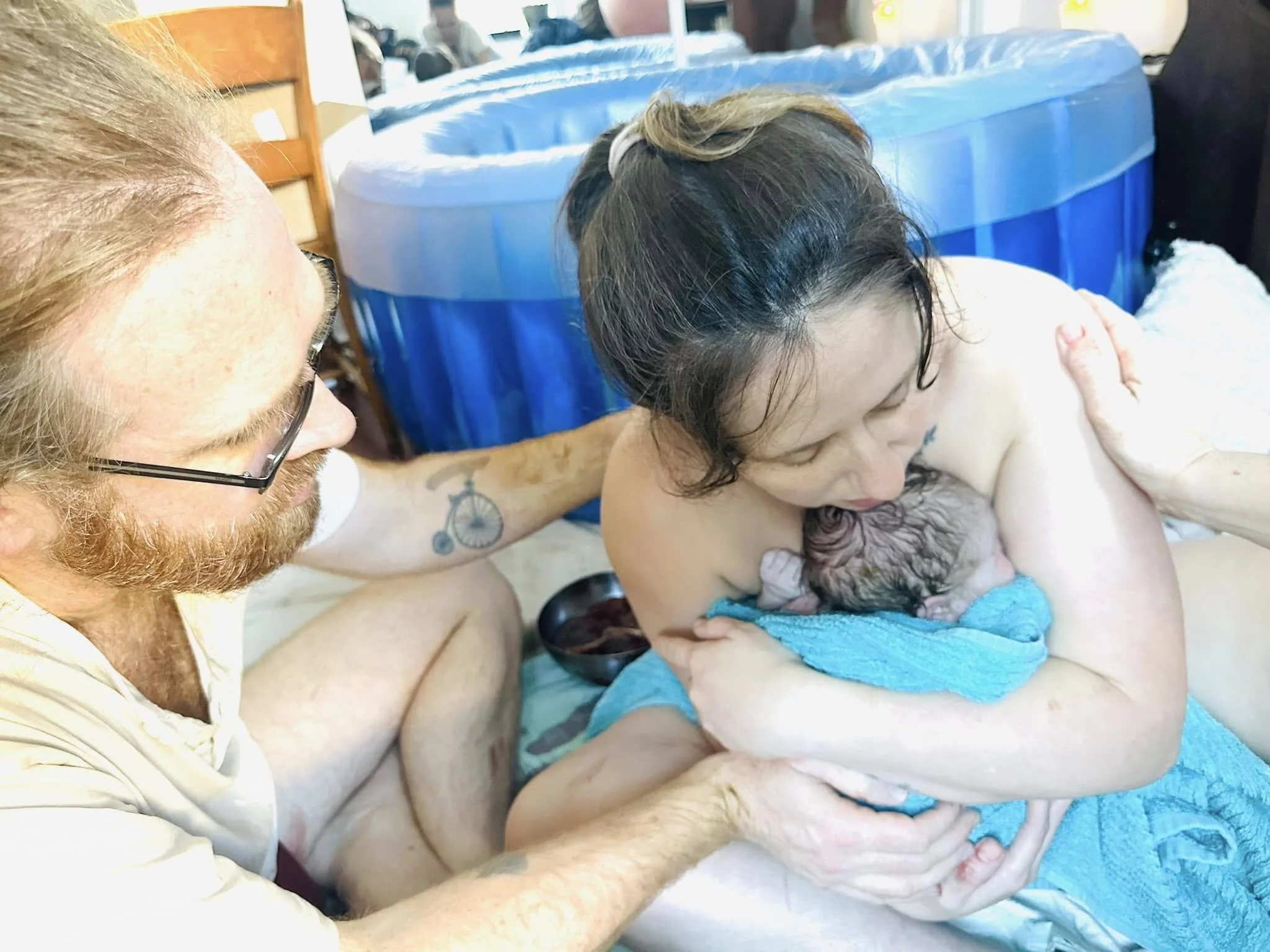
Genevieve Pleasure, a sexologist, doula, and fellow Astoria mom, talks about her empowering home birth of her 10-pound daughter. Genevieve shares how her traumatic first hospital birth led her to choose a pleasure-based home birth the second time around, walking through her prenatal journey, an unexpected shoulder dystocia during delivery, and the ferocity and power she manifested. The conversation also dives into postpartum recovery, rebuilding intimacy after birth, and how curiosity and playfulness can transform a couple's connection.
Resources:
Debra Pascali-Bonaro - Orgasmic Birth (documentary, book, podcast)
Ibu Robin Lim - renowned midwife
Shoulder Dystocia resources:
“Evidence on: Induction or Cesarean for a Big Baby” (Evidence Based Birth)
Flip Flop technique (Midwifery Today)
Gaskin Maneuver (Cleveland Clinic)
Resolving Shoulder Dystocia with the Gaskin Maneuver or McRoberts Maneuver (Midwifery Today)
Shoulder Shrug Maneuver to Facilitate Delivery During Shoulder Dystocia (Obstetrics & Gynecology)
Sponsor links:
Free “Pack for Your Best Birth” Packing List (with free mini-course option)
East River Doula Collective (find a doula, attend our free “Meet the Doulas” event)
Birth Matters NYC Childbirth Education Classes (Astoria, Queens and virtual)
*Disclosure: Links on this page to products are affiliate links; I will receive a small commission on any products you purchase at no additional cost to you.
Episode Topics:
Genevieve's background as a sexologist and somatic practitioner
Meeting her partner later in life and deciding to have a second child
Her first birth: hospital pressures, forced epidural, and Pitocin
Choosing a home birth after a difficult first experience
Interviewing and selecting midwife Kara
Navigating a prior cervical cancer diagnosis and fertility-preserving surgery
Prioritizing pleasure and intimacy throughout pregnancy
Deciding not to hire a doula for the second birth
Early labor at home and letting her partner rest
The midwife juggling two laboring clients at once
Feeling stuck and using the shower to shift her energy
Getting in the tub and the physical sensations of pushing
Shoulder dystocia with a 10 lb, 2 oz baby
The midwife's calm, skilled response to a stuck shoulder
Baby born briefly not breathing, then quickly recovering
Feeling empowered and fierce compared to her first birth
Her partner's emotional experience witnessing his first biological birth
The role of her doula-friend as photographer and support
Eating the placenta as chili
Postpartum hormonal and emotional differences compared to her first postpartum
Building a local moms' community group
Recovering from a labial tear and using natural remedies
Rebuilding sexual intimacy after birth
Navigating changes in touch sensitivity postpartum
The importance of relaxation before arousal
Communicating changing intimacy needs with a partner
Using playfulness and games to reconnect physically
Redefining pleasure and intimacy beyond performance
Reflections on feeling empowered and respected during birth
Genevieve's work coaching pleasure-based birth and postpartum couples
Interview Transcript
Lisa: 00:00
You're listening to the Birth Matters podcast, episode 140.
Genevieve: 00:04
She looked at the baby and she was like, This baby is gigantic. That's why your birth was so hard. Um, and later when we measured her, she was like, Oh, she's 10 pounds, two ounces.
Lisa: 00:22
Hey there, and welcome to the Birth Matters Show. I'm your host, Lisa Graves Taylor, founder of Birth Matters NYC, and director of East River Doula Collective. I'm a childbirth educator, birth doula, and lactation counselor, and I've been passionately supporting growing families since 2009. This show is here to lessen your overwhelm on the journey into parenthood by equipping and encouraging you with current, best evidence info, and soulful interviews with parents and birth pros. Please keep in mind the information on this show is not intended as medical advice or to diagnose or treat any medical conditions. Are you following us on Instagram yet? We have lots of educational content there, so connect with us over at Birth Matters NYC. Today I'm talking with Genevieve Pleasure, Adula, sexologist, and mom here in Astoria about her incredible home birth story. After a difficult first birth in the hospital almost a decade before, Genevieve set out to do things differently the second time around. She shares everything from choosing her midwife to an intense moment during pushing when it seemed like baby was having trouble coming out, to the powerful, fierce strength she found herself exuding. We also get into what happens after birth, the hormonal shifts, finding community, and how she and her partner have navigated rebuilding intimacy with a lot of curiosity and playfulness. Before we hear from Genevieve, we wanted to share a couple of upcoming events and resources that may be of interest to expectant parents. Something you might not know unless you've taken birth class with us is that we've curated a list of recommended items for your labor go bag as well as beyond, and recommended books and films, too, as you prepare for the journey through labor and into parenthood. You can find the link by visiting birthmattersnyc.com and clicking on the resources tab, or just visit birthmattersnyc.com slash resources, and the Amazon link is at the top of the resources page. East River Doula Collective's next Meet the Doulas event will be on Wednesday, September 30th at 6 30 p.m. on Zoom. And our next virtual savvy birth 101 workshop is one week after the Meet the Doulas on Wednesday, October 7th at 7 p.m. on Zoom. You can find links for more information or to sign up for either of these events on the top banner over at birthmattersnyc.com. So if you're expecting a baby or trying to conceive, we'd love to see you at either or both of those events. Also, our all-in-one childbirth class series are filling up really quickly for the fall, so if you're due in the next few months, be sure to grab your spot soon. And just a reminder that if you don't live in New York City or you just don't want to have to travel for childbirth class, we would love to have you join us for our live group interactive class series virtually on Zoom. A lot of folks have found this to be a very convenient option while still having the benefit of being able to chime in and ask questions in real time. This format is also priced lower than the in-person option, so it's a great option for folks with a more limited budget. You can check out this option as well as several other childbirth class options like private classes and our online on-demand course, all over at birthmattersnyc.com. Now let's jump into today's story. Welcome, Genevieve.
Genevieve: 03:57
Thank you so much for having me here, Lisa. I'm really excited to talk about how cool the experience was.
Lisa: 04:04
Yeah, me too. Is there anything else you'd like to share about yourself? Just to give us a little more context of who you are and how you came to this journey.
Genevieve: 04:12

Yeah, well I'm a sexologist, as you mentioned. So I work with bodies and somatic sexology in the body. I'm really interested in the nervous system and seeing how that impacts our pleasure in our lives. And so, of course, I took it into my birth. Um, this is also my second birth. I have a nine-year-old son as well. And so it's been almost a decade. So that was also an interesting spin. Yeah.
Lisa: 04:37
And given that large spacing, do you mind if I ask if that was that planned or did it just happen that way, or was yeah, I was a single mom.
Genevieve: 04:45
And so I didn't think I'd have any more children, but then something just happened like a year and a half ago where I realized I really want to have another baby, even though it didn't make sense. I didn't have a partner at the time. Like, none of this made any sense. And my best friend said, get yourself on hinge. There will be someone out there for you. Like, just believe it and trust it. And I was like, There's no way I'm gonna find a single dad who wants another baby. That's not, and for months, no one said anything, and my dates were awful. And then I met my partner who is the most incredible man, and he said, I think I'm it. I think I think I'm the person that you want to do this with. Oh, I love that. That's such a cool story. Yeah, it was so amazing, it's still a miracle. The two of us are like, How do we find each other? It's so cool.
Lisa: 05:34
Love it. Every love story is unique, right? I'm so curious and interested to hear, and I'm sure listeners are as well, about this journey and how your work and your fascination with all of these topics you were just detailing on sex and pleasure and the nervous system, how this played into your birth choices and your birth experience. So, can you give us a little context in terms of going chronologically? Your pregnancy and how did you make the choice to give birth at home? How did you assemble your birth team? Just anything to note about the prenatal journey this second time around.
Genevieve: 06:12
Yeah. So my first birth was in a hospital. And so I ended up, I was working on, I wanted to do a natural birth in the birthing center. And that was what I was working on. And I got there and I wasn't dilating fast enough for them. And there was all this pressure, and it was my first baby, and I just remember the pressure. And they ended up doing something illegal, which I didn't know until after I just became a doula and I started learning about policy. But basically they said to me, I was in triage for 30 hours, and they said, We'll give you a room if you agree to an epidural. And so I had to agree to the epidural in order to have a hospital room, which was insane. What? But at that point, I was so tired, 30 hours in, and the bright lights of the triage room, I said, I need a room. Okay. So I said yes to the epidural. And then, of course, after the epidural, they had to give me pitocin, as often happens with hospitals. Or it's not always, but it happened with mine. And so I had to do the Pitocin at that point. And then I remember giving birth to my son. And the first thought I had after, of course, oh my gosh, I have a baby, yay! Right. And the excitement, the next logical thought I had was I should have done this in my living room. The thought was like, I should not be here. This doesn't make any sense. And so I said to myself, I don't know if I'll ever have another baby, but if I do, I'm gonna make sure I end up at home. And that's also when I started looking at birth and kind of learning. I watched the business of being born. I got really into all these pieces and I realized what actually happened in the hospital and what they were doing with me.
Lisa: 07:53
Um Do you have any theories as to why they insisted on an epidural in order to get a room? I'm trying to like process that right now. I'm also trying to process that many hours in triage.
Genevieve: 08:04
What 30 hours and triage kind because my son decided to go into labor during fashion week in Manhattan. And so the hospital was overbooked. I know that the labor rooms were also overbooked, and they were also currently doing construction in the hospital. So we didn't have a waiting room. There was no waiting room. So everyone just had to go straight to triage and sit there. And it was really bizarre. So I was laboring, but then there's someone next to me who had a bloody wound, and then it was such a bizarre place to be able to try. Yeah. Um, I had headphones, thank goodness. But I think that's I think that they just needed to get me through. They needed to get me in and out quickly. And now that I know more about birth, I think that's probably what they were doing. And I didn't have anyone there that could advocate I was too young to know what was going on. And the recovery from that was really challenging for me because of the epidural and because of all the work I'd done prior to be in my body and do so much somatic work, the healing was actually harder for me. It felt like I had to figure out what to do with all this numbness that I was feeling and the disconnect between the birth itself for me, because I'm such an embodied person, was like, how do I maneuver? Like, how do I do this? The breastfeeding journey was hard. Things like that happened. Um, I went and I did the dual training and I knew I said to my partner, actually, when we were dating, I said, if we get pregnant, because we were planning on getting pregnant if we chose each other. But I said, if we get pregnant and we choose each other, we're doing it at home. And he was like, 100%. That's great. So I was like, okay, good. That was like when I was dating, I was making sure because I cannot be with you unless that's a green light. Very much like I am not ending up in the hospital.
And so what I did is I started researching midwives, and I know a few birth workers in the city, and I thought to myself, why don't I just see if Kara would do it? And no, Kara casually amongst my doula friends, Kara is like the unseen midwife. She's like hard to get to, hard to book. That's what, like, she's always me with all her clients. And I was like, Kara's not gonna do my birth. I don't know. In my head, I'm like, and she's also in the business of being born midwife. So she's got a celebrity-esque vibe about her. But when I called her, she answered and I told her that I want to have a pleasure-based birth at home. And she was like, that's really exciting. So she got excited about the idea of music and dancing and singing and lots of joy and oxytocin. And so then she became my midwife. And the thing I love about Kara is that she so trusts the female body even throughout my pregnancy. Like there would be, we didn't even do all an ultrasound. We did one because I had she typically doesn't do that, but I asked for one. I actually had cancer in my cervix. Uh, and I had surgery on it five months before I got pregnant. So it was wild. Yeah, I had cervical cancer, it progressed really quickly. It was right before I met Andy. And I told my surgeon, I said, because the typical procedure with surgery, cervical surgery is to do something called a leap. And with the leap, my understanding of it is that there's like an electric situation that happens, like it burns the ends of your skin so that it doesn't bleed. And I was like, that feels unnatural and strange to me. So my gynecologist was amazing, so great. And I was, I'm just the type of patient that needs to research and know what's happening to her body at all times. So I went back to her a million times and I was like, excuse me, explain this, please explain this. And I said, I need to make sure to preserve my fertility. My nervousness is that we're gonna do something and it's gonna have my fertility drop. Now, even though even with a leap procedure that's very rare, I was like, I'm a little nervous about the cauterization of the cervical tissue. And so we ended up doing just a knife. She basically agreed to a scalpel only with no sutures. So that it was crazy because I met my partner like the day after that surgery ends, but I basically bled for a month. It was very kind of old school, but I felt like it was the best thing for my cervix for fertility's sake later on. And when I was about seven months pregnant, the one concern with these surgeries is that your cervix doesn't hold the baby as well because when you're nice and big. And I was about to go fly to Colorado and I was like, can I just get an ultrasound to double check that my cervix is holding the baby in before I go on a plane? And we checked fair and we checked, and the woman doing it was like, your cervix looks normal, like there's no, there's not even scar tissue. Like it's a completely normal cervix and it's regrown, which is amazing. In case listeners don't know, the cervix regrows itself, which blows my mind. So it grew back to normal size, like within nine months. So that was neat. So we only did the one ultrasound.
But other than that, she would come over and just complete trust. And when I was interviewing midwives, I tell all my friends that are pregnant or looking to conceive that it's okay to say no to the first couple of midwives you meet or the first couple doulas that you meet. I think my first pregnancy, I didn't know that. I was just like, whoever wanted to support me, great. But with this one, I went in with a series of questions. Um, one of the things I wanted to ask was about cervical checks because my first birth, my god, the cervical checks in the triage were the worst part of the birth. It was so bad, like way worse than everything else. And so I asked a bunch of midwives and I said, Are you comfortable not doing any checks? And I didn't get anyone saying yes until I met Kara. And Kara was like, I don't need to check you, I can just listen to you and I'll know. Love that. And she's brilliant. Okay. And then I asked her about, I also asked her about shoulder dystocia, because just because I've seen births and I said, What if that happens? Also, my partner's six foot four, so I was expecting a big baby. So I said, What about shoulder dystocia? And what if the baby's breached? And she gave me, I'm not gonna put you in the hospital for any of these things. And here's the procedure, and here's how I would maneuver it. I also asked for her transfer rate. These are things I just tell my pregnant moms, right? I'm like, Yep, uh these things. And her transfer rate is so low, my mom's don't end up in the hospital. So I was like, okay, all right, as long as I don't have to be there. So we did, I did a lot. I think choosing the person was the most important part. And then over the next seven or so months, she became like a part of the family, right? She was just such a love in all of our meetings. So yeah.
Lisa: 14:46
I just want to mention, I don't believe that I knew your midwife was Kara until I was at an Oscar's party about, I don't know, a week ago or so. Um, and I saw our mutual doula friend Laura. And wasn't she at did she say she was at your birth, right? Yeah. And she mentioned Kara and I was like, she was my midwife for my second baby, too. So that was really fun to hear that. I love Kara.
Genevieve: 15:13
She was amazing. Yeah. Yeah, she's just so great. I love that.
Lisa: 15:17
Yeah, you signed up with her like early on.
Genevieve: 15:20
Early, yeah. As soon as I found out I was pregnant, I started checking for midwives.
Lisa: 15:24
Nice, nice.
Genevieve: 15:25
I switched in the third trimester. Amazing. The rap's so important that like women know, like I tell all the women I've talked to and all my friends, like, you can switch whenever you want. Like, healing and the instinct is so important because this is, I really think birth is one of the most important days of our lives. Oh, yeah, absolutely. Core memory. Yeah, so important. Yeah, so the prenatal journey was really great. I didn't have any pains at all. I gained a ton of weight, but I have never checked myself, which was great. I have no idea what I weighed, but I know I'm like, I don't know, I'm huge, but I have no idea. And we one of the things Andy and I did, and I told him, I said, I want to make sure that I have a very pleasurable pregnancy. So even though we moved houses and because we found out we were pregnant, and we were like, we have to get everything together, and it's definitely very quick for us. I made sure I was like, I want to make sure we're having lots of sex and lots of massages and lots of pleasure, and that's exactly what we did. And it was so helpful for any of the pregnancy symptoms, which I didn't have my first time around. And so, like, I would be so nauseous, and he would just start to massage my feet and like we would breathe together and we start to feel turned on. And I was like, Oh, the nausea's gone. This is the main thing. Wow, powerful. It was really great. It's something I would, if I ever get pregnant again, or friends of mine, I'm saying, like, make sure you put pleasure as a priority, even when you don't feel like there would be moments where I didn't feel like I wanted anything but to just complain and then inspire me, like, hey, like you're a pleasure person, let's explore it. And I'd be like, Oh, okay, you're right. So, yeah, so that was yeah, it was a great prenatal journey. It was really fantastic. Yeah.
Lisa: 17:12
And so, in terms of doula support, or was this just like friends who were doulas, or did you like officially hire a doula, or what did that look like?
Genevieve: 17:22
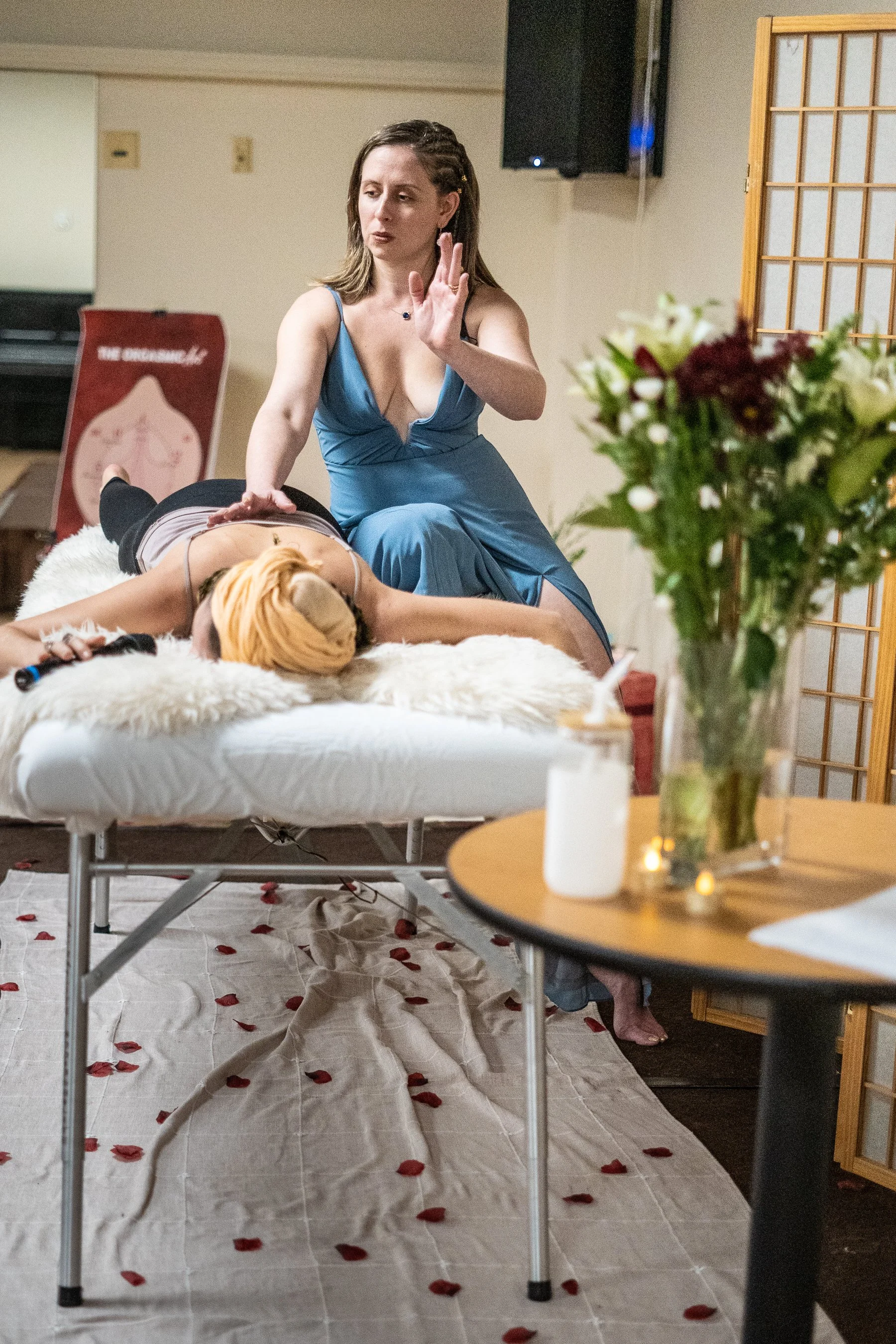
You know, it's funny being a doula that I didn't hire a doula and I feel bad about that because I feel like I should, right? Because I know it's important. But what was interesting is I interviewed a few, and the one that we really liked wasn't in town. The other thing was it was really hard because our due date was December 30th. And so almost everyone was out of town for the holidays. And so the one we found that we were like, yes, she was like, Oh, I'm gonna be out of town. And then I sat with myself and I was like, okay, this is meant to just be me with me. I can feel that. Um, and because it was my second baby, it felt like it was an okay choice. And I still feel like that was an okay choice. And next time that doula, I'm gonna be like, hey, hopefully we're not giving birth again on Christmas so she can come. But yeah, so we didn't end up doing doula. It was just the midwife and myself and Andy and our mutual friend who was there to take pictures and she doula and me throughout it. We're such close friends that it was great to have her there and cheerleading me for sure.
Lisa: 18:25
All right. Anything else to share about the pregnancy? And I actually do have one question before you jump into the birth story, but anything else you wanted to share before the birth story? I can't think of anything else, but tell me your question. Yeah, I was just I think I know the answer because you later said something that referred back, but it sounds like you were already doing uh the sexologist work before you had your first baby, is that right?
Genevieve: 18:51
Yeah, uh yeah. I've been a sexologist for 15 years. So 15 years baby's nine. So a very long time. But I think there's degrees of embodiment and pleasure, and there's things they didn't even have and you're also your body's so different at 26, you don't have to pay as good attention to it. At that time, everything was pleasurable all the time. It's different. Now it's a different journey to be really in pleasure.
Lisa: 19:16
So yeah, yeah. And I guess my point of curiosity is that was there any thought of an out-of-hospital birth with your first? Or what was your thinking with that?
Genevieve: 19:28
My partner at the time was uncomfortable with it. And so I ended up having to go with what she wanted there. But the birthing center looked amazing, and I think it wasn't this was the old one, the Mount Sinai West birthing center. And then first was born. Yeah, I'm sure it was a beautiful experience, but I think the reason it ended up closing down was it's it's quite hard to get into that. You have to be a certain amount dilated. I don't know what the number is, but I can get there.
Lisa: 19:53
And that's why my doula encouraged me at the very beginning of my second pregnancy. I hired the same doula again and she said, Lisa, I'm concerned that you are getting your hopes up again to give birth again at that birthing center. And they have made it harder to get in. It's been easy, it's become easier to risk out. And so she was the one that planted the home birth seed. And it took me months of researching before I finally came to the other side of, yeah, now I feel better and safer doing this at home. And so it was scrambling to find a home birth midwife towards the end of 33, 34 weeks, who was available. But that's fun that you and I both were birthing center first time, and then yeah, yeah.
Genevieve: 20:36
And makes sense. The first time is such that you don't know anything, right? And then once you're like, hang on, I understand how my body will feel and what's gonna happen. Yeah. But my first time I ended up with the epidural, so I didn't know the sensation to the degree that I felt it this time around. Say I still enjoyed the sensations of my home birth way more than the epidural. Interesting. Much better to be aware of what I'm feeling than to feel disassociated from it. So it's a very interesting experience. I don't know if people would say that, but for me, that's what I needed. Yeah.
Lisa: 21:12
Yeah, everybody's different, and that really resonates. That idea resonates with me a lot. I can't wait to hear the birth story. Go start wherever you want to. It could be the last few weeks of pregnancy or right when labor started.
Genevieve: 21:25
Not much happened the last few weeks of pregnancy, so we'll go. We were having sex to try to have baby come, but we didn't want baby to come too quickly because we already have my partner has two children, um, and I have one. And so his children are much older, but we were like, it's different. When you have the first baby, you're waving with your second or third or fourth. You're like, hang on, not yet. We're not ready. So we were just trying to get the nursery like somewhat together. So I feel like we weren't really ready anyway until Christmas. The baby's due date was December 30th. And the interesting thing is we didn't, because you know how hands off Cara is in a beautiful way, we didn't know how much. The baby weighed. We didn't know. I was measuring bigger than I was like on the highest. And had I been a little bit more, she would have been nervous. But I was like the highest possible in terms of how big my belly was. That was that she was okay with. But she was like, Oh, you're measuring really big. So I was big throughout the whole pregnancy, though, the whole time I was measuring big. And so on December 30th, which was her due date, which is hilarious because Kara was like, You're not gonna give birth on your due date. No one does that. And I was like, I know, no one does that. December 30th at midnight or 12:30, that's when I started to feel the labor coming on. And I let my partner sleep because I knew he was gonna about to run a marathon with me. So I let him sleep. And I was like in such bliss. There was such joy after having been in the hospital, just at the beginning to be like, I'm in my house when my son is sleeping right there, and my dog is here, my cats are here. And we have a little guest room in the back of our apartment. And so I started just cleaning and sweeping and setting that up. And I called Karen. She was talking to me while I was doing that, um, and just moving with the surges, which felt like the heavy period right at the beginning. Um, with my first baby, I had the mucus plug um show, which was great because I was like, oh, I'm in labor or I will be soon. This one was just the contractions to start. And so she, but she was able to say, You're definitely in labor. This is exciting, cool. Now I found out later, this is hilarious, because this was also a new moon of in December. Now, one of my friends, Deborah Piscali of Bonaro, who I trained, I did orgasmic birth practitioner training with her and my doula training with her. She would always say to us, she's the new moons and the full moons are when all the babies come. And I told my partner this. My partner is way more logical than I am. And he was like, That's so not, you can't find that anywhere. And I was like, I don't know, babe. I think baby's coming on the new moon. Ask any labor and delivery nurse, and they'll say it's everybody's, it's full. There's no rooms available.
Genevieve: 24:09
And so what I didn't know was that Kara actually had another woman in birth who was in labor and she thought she was a neighbor. She was like 43 weeks and two days. Whoa. Something crazy. Or maybe it was 42 weeks and three days. I don't know. I'm bad with the numbers, but it was very far, way past her due date. And she was talking to her at the same time that she was talking to me. Like she was calling both of us to track us, and she's frantically calling her midwife friends to see if she could get a replacement from me because she wasn't sure if she was going to be able to attend both births. I didn't know this. She was great at not telling me. And then that other woman, thank goodness, called her back and said that it was just a scare, nothing was happening. And so I got to have Kara. And I'm like, oh my gosh. I'm sure the woman she sends is lovely and it would have been great. But I was like, oh my gosh. Um, so new moon, and that started. And then as I started to feel them more, and that it was, I would say it was like the beginning of active labor. That's when I woke up my partner. And Kara was just calling in a few hours. Like, she didn't want to wait too long because it was second baby. So she was like, it'll probably be pretty soon, but she wasn't stressing it. So I woke Andy up and it was so cute. I loved that. Like, I went over to him and I whispered in his ear and I said, You get to meet your baby today, because he had no idea it was labor. And he says that was the sweetest moment. And he woke up to that. Love that. It was so sweet. So he came over and it was basically just a list of things to clean the room that I needed. It was like, Can you clean this and put this here? And like, because I'm gonna be in the room. And it's like we weren't ready. And then as the labor continued and started to progress more, we were very into pleasure at the beginning. There was a lot of him massaging me and we were kissing a lot. So there's a lot of really yummy oxytocin, and my mood felt great, but he could tell that I was feeling it more, like I was starting to go inward more, and I was changing the music and I wanted the lights down lower. This was around maybe four in the morning. And that's when Kara, he called Kara and she was like, Oh, I should probably go and be with you guys now. Like she could hear my voice as I moved through the contractions. And that's also when we called Lara to come over because we wanted her to take pictures and also to be there when my son woke up. So she was like my babysitter too with him, which was cool. Around, I don't know, five or so. These timings are wrong, but around five in the morning, I started to feel tired. I remember feeling really tired. And the whole time I couldn't let myself relax very well. I was very upright during the whole labor. And Kara kept saying, she was like, You can lie down and I can press into your back as the contractions come. And I was like, I know I can do that, but I do not want to. Like, there's no part of me that wants to lie down right now. And she was like, Okay. But then I kept complaining about how tired I was, but I couldn't lie down, which I now know why. But so she said, it's because it's dark. As soon as the sun comes up, you'll feel like you'll have more energy. She was 100%.
So as the sun started coming up, my son woke up. Everything felt like we started to get the energy moving again. It felt great. And I started to feel like, oh, the baby's gonna come soon. Like the sun's up. This is awesome. I started blasting music more. It was really nice. And then at that point, my son was up. He went off to camp for the day. It was like some winter camp. And then I was feeling great. And then I started to feel my mood drop a little bit again. And it wasn't so much exhaustion at this point. It was more like I had a feeling that I wasn't progressing. And that could have been trauma from the first birth, where I felt like, oh my God, I'm not dilating. So they won't give me a fucking room. Like it could have been, it couldn't be that. And so I felt like that pressure creeping in of like being on a time clock. And so I was like working with that in my mind of like, no carrots just hanging out in your living room. I kicked her out at like maybe 4:30. And I was like, I just want to be with my partner. I just want love making to feel like that. And so she was just hanging out, drinking coffee, chatting with Lara in the living room. They were having a grand old time. But every once in a while I'd ask Andy, are they okay in there? And he was like, You don't, yeah, don't stop worrying about them. But then I started to get that feeling of I want this to move faster because I feel like something's not moving. That was the feeling. And it was this strange instinct. And that's when Kara, I went out of the room to Kara for the first time. And I looked at her and I was like, I feel like something's not moving. And I don't know why, but I feel like something's not moving. And she was like, Okay, what do you want to do about it? But that was like, because she's so good at not pushing the issue around me. She was like, whatever. And I said, I wonder, could you check and tell me if I can get in the tub or not? And which was really interesting. And Andy was shocked, my partner, because he was like, She hates checks. Why would she ask for a check? But I was like, I want to know because I don't want to get in the tub and stall the labor or slow it down by any means. And so I said, Here's the deal." I looked at her and I was like, here's the deal. You're gonna check me, but you're not gonna tell me how dilated I am at all. You're just gonna tell me whether I can go in or not. That's all. And when you go in to check, if I say get out, you get out immediately. Imagine you're in there, you leave immediately. And she was great. Like she went in and it didn't even hurt, which was crazy because the cervical checks before were like that pain in the hospital was awful. At my house, like kneeling by my bed, I felt so chill and I was like, I can't even tell if you're inside or not. There was zero pain. And then she said, You're not ready yet. I later found out I was about four centimeters, which is about where I got stuck with my first one too. It was the harder moment for me, was around three to four with both babies. And I didn't know how far. So she said, get in the shower. And I was like, Okay, I got in the shower. And this is when I was, I think things started to turn. I got in the shower and I was by myself and I closed the door. And I tend to be the type of person that when I'm struggling with something, I actually do better when I'm alone. Like I, if I'm with other people, I it's harder for me to find my solution. Like I can't have anyone around me. So I was just on my own, feeling myself. And I remember in my mind thinking, maybe you're not gonna have the pleasurable, calm birth that you thought. Because I'd been preparing for like lying in the tub and just breathing baby down and just like the Instagram videos that I was like, that's gonna be what I do. And then we're gonna post it all over Instagram, it's gonna just be so good. And I remember going, maybe that's not what this is. Maybe this baby has a different energy, and that's not the energy of this baby. And so I started to just let her talk to me.
And we were in the shower together, me and the baby, and she started to give me, I started to get really hot. I was sweating in the shower. She gave me all this heat, and then I just started screaming and singing in some other language. And Andy has a video, it's hilarious. I'm in there just dancing and singing and sweating, and I don't know. And then and then I came out and Kara looks at me and she goes, You just turned the corner. I bet you're ready for the tub now. All I needed to do was kind of meet her. And and it was interesting. When I came out, I felt this like ferocity in me of just we're gonna get this baby out, which is not me. I'm more like pleasure, surrender, relax, whatever. But this is very like take charge. Like, I'm not, I'm just kneel, I couldn't lie down. It was wild. So I get in the tub and I'm neat, like I'm squatting because I wanted that very power pose feeling. And I start to feel the urge to push. And because I was in that determined space, I give a good push. At this point, it was just the sack, but I went and felt it, which was very cool. I didn't do that with my first baby, and I got to go inside and feel the sack. And so as I was pushing, I could feel my sack, right? And the strength of it. And Kara was like, isn't that wild how strong it is? It's not popping yet, but we can feel the strength in there. And so that was really helpful because it gave me this feeling of I know what's happening right now in my body, and I'm in charge of this. Um, it was almost the surrender, right? It was like very fiery. And then I had Andy, Andy had his hand at my lower back and it felt really good right on my coccyx, right on the and he was pressing really hard. But then in between in between the contractions, I had him actually give me pleasure. He went around and he would touch my clitoris and start to give me, move me into pleasure. And it was weird because it wasn't pleasure the way that you would think of normal sex pleasure. It was still almost felt like a massage in the area. I think it really helped me open. And I was like, okay. So then the next couple of pushes, her head came out. The first the sack did its thing and burst, and that felt so good. The relief was great to relieve the pressure. And I didn't know this, but there was meconium, which I had no idea because I'm facing the other way and I didn't look at the water. But Kara tracks it, right? And I think she even told Andy at that point that there was something going on, right? So I'm sure in her brain she's going, we gotta get the baby out soon, right? But I already knew that there was actually this part of me that was like, baby needs to come quickly. So I go to push her again, and her head she crowns, right? But the whole head doesn't come out, it's just the crown. And at that point, I started to feel something up against my pelvis. And I and it was hurting, like it felt stuck, like bone against bone. And I remember asking her, like, how am I supposed to get this baby out? Like it feels like she's not gonna fit. That was the feeling. Um and I couldn't speak very well to say, like, it's bone against bone. That's the feeling. But I knew something was up with the positioning. Like, I was like, this isn't working. I gave another push. We still had no movement, like it was just staying crowned. That was it.
Lisa: And I'm sorry, what position are you in right now?
Genevieve: I'm squatting.
Lisa: Okay. Yeah. I wasn't sure if that had changed.
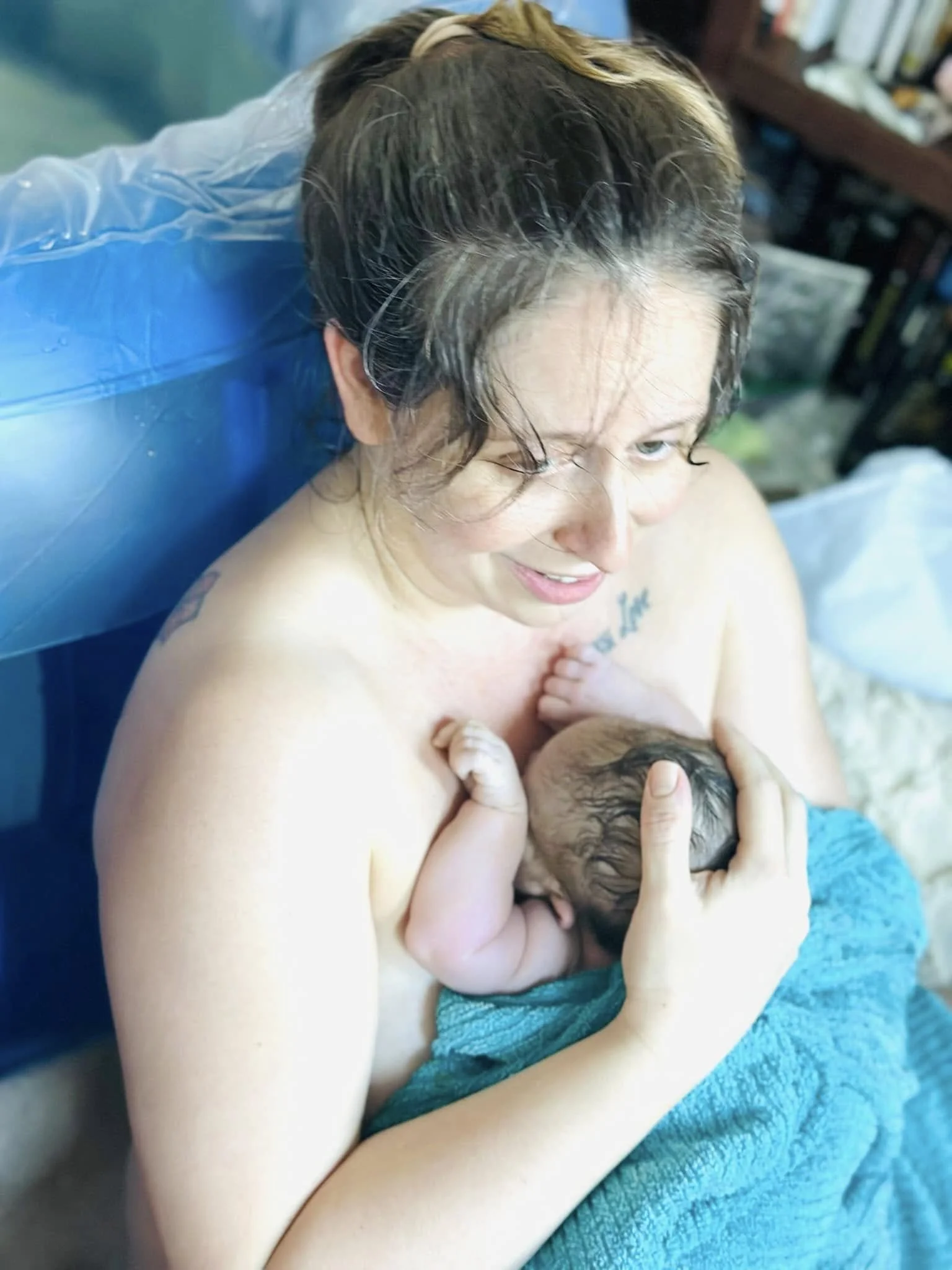
Genevieve: Yeah, so I'm still squatting. I'm in that spot. I sometimes would lean forward and then come back to squat. But there I was, she was just right there. Her head was not coming for whatever reason. And then Kara, and I'll never forget this moment. Her language here was so brilliant as a provider. I want to copy it. But she asked me, she said, Genevieve, how important is it for you to have this baby in the water? So she said that to me, and I just think it was so kind because she could have said, get out of the water, right? Or we need to move you. But she asked it as a question, even though obviously baby needed to get out, right? Um, and I felt so I was like, I don't really care. I don't think we'll even notice if I'm out of the water at this point, whatever. And so we moved me over, and I found myself in a lunge. That's what I was guessing. We were heading towards the lunge, and my left leg was forward, and I had hips hiked because I think that was what like the position that needed to happen for where she was stuck. Next push, we were able to get her head out, and that felt great. And I remember the moment that was beautiful, and then we paused, right? We had that beautiful sacred pause during the pause. I have it on video, I didn't know this, but she went in and did suction on the baby's nose and mouth so that baby could breathe, right? Because baby had been in there and there was meconium too. And this is when my partner started getting scared, but I didn't know because he was behind me, right? But he saw that baby wasn't doing so well, right? Like she wasn't really a baby, she was like a doll at that point. So I did the next push and it wasn't and the next surge, and we I wasn't able to get her to move her out. It was just like a lot of pressure, but she wasn't moving. And I remember with my first baby, I just pushed and he like swam out of me. So like that was, but he was only eight pounds. I was gonna ask how what the size was like for this baby. That's what I expected, but that's not the feeling. It was way more like a very different feeling. And that's when I can see on the video now what Kara did was she came over to the left side of me and she put her hand up toward my pelvis, right? And toward the back of my posterior pelvis, and she hooked, unhooked the baby from that spot around her shoulders. And then baby just went really because I was pushing really hard. It came flying out of me into Andy's hands.
And she wasn't breathing when she first came out. She was blue, which I think is a lot of people, they worry with home births that this type of thing will happen and then it's gonna be an emergency. But because I knew Kara's skill set, I saw that and I was like, I'm not worried about this because it had something we talked about this prior. I was like, what are your resuscitation measures? Like, how do we maneuver this? When do you call the ambulance? So I knew we're fine because Kara's got this. And within 30 seconds, baby started crying. We should just had to shake her a little bit and suction her. And then she looked at the baby and she was like, This baby is gigantic. That's why your birth, that's why your birth was so hard. Um and later when we measured her and she was like, Oh, she's 10 pounds, two ounces. Wow. That's why you didn't have one of those peaceful Instagram births. Like you need pushed hard, which is exactly what it felt like. I wasn't just hanging back, I couldn't surrender. It's a very different feeling where I was moving the whole time. Lots of dancing, lots of standing, and really it's why I think I couldn't lie down because I needed gravity to keep holding her down. It required some ferocity on your part. A very different marathon to my first baby. So it just shows that our body was really aware, right? Like when we're in birth, my body just knew there's no way I can lie down or even sit. Like I need to be constantly moving around. So it was pretty wild. And then baby was great after that, and she latched right away because she's huge, but also I think because she was relatively calm of a birth. And then my partner went and took the placenta and cooked it for me, and I had placenta chili at which Tara was like, she was like, You're crazy. And I'm like, Your mommy birthed a 10-pound baby and this is what’s crazy to you. The great afterbirth meal, it tasted really tasted like beef, but it was fine.
Lisa: 38:21
I don't think I've worked with anyone who's done placenta chili.
Genevieve: 38:23
That's a fantastic recipe because usually you just put it in smoothies or whatever, but this is like meat, it's meat. And I was like, I was high from the birth, so I couldn't care less that I was eating at that point.
Lisa: 38:34
And was that like a pre-planned thing or was it spontaneous?
Genevieve: 38:38
Okay. I looked up recipes and the chili is such a great idea because you mix it with so many ingredients and you mix it with beef. So you can't taste, you can't tell beef and a placenta. So you're like, it just tastes like really good chili. And I had my glass of wine and my chili. It was great. I felt like a queen.
Lisa: 38:58
Wonderful. You deserve to feel like a queen after that human feat. You just decorate, right?
Genevieve: 39:05
Marathon, for sure.
Lisa: 39:06
And I do just want to come back to baby needing a little bit of help for listeners. It is pretty common for babies to need a little help. Well, as I understand it, about one in ten babies will need a little bit of help. It's usually fine. And that's why we're working with a care provider who really knows their stuff, including home birth midwives. And in fact, I did a training with Karen Strange on neonatal resuscitation. Oh, love her training.
Genevieve: 39:35
Yeah.
Lisa: 39:36
And it just really was so eye-opening that a lot of one of my takeaways from it, she I don't think she explicitly said this at all, but one of my takeaways from it was that home birth midwives, in some ways, are more expert in helping a baby in ways that are less disruptive to a baby's nervous system or less intervention laden. Um, because there's more patience and there's just more attention to all of baby's messages that they're giving us. And I love that so much. So yay for a wonderful expert home birth midwife who really knows what they're doing so beautifully to support you in that potentially stressful moment. Yeah.
Genevieve: 40:23
We asked her afterwards about it because that was, I think, the most for Andy. Andy had to clear the fear, right? Because he was so scared when he saw blue baby, right? I found out later that I came out blue too. So maybe it was just like a thing.
Lisa: 40:37
Um, to some extent, anyway.
Genevieve: 40:40
It's normal, but it doesn't look like what we think of as a healthy baby, right? So he was nervous. And so we asked Kara at the follow-up, and she said in her mind she was tracking like multiple things. And one thing that she tracked the whole time was the heartbeat of the baby, which my baby was strong the whole time. And throughout the entire pregnancy, there was no wavering of heartbeat, which was amazing, right? So she said if the heart rate would start to drop, then I knew baby was a little weaker. I then would have set up other ideas and had other plans. So she's in, she said to me at that after birth um session with her, she was like, Your baby wasn't in harm's way at any point. It was actually just that we couldn't figure out how to move her through because she's 10 pounds and her shoulder got stuck. And so, because of that, she wasn't breathing as much as a baby that could just slip out and could breathe right away. But she said some of them need a little jostling when that happens, just to remind them of what's happening now. And her skill set with the shoulder and with how big the baby was, I would have definitely ended up in the hospital with another practitioner provider, just knowing that the baby's 10 pounds, two ounces. That would have been a C-section. And had not known that, then I would have definitely had either a four-cepts delivery or episiotomy, right? As soon as we saw that head, like the video, that it looks like there's no way this head's gonna come out of me. Like it, it's wild to see. How is it gonna happen? And I didn't tear, like my perineum stayed in. I was gonna ask, what? And that was Kara was like, I do not understand because she said at that point she was just getting baby out, like she she wasn't trying to protect me at that point. She was like, Yeah, and so she was like, That was just your collagen, and you just have baby.
Lisa: 42:20
It seemed that way.
Genevieve: 42:22
It's pretty miraculous. I think it's also the positioning as well. I think that position is a really good position because I tore with my first baby and I was sitting up with him. And that was also an epidural. I also feel as much. But I think that position was I don't there was no pressure on my perineum, right? All the pressure was on the front. Yeah.
Lisa: 42:43
Yeah, that makes sense from that perspective. But even just the sheer size in any position in the lineup, pretty miraculous, very impressive. Impressive collagen. Yeah.
Oh yeah. Wow. Yeah.
Genevieve: 42:58
So I think what just on an emotional level and energetically for me, I left the birth feeling a power inside of myself that I'd never accessed before. And I think that was the real gift. I feel like a different woman for sure from December 29th to January Friday changed in that moment. And it's because I'd never met that much ferocity. I've always been a very fierce woman and relatively fearless. But to meet that moment with such an inner trust in myself to be like, you are this much of a badass. Like, you are actually this much of a badass. Like it was a very valid feeling. And especially birthing a daughter, like it just feels so much, like so much power to be able to say, This is what women are, this is who we are, this is what we're capable of. And it also changed my, you know, Andy was saying, I see you even differently now. He's I look at you and I'm in reverence because I see that whole process so beautifully. Um, so I just think about like the ripple effects and how. Amazing it was that we got to have that experience for our family.
Lisa: 44:03
Yeah. Um, I was just curious, had Andy been at his other two kids' labors and births? No.
Genevieve: 44:11
His other kids were adopted from international countries. So they were already. Yeah. So this was his first. It's new for him completely.
Lisa: 44:20
It would have been new anyway because it's new, it's different, but really new.
Genevieve: 44:25
New experience. And it was so cool how he was with me the whole time. Like he was so into the whole process. He wanted every single prenatal appointment, just obsessed with the whole thing. Oh, that's so sweet. He's the best partner ever. But just he didn't leave my side the entire birth. He didn't eat, he didn't pee. I don't understand. It was about a 10-hour birth, which is a little bit long for a second birth, but it's because of the sticking point. But he was 10 hours just marathon with me. It's amazing. And he's very much an advocate now. Like he's telling all his friends that are pregnant. He's like, You should try for I've got the head that's he's trying to get on, he's getting all the dads on board.
Lisa: I love it. That's great.
Genevieve: He was like, I wanna be a doula. How could I be a doula? I was like, oh my god.
Lisa: That's so great. What a great partner.
Genevieve: Yeah, he was amazing. And Lara is such an advocate of ours because she's known me since before I met him. And so she's gotten to see our love and our partnership. And it was very cool to have her there and witness and be like, you have something really special here. And she's just perfect. I love the way that she doulas in that she's so like in reverence and available and ready, but there's no insertion of herself, right? Like she's really just there to witness the whole process and be moved by it. And that's what I could feel is love just emanating off of her. And there were moments where I needed to giggle and she was ready to Google with me. It was just like so I like the minimalism for me. Like some people, I've been to births where certain nervous systems need lots of touch and lots of things. And for me, it was a lot of stillness and like empty space and quiet and not much at all. Yeah. Mm-hmm. Yeah. Nice. We have such a bond. So having her there to witness everything was just really she later wrote later on. She was like, I can't believe your partner Andy just sat there. Like this because at one point, of course, I passed a bowel movement as we do, right? When we're about to and apparently Andy just took it with his bare hands, grabbed it.
Like I can't believe he did that. That's a new one to me. I don't know. What do you think? Whatever. And I was like, yeah.
Genevieve: 46:48
Let's just get that out of the way. Like, whatever. I want to have a baby. Like, what are we doing? Wonderful.
Lisa: 46:55
And I love that Lara was there to capture some of those moments with photographs.
Genevieve: 47:00
I told her if she could go on to photography. The photos are beautiful. And it's funny because we had another photographer planned who's one of my photographers that I work with a lot. And he's fantastic and would have been great. But there's something so beautiful about having a friend. He was out of town. Everyone kept being out of town, right? Yeah, holidays better. That timing was not. And so he was out of town. And so the morning I went to labor, I was like, who's in town? Okay, Laura is then like those moments. Nice.
Lisa: 47:29
Yeah. So then any reflections on the moments or the hours or the days or the months since after on the other side of birth?
Genevieve: 47:40
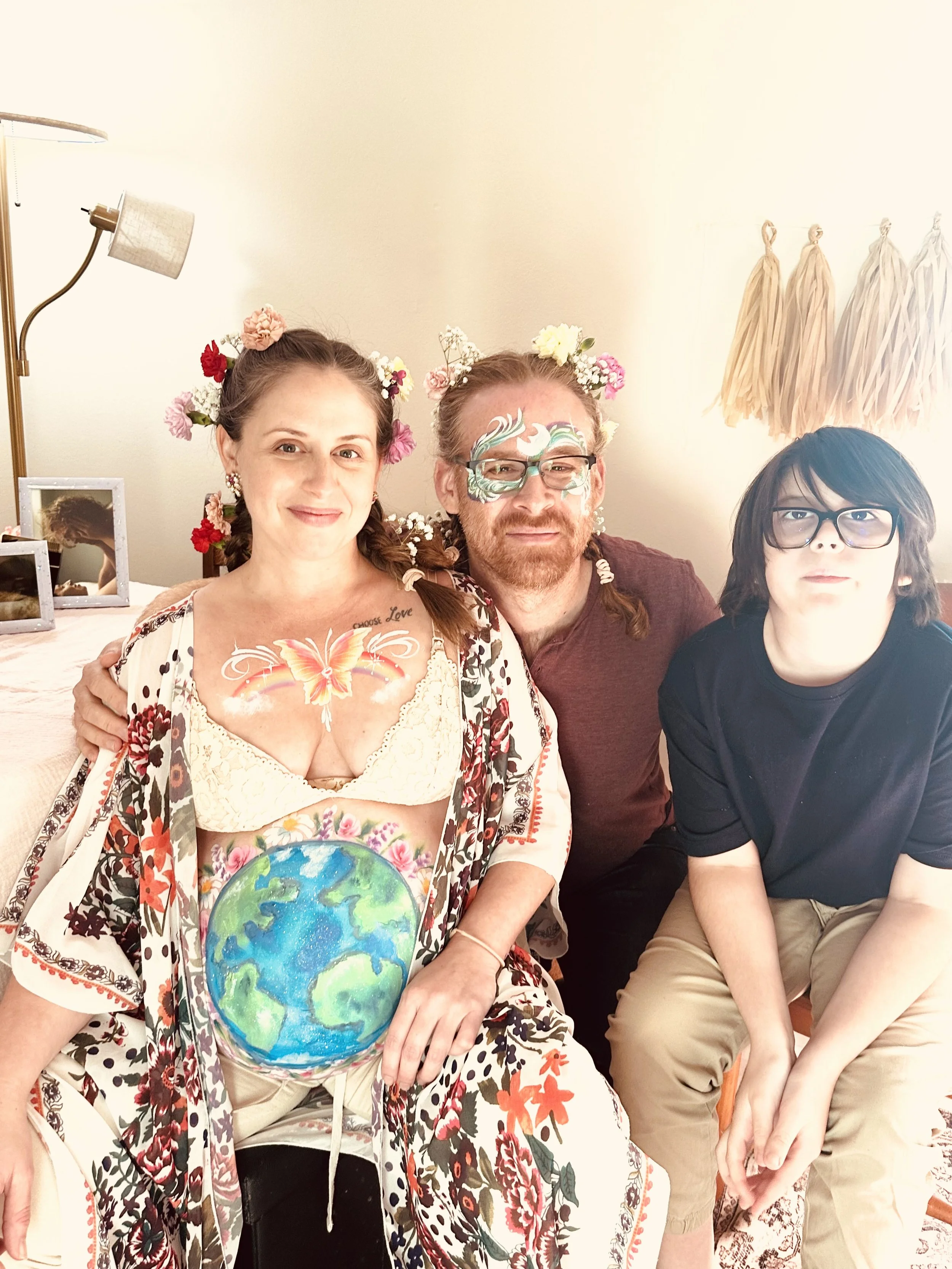
One of the best parts was that I really got to have the couple hours after birth really honored. Because when I gave birth in the hospital, I remember people coming in and checking things and poking and doing all the things. And Kara was sitting there. She stayed with me for a while because of how big the baby was. She was like, I just want to make sure there's not too much blood on the other side. And so she was tracking that whole process. And I love it. I'm a Dork. So I love, I was like, tell me what's happening. We were like talking about birth as it was happening because I was done with the hard part. And so we were all like Laura, Kara, and I were just hanging out while Andy was cooking the placenta. It was like a girl's day, you know, with our wines and we're just hanging out. Um, and so it was nice having I pretty much had the entire day completely by myself with the baby. We were just snuggled up on the bed. And I just think that was the sweetest. Like it was the sweetest memory. And then, yeah, having a partner who was so loving. My first birth, I didn't have that. I wasn't with the right partner. And so I didn't have that. And this I felt like a queen. There was actually a moment in the birth where like it was during transition, or right about right at the beginning of transition. And I looked at Andy and I was like, You better pamper the shit out of me this week. Like, I want to be so pampered. And he was like, You got it. And I was very pampered. And we don't have all the resources in the world. I couldn't hire all the supports and another world, another life. So it's just he and I being here with each other, but it was enough. Like we didn't need much more. And that's really cool. I bled a lot because of how big the baby was. And the breastfeeding journey was easy. But I think the most interesting thing that's been different from my first postpartum experience, because I was 26 with my first baby, and I'm 36 now, was how much hormonally, how much more I would feel the hormonal drop post-birth. So I don't remember, I remember 26 bouncing right back into life. I was like just already me. With this, it was much more of a, oh, I have to just cry for two hours. Oh, interesting. Oh, I have to, I feel all sorts of feelings that were really big. And I wasn't expecting that as much. Andy did a beautiful job holding it, and Laura wouldn't hold it, and I had friends that were here. And really the power of community. Astoria is incredible because we have so many beautiful people here and local moms. I started a mom group out of thin air because I was feeling really lonely. And I posted on momely, I said, Does any other moms like that have recently given birth? There's over 65 women already in that group.
Lisa: 50:13
65. I think I saw that post and I was enjoying seeing so many people chime in and be like, Yes, please.
Genevieve: 50:20
So many. And we just we meet very casually. Someone gifted us their yoga studio. So we were in her yoga studio and sacred space. No, we're a different one. And so we just sit and everyone goes around and talks about what's going on, what they're struggling with, and that's it. And that's really simple. And I've already made so many friends, and that's what we're doing. It's helping each other make connections, and that's been really helpful, like very much so in the recovery. And then the other thing, so I didn't tear with my perineum, but I tore my labia. It's called a labial graze, uh, which was just annoying at the birth. Kara was so funny. She was like, This is totally cosmetic. Do you want me? I don't know. I could sew it, I could not, I don't know.
Lisa: 51:05
That's the same thing with my birth, my second birth, too. She was like, It's a little tear, I can sew it. Yeah, I love the option, right? It's so cool to just be given the option.
Genevieve: 51:14
We don't have to, it's up to you. And so that recovery was a little bit annoying just because it's just like in your way.
Lisa: Did you choose to have stitches or no?
Genevieve: She did one stitch, but I don't know if it held necessarily. Kept being annoying. And so what I did was I heard from another midwife to put oil, just keep oil on it. So I've been just putting vitamin E oil like all the time, and that's helping so much. Great. I didn't expect. I don't know if the labia is gonna end up going back together or not, it might stay. But I read somewhere online about this woman that that happened to her, and she said that they just started referring to her labia as Nikki because it had Nicks. And I thought that was really sweet. And so I just told my partner like this just might be my labia. And he was like, I don't care at all. And I was like, Cool, me neither. But the oil is helpful for how annoying it felt. Just in the case, Eddie Blitzner has the smell. Finally, I couldn't figure it out. But yeah, and then getting back into intimacy was another interesting thing because sex has always been my genius. It's the place that I know. I ever since I was young, I was a trained dancer before, and then I brought my dance training into sexuality because it's really the same thing, right? Where your breath is going, the nuances of touch, like all those things are very much I've never thought about that.
Lisa: I love it. Yeah, like a tango dancer bedroom, same thing, right? Yeah.
Genevieve: 52:43
That's why we like watching dance, I think partnerships and dance. I've always been very confident about what I can do with my body and how I am intimately. And I'm the one that all my friends call to ask the questions. And it's been interesting being intimate with my partner again because my body is I don't feel as confident in it, I don't feel as sexy, like all those things that I used to feel. And so I've had to really go internal and find other ways of loving myself and loving him, and then allowing myself to express myself intimately without the pressure of performance, right? And so we've been having a lot of fun with just playing games. He'll come home from work and I say, Okay, let's just play a game where you just tell me something, one thing that you want me to do to your body, and I'll do it for three minutes, and then I'll tell you one thing I want you to do to my body, and I'll you'll do it for three minutes. And we just right, and it starts to get silly and funny, and sometimes I cry because something and I can't feel it because my body's still healing, right? And and then so and then he'll hold me while I cry, but it gets things moving. And I just see a lot, especially with the mom group, a lot of women that once it starts to get more challenging, they just go, I'm not gonna try, or I'm just gonna say I don't need this anymore, or say I'm still healing. And when we are, we are still, I'm definitely still healing. But there's a way of being intimate still in the healing. And especially if you're nursing all day, you're tired. It's the last thing you want to do is give. And so I can say to my partner, like, I so want to be with you and connect with you, but I feel like I have no spoons to connect, like I've nothing. And so we'll get creative with what we can do, how can we connect? And it's that next level that's been really sweet, the way that he's very receptive of maybe it's that he's gonna give me a massage and I have to let myself totally receive, or whatever it is, or he gives me pleasure and I have to receive, and I I don't have to give back and it's okay and it's not tit for tat. So all these pieces, I think, post-birth for me has just as a sexologist, it's been cool to go through my own challenges with it because I feel like I'm putting on my kind of Carmen San Diego hat, going like, what's happening, right? Like, what is right? And then the hormonal changes and it's affecting everything. And so it's cool. I think it's something that as I go through it, I'll have the opportunity to keep thinking about what's going on in my own body and then be able to speak to women about what's going on in there as post-birth.
Lisa: 55:14
Yeah. Yeah, thank you. This is so interesting to sit with and ponder some different aspects. One thing that's coming up for me right now is this idea that a lot of us feel touched out when we're caring for and holding a baby throughout the day and feeding the baby throughout the day. And how can we, in that feeling of touched outness, still find ways to be intimate with our intimate partner? One thing that's occurring to me maybe is just some eye contact, just like sitting and looking into each other's eyes. I'm curious if you have other ideas. If someone says, I'm feeling touched out, what are ways I can still find pleasure and be intimate with my partner?
Genevieve: 56:00
One of the things that changes, and I've learned just I there's a lot of research on this actually, that one of the things that happens through birth, the process of birth and recovery is that your nervous system actually changes and rewinds, right? And so when and the sex is all about the nervous system, pleasure is all about your nervous system. And so often someone will say, I'm touched out, but what's actually happening is a specific type of touch because that doesn't work anymore. And so there's a lot of different ways that you can be touched in a lot of different areas. And so what we do, I always say with sex challenges, it's like, how curious can you get? It's like in birth, too, when you're like, oh, this position sucks instead of just staying there. What else? What else? What else? How creativity and curiosity. Yeah. Like, yeah, what can I do? And it's the same in the bedroom. And so what's interesting is before birth, I used to love when Andy would touch me really lightly, like just really light. And he did it a lot during the birth. It felt great, like just really light touch. And it was such a turn on for me. And I don't mind doing it on myself, but now when he does it on me, I want to smack him. Like I can't so interesting. I'm just so and then like it bothers me so much. And so I told him after the birth, I was like, I need you to like deep pressure. Let's try deep pressure. And so now he touches me with really deep pressure, which wouldn't, it seems like that wouldn't be a turn on because at first it's very relaxing, right? But what I've learned about pleasure, and it's something I teach all the time, is that bodies actually can't get turned on before they're relaxed. They have to be relaxed. Makes a lot of sense. Yeah. And so what's actually happening, I think, a lot of postpartum moms and moms in general is that they're just not relaxed. And that's why there's no arousal.
Lisa: 57:43
And makes so much sense with the adrenaline oxytocin component. Yeah.
Genevieve: 57:47
Exactly. Yeah. And so what I'll often do is have him just help me relax. Like we'll take a nap or he'll give me a massage. And I, and then with no pressure to feel arousal at all. And we make ourselves say, like, absolutely no pressure. And what happens is if we do that regularly, like we have a nightly connection. So if we do that regularly enough, chances are like every couple days, I'm gonna feel a natural arousal from relaxation. And that and I'm a big proponent of natural arousal instead of forcing it. Women are used to forcing it. So we wait, right? But then when I start to feel that little bubble, and it's been weird post-birth because arousal is very small of a bubble. Like it's not, it used to be way more low than the tiny little bubble right now. I let him know, and then we start to figure out how he can fan the flame. And it's clunky and it's weird and it's not perfect, but I think the connectivity and the creativity and the lack of pressure is what's helping both of us feel okay, it's not just like this horrible dry time of our lives, right?
Lisa: 58:56
Beautiful. Thank you. You're giving so much all of us, listeners and myself included, just a lot to really think about and sit with. Thank you.
Genevieve: 59:05
Yeah, yeah, it's just beautiful and sex is not the only way to share love and the only way to connect, but it is a beautiful tool, right? Like I think it's just a tool to show your partner and to receive from your partner how much love there is. That's what I see. And sometimes if that's not available, you can do it through words or anything else. But it's nice to have it as an option instead of just saying that's not an option anymore because of this or because of what's happening in our bodies. So yeah, that's how I see it.
Lisa: 59:35
And how I'm playing, yeah, I love that approach. Yeah. The curiosity piece of it really resonates with me. Yeah. Yeah. Not just shutting it down, but thinking differently.
Genevieve: 59:47
Yeah. I think that's what I think we get confused because we see sex as like this thing on the screen where two people are heavenly passion, like crazy passionate. And then, and that's not what it's like on long-term relationships, being parents. Like it's not, you're not just gonna walk in the room and be like, wow, right. That's a different vibe. Not to say that we're not attracted to our partners, right? But it's just a different vibe than the first time. And so you actually get to be really creative with cultivating it, similar, which to me feels like a dance, right? Like if I'm choreographing a dance, I want to build passion. And so you do the same thing, and you can get really funny. Like Andy and I are really silly, and we make it a game instead of a way that we can get it right or wrong. It's just a funny game of let's try this, let's try this. And then we'll laugh when it doesn't work. We're like, that was so silly, that didn't work at all, but it was fun to do. So fun, the playfulness.
Lisa: 01:00:38
That's something that all too often for many of us, just as life is hard and adulting, you know, and we have to be intentional with being playful, finding ways to be playful.
Genevieve: 01:00:50
So I love that. And I had that even in the birth, which I didn't talk about when I was sharing the birth story, funny enough. But after the shower, I came back in the room and I remembered what my friend Deborah said, where she was like, if you feel stuck in labor, make sure to boost oxytocin. That's her mantra because she's a pleasure birth. And so I was like, All right, what can I do? And I was like, I don't want anyone to touch me, so it's not that. I don't want to touch myself, but it's not that. And so I was like, I love dancing. And so I turned on music, really kind of silly drumming music. And I had Andy come in and play his bongos and I was singing and dancing, and we were laughing, and we were ridiculous. Like it was so ridiculous while I was laboring, but that playfulness and silliness moved me through a transition. Like, I don't even remember there being a transition because we were distracted and enjoying. And then I was like, I don't understand what because everyone was prepping me for the transition. And I was like, I don't know, it was much harder like when the sun was down and I was tired. That was the hardest part. Very interesting, right?
Lisa: 01:01:54
Oh, that's fantastic. I'm so so glad that you remembered to mention that because that's huge to me. I mean, I'm envisioning it.
Genevieve: 01:02:03
Yeah, so cool. It was and then the Kara came in and started singing. She was like, You got a great playlist. Everyone was just it was a party. It was the party.
Lisa: 01:02:16
Amazing. All right. As we start to wind things down, just any final thoughts that you would like to share with listeners or leave listeners with. Let me see if I have anything that feels important.
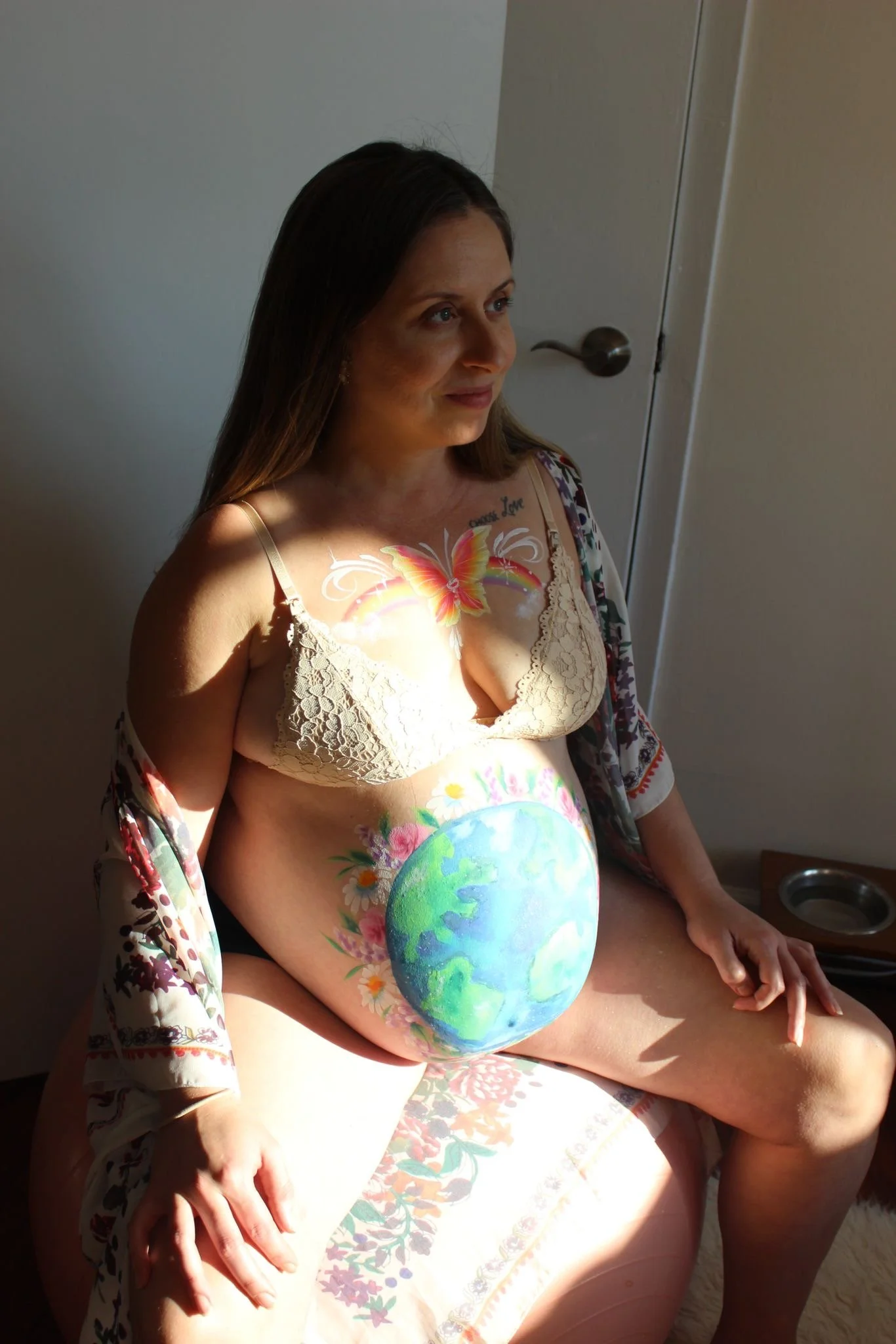
Genevieve: 01:02:31
Yeah, I'm leaving this the listeners for people that are pregnant or helping people in birth, but I think I told Kara this after when I was reflecting on the birth and I told Andy this. It was so interesting to me that my first birth, I had the epidural and it was cushy, right? The nurses were there, everything was safe. But I felt powerless, right? I felt confused during a lot of it. My emotions were like a feeling of I don't really know what's going on. I don't know what this person's doing with the monitor and the thingies, and who is this coming in and out of the room. I don't even know who the people were, and I didn't even know when they gave me the pitocin. I found that out later. So there were all these strange kind of confusing moments. And I was really, I really wanted to make sure that my birth didn't feel like that again. I wanted to feel like the power that I knew inside of myself that I could stay empowered and I could stay in the driver's seat, which I was nervous about because earth is such a kind of altered reality kind of place. You're not thinking clearly, you're not really able to speak, like even at home without any medication, I still couldn't during certain points of it. And so I was worried that Kara wouldn't be able to read me correctly, or I would still have some sort of weird pressure to do something. I still came in with that. And I remember at the end of it, I told Kara, I said, while the sensations were so intense, like at one point during, I think it was right at transition, I yelled at Andy and I was like, why are we doing this? Like I had this moment. And he was like, good, that means we're almost there. Because I told him I would say that to him at some point. Um but even though the sensations were so intense, and I was and I couldn't, I can't even compare, I can't compare to those sensations. And in many ways, I guess pain was more prevalent, right? I never felt out of power and and I never felt disrespected, and I never felt pushed to do anything I didn't want to do. Everything they did to me, they like triple checked. Like whenever everything was happening, they're Are you sure you want this? Yes, is this what you want? It was very clear about the whole thing. And I told Kara, I was like, that the most important thing about the birth was that I left it feeling that feeling. And I just, I don't know, I want people to know that they can feel that in birth because I don't think our system's currently set up for that.
Lisa: 01:05:01
So yeah, you're so right. Thank you for sharing that.
So I will be sure to include your information on the show notes page, your website and whatnot. But are there so say that there are pregnant folks or new parents or non-new parents for that matter, who or doulas, birth workers who are interested, anyone who would like to work with you. Do you work with all of those different populations as a sexologist? And how can they work with you?
Genevieve: 01:05:26
Yeah. So I work because I'm also a doula, right? And I could I either work just in the birth itself, but I work specifically with pleasure-based births and I only do home births. So I have a very niche space right now and where I go. And so I help train whoever the pregnant person to help access their body before the birth. So what's orgasm like for you? What's pleasure like? Let's bring that in so that when you're in birth, you can use it as a tool if you want to. And then the postpartum phase for the couple is one of my favorites to help. I think most of my clients are in that. Phase. Postpartum, they can't figure out sex again. Things feel weird. Hormones are different. All the ways that used to work don't work anymore. That's what I like to help. Couples are really my favorite. That's my favorite place. Because when couples can get it again and they feel like, oh my gosh, like we can still have fun. That's my oh my gosh, we can still do this. We can still connect. Because ultimately I just want to see families thriving, right? And this is one way that they can really thrive. Yeah. So all populations, but I definitely have that my favorites are when I get my couples for fun for me.
Lisa: 01:06:35
Nice. Yeah. I knew I knew you had mentioned working as a doula, but I just wasn't sure if you were doing that work currently or not. Well, yeah, I've been taking a year off to nurse the babe, but then I'll be back. Wonderful. That's so great to know. Well, thank you so much, Genevieve. It's been so much fun. I have loved hearing what a badass you are. What a beautiful birth story and uh excited about your work. And it's just been great to hear from you.
Genevieve: 01:07:03
So thank you so much. Thank you so much for this time and for your sharing of the story. I really appreciate it.
Lisa: 01:07:10
We recorded this episode quite a while back. So I wanted to provide an update that Genevieve is now a member of East River Doula Collective. We're so happy to have her with us in our Doula community. So if you're interested in working with her, you can visit East Riverdoulas.nyc to be connected. I'm also including a link to find her online. Today I'll touch on two quick things: the LEAP procedure as well as shoulder dystocia. For anyone unfamiliar with the term LEAP, it's an acronym that stands for Loop Electrosurgical Excision Procedure. It's a common treatment used to remove abnormal or precancerous cells from the cervix. What happened in Genevieve's pushing stage sounded like something called shoulder dystocia, which is when the baby's head is born but a shoulder gets stuck under the pubic bone. This happens with 7 to 15% of babies, but usually can be resolved without needing a cesarean. You heard how Genevieve's move into an asymmetrical position was just what baby needed, along with a little assistance from the midwife to dislodge the baby so she could be born without needing to transfer to the hospital. What you heard in today's birth that resolved the shoulder dystocia and helped baby be born vaginally was likely a technique called flip-flop, with flop being an acronym. The F stands for flip the birthgiver onto all fours. This first step is a technique specifically called the Gaskin maneuver. L is for lift leg for running start, or essentially a kneeling lunge, usually with the right foot forward. O is for oblique. The midwife or OB manually rotates the baby so that their shoulders hopefully move to be across the wider opening of the pelvis instead of against the pubic bone. And P is for posterior, meaning the clinician helps the baby's posterior arm to be born. The first step of going on to all fours in the event of a shoulder dystocia sometimes can dislodge the baby's shoulder, both because we always say motion is lotion and could in and of itself help the baby move down and out, but also moving off of one's back to all fours significantly increases the opening in the pelvic outlet by up to around 30%. This technique works around 83% of the time. There's also another technique in obstetrics called the shoulder shrug maneuver, in which the OB or midwife manually tilts the baby's head and then reaches in and loops two fingers, their pincer grasp, around the baby's shoulder to help them be born without injury. And the most common approach in hospital births specifically is called McRoberts maneuver, which has the birthing person flat on their back and getting their legs into a super awkward position. It's usually combined with something called intrapubic pressure. When only McRoberts is used, it's only about 42% effective, but doing both together increases the success rate up to 90 to 95%. However, my biggest concern about this approach is more potential for severe perennial tearing and pelvic floor damage because of both the positioning and the aggressiveness. With any shoulder dystocia, there's more likelihood of pelvic floor damage. So working with a really great pelvic physical therapist or occupational therapist will be a really wise idea for anyone who's birthed a baby with shoulder dystocia. I'll link to several articles and videos on the topic of shoulder dystocia, as well as various techniques used to resolve it in the show notes for this episode over at birthmattershow.com. Okay, next time we have our third in the series of three consecutive home birth stories. Here's a sneak peek of what's up next time.
Alaska: 01:11:22
I felt him like corkscrew through my pelvis. It was literally, I felt like a cartoon, like, I had to lift my leg, and I felt his head just come down so insanely with one push. And he was like about to come out. And I remember like, because when you're in labor, you're not super rational. And I'm leaning over the side of the tub, and I'm in this place where I'm like, should I hold him in until the birth assistant and the birth photographer get here? Because I really do want photos, and I feel like the birth assistant should be. And then this other part of my brain was like, What are you talking about? You couldn't hold him in if you wanted to.
Lisa: 01:11:53
Here's one final thought I'll leave you with today. Genevieve shared that in early labor, she loved using a phrase she learned from midwife Robin Lim, also known as Ibu Robin, who is a fierce advocate for peaceful birthing practices. The phrase is arms crossed, chin to chest, I love you. I learned that Robin talks about if a baby is left undisturbed at birth, they will assume this position, one that seems to be an act of love and peace toward the birthing parent and the world. I'll invite you to try crossing your arms over your heart, tucking your chin, and sending love to the baby you're growing if you're pregnant, or if you're not pregnant, sending love to someone you love. Thank you so much for listening to the Birth Matters podcast. We are here because of you. If you have a birth story that you'd love to share, please pitch it to us at this email podcast at birthmattersnyc.com. And also, if you have ideas for types of birth stories that you haven't heard yet or other content you'd like to see us air on this podcast, please also email us. And as always, if you enjoy this show, which hopefully if you made it this far, you do, please give us a like or a follow or a review. Until next time, be well.
