
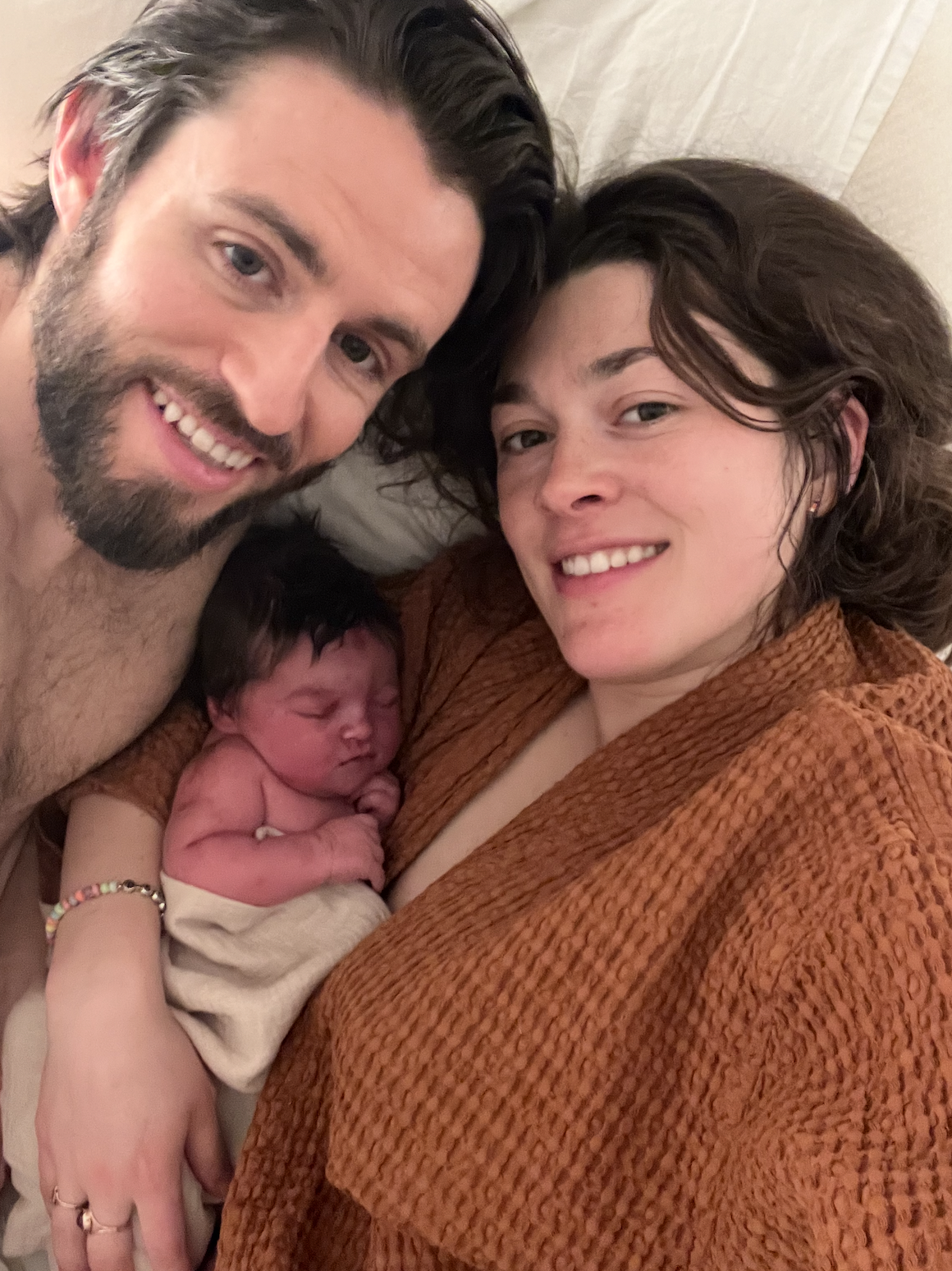
In this episode, Brooklynite Lindsey shares all about her home birth experience with midwives. Lindsey walks through her decision-making process, from being inspired by a doula friend in LA to navigating a long, multi-day labor that nearly ended in a hospital transfer. She shares candid details about the surprise of welcoming a baby girl after months of "boy energy," and the mostly peaceful postpartum period that followed. She also opens up about breastfeeding support, postpartum care, and the very cool bond that formed between her newborn and the family dog.
Resources:
The Business of Being Born* (documentary)
Flower of Life Chiropractic (Brooklyn & North Texas)
Stephanie Propper acupuncture (based in Brooklyn, home visits)
Red Moon Wellness - Lena Degloma (Brooklyn)
Elle TENS unit (specifically designed for labor)
Lou Read 131 - teaser 2 - priscilla - A Surprising Aspect of 1st Trimester Pregnancy Loss- doula
Reclaiming Childbirth* by Rachel Reed
Episode 76, Birth Matters Podcast (Eileen’s story) - more info on prelabor rupture of membranes
*Disclosure: Amazon links on this page are affiliate links; Lisa will receive a small commission on any products you purchase at no additional cost to you.
Sponsor links:
Free “Pack for Your Best Birth” Packing List (with free mini-course option)
East River Doula Collective (find a doula, attend our free “Meet the Doulas” event)
Birth Matters NYC Childbirth Education Classes (Astoria, Queens and virtual)
*Disclosure: Links on this page to products are affiliate links; I will receive a small commission on any products you purchase at no additional cost to you.
Episode Topics:
Introduction of guest Lindsey Wheeler, a podcast listener sharing her birth story
How Lindsey and her husband Kendall found out they were pregnant and their early decision-making process
Influence of a doula friend in Los Angeles who introduced Lindsey to the idea of home birth
Watching "The Business of Being Born" together and Kendall's openness to home birth despite his more scientific background and doctor parents
Initial exploration of a hospital birth with a midwife, and why that path didn't fully align with her goals
Choosing home birth midwives and selecting Cosmos Midwifery (Chloe and Jenna)
What prenatal care looked like with home birth midwives compared to a traditional medical setting
Deciding to work with a doula (Lou) and the importance of that relationship
Discussion on hospital protocols, evidence-based practice gaps, and the "adversarial" feeling some birthing people experience in hospitals
Preparing physically and mentally for birth: chiropractic care, acupuncture, and Chinese herbal medicine
The value of having pregnant friends going through the same journey at the same time
Taking a birth class and feeling like an outlier as the only home birth family in the group
Reflections on birth as a journey, not just an outcome, and resisting a purely "outcomes-driven" mindset
Lindsey's overdue pregnancy and the onset of early labor signs
The long, multi-day labor process, including irregular contractions and disrupted sleep
Using a TENS unit for pain management during labor
The role of the doula and midwives throughout labor, including timing their arrival
Cervical checks, dilation progress, and the choice not to break her water early
Use of an at-home IV for hydration and energy during a long labor
Bringing in an acupuncturist for house calls to help progress labor
The moment labor intensified to the point of considering a hospital transfer due to fetal heart rate concerns
The decision to stay home, change positions, and successfully deliver at home
The birth itself, including pushing, delivery position, and the emotional reaction to discovering the baby was a girl after expecting a boy
Immediate postpartum experience at home, including bonding time and first shower
The peacefulness of the week following birth with no visitors
Preparing the family dog for the new baby, including board-and-train before the birth
Stories illustrating the bond and protectiveness between the dog and the baby
Postpartum midwife follow-up visits and the two-week and six-week postpartum checks
Breastfeeding journey, including working with a lactation consultant before and after birth
Discussion of infant weight gain expectations and pressure around growth curves
Postpartum recovery support, including in-home massage and continued chiropractic care
The role of her partner Kendall in supporting her postpartum recovery
Deciding who to tell (and not tell) about the home birth plan, including medical professionals in their life
Final reflections and advice for expectant parents on trusting their birth team and embracing the birth journey
Mention of "Reclaiming Childbirth" as a book that shaped her perspective on historical birth practices
Closing thoughts on returning to work and appreciation for extended parental leave
Interview Transcript
Lisa: 00:00
You're listening to the Birth Matters podcast, episode 139.
Lyndsey: 00:04
The baby comes out, and I'm like, is it a boy or a girl? And they flip the baby over. And I was like, oh my God, it's a girl. And Lou was recounting the story to me. And she's like, you were cheering. So happy when you found out it was a girl. The whole time we thought we were having a boy. Um, and so the fact that it was a girl was like the best surprise ever. So amazing.
Lisa: 00:36
Hey there, and welcome to the Birth Matters Show. I'm your host, Lisa Graves Taylor, founder of Birth Matters NYC, and director of East River Doula Collective. I'm a childbirth educator, birth doula, and lactation counselor, and I've been passively supporting growing families since 2009. This show is here to lessen your overwhelm on the journey into parenthood by equipping and encouraging you with current, best evidence info, and skillful interviews with parents and birth products. Please keep in mind that the information on this show is not intended as medical advice or to diagnose or treat any medical conditions. If you enjoyed this show, we'd be incredibly grateful if you'd share it with a friend. You can follow and share our posts on social media at birthmattersnyc or simply tell them to search for birth matters wherever they listen to podcasts. If you listen to the teaser at the end of the prior episode with what's up next, I have to say on that. That teaser was Genevieve, who turns out will be our guest on the next episode. Today we will actually have Lindsay as our guest. Lindsay is a podcast listener who reached out to share her own home birth story, and it's a good one. We get into why she chose to give birth at home after her dear friend, who's a doula in LA, recommended it, what it was really like when her labor stretched on for days, and in the posting stage almost sent her to the hospital, and the moment she found out after months of feeling sure she was having a boy, that she'd actually had a baby girl, as you heard in the teaser. We also talk about her postpartum experience, breastfeeding support, and even how her dogs seemed to know exactly what her new baby needed. I think you'll really enjoy this story whether you're planning a home birth or a hospital birth, or if you're still exploring your options for birthing location. I'll also mention one more thing that this will be the first of a series of three home birth stories. But first, before we jump into the story, a few words from our sponsor. East Riverdoula Collective's next Meet the Doolas event will be on Wednesday, September 30th at 6:30 p.m. on Zoom. And our next virtual Savvy Birth 101 workshop is one week after the Meet the Doo List on Wednesday, October 7th at 7 p.m. on Zoom. You can find links for more information or to sign up for either of these events on the Top Banner over at birthmattersnyc.com. So if you're expecting a baby or trying to conceive, we'd love to see you at either or both of those events. Also, our all-in-one childbirth class series are filling up really quickly for the fall. So if you're due in the next few months, be sure to grab your spot soon. And just a reminder that if you don't live in New York City or you just don't want to have to travel for childbirth class, we would love to have you join us for our live group interactive class series virtually on Zoom. A lot of folks have found this to be a very convenient option while still having the benefit of being able to chime in and ask questions in real time. This format is also priced lower than the in-person option, so it's a great option for folks with a more limited budget. You can check out this option as well as several other childbirth class options like private classes and our online on-demand course, all over at birthmattersnyc.com. All right, now let's hear from Lindsay.
Lyndsey: 04:02
Hi, I'm Lindsay. I live in Prospect Heights with my husband Kendall and our dog, and now our baby girl. I work in marketing mostly in the tech space, and I gave birth 15-ish weeks ago. So I'm almost four months postpartum now.
Lisa: 04:23
Great. Thank you. Would you please just take a little bit to share anything and everything you'd like to share about your pregnancy, your choice to give birth at home?
Lyndsey: 04:34
We found out we were pregnant in August, so almost a year ago. And there was not a lot of struggle or anything like that leading up to getting pregnant. And also the pregnancy itself, I would describe as pretty uneventful in a good way. Obviously, pregnancy isn't the most comfortable experience, but in general, I was low risk. I didn't have a ton of nausea, vomiting, etc., which I know can be really debilitating. So I feel really lucky in that regard. And when we found out, I early in the pregnancy started looking into and thinking about how and where I wanted to give birth. And I have a friend who lives in Los Angeles who is a doula. And a couple years ago, she started planting the seeds of other ways besides just a normal hospital epidural birth, other ways to give birth. And she was really pro-homebirth. And at the time when I had first heard about this, I had never, I wasn't pregnant, I wasn't considering it at all, but it started just implanted my mind as a possibility. My mom had an easy pregnancy, but had a very traditional hospital epidural birth. And so my whole life, that was just what I assumed would be what I did. And then when I finally, when I did get pregnant and started looking into the options more seriously, I did pursue home birth midwives as one path. And my husband, who's he's more scientific and his parents are doctors, I think I was not sure if he would be open to the possibility of doing a home birth. So we watched the business of being born together, and I shared some of the materials that had inspired me, and he was totally on board. He was very supportive. And so after we decided that was the path we wanted to go, I actually had first looked into the more, I don't know, collaborative model where you give birth in a hospital with a midwife, and I spoke to a couple of providers like that, and they asked what my birth goals were. And when I described the ideal birth for myself, they were like, I'm gonna be honest, we can get you part way there, but we're not gonna be able to give you exactly what you're looking for. And so at that point, I was like, okay, I think we have to go full home birth midwives. So I spoke to two different midwifery groups, and I ended up going with Cosmos Midwifery, which they're a duo, Chloe and Jenna. And one of the reasons, aside from just connecting with them, was that they're two of them. And so if there was ever another birth happening at the same time, I had confidence that the odds were high that I would be delivering with someone that I had worked with in the past and knew. And so that was a big priority for me. And so I decided to work with them and then from the very beginning. So I didn't do any kind of prenatal care with any other providers besides the midwives, and it was a really amazing experience where you go to their office, they're based in Green Point. It feels more like you're almost in a therapist's office, not a medical environment. It's very much about building rapport over the nine months that you're pregnant, and so that was really positive. And pretty early, and I've decided on midwives before a doula, but I did know that I also wanted it more for the doula. And I think actually Cosmos requires you to have a doula.
Lisa: 07:49
Maybe not. A lot of number midwives do at least highly recommend it.
Lyndsey: 07:54
Yeah, they definitely require you to do um prenatal education for for a first-time birth. This is my first, and so quickly I started interviewing doulas as well, and I ended up deciding on Lou Reed, who I just really connected with. She's like a meditation teacher and she's a doula. She had given birth in a home birth a year before. So she was not only had she been to a lot of those births, but she also had one herself recently. So I felt really confident with that choice. And right from the beginning, I had my team.
Lisa: 08:28
I love that. And two things I just wanted to comment on. I'm so thankful that the hospital providers that you spoke with were candid and honest and very transparent with the fact that they're working for a hospital. And even if they would like to give you a home birth experience, they are working for a hospital and they have to, to a good extent, abide by their protocols, which often are continuous monitoring and IV fluids and things that you might not have wanted because they're not always evidence-based or necessary, right? I don't know. I'm just giving examples, not necessarily things that mattered so much to you. I don't know. Yeah. Yeah.
Lyndsey: 09:06
I think I said I wanted a low intervention birth. And I think I probably did mention those continuous monitoring as one. And I wanted to, I think it was like a I described the environment that I wanted to be giving birth in from a low light, peaceful, low, all of those kinds of things. And they were just like, hospitals by design are not that. And the woman I spoke to was a midwife. So I don't know if I had spoken to a doctor, would that candor have come out? But she was like, I've seen home births and I've seen hospital births with midwives, and we can get you close, but we can't get you to exactly what you want.
Lisa: 09:48
Yeah. Yeah. What I hear OBs most commonly say is not directing toward home birth so much, but in fact, hardly ever at all. But instead saying, you're just gonna want to labor at home for a good long time. Come as late as you can to the hospital to have a low or no intervention birth or low intervention. Yeah, yeah, exactly. And the other thing, the other thing I wanted to ask about, unless you had another thought specifically on that, was going back to your friend, your doula friend in LA. Do you happen to remember? I'm just curious about a little more detail if you can recall what were the reasons that she recommended having home birth, and or like what so is there anything in addition to yeah, I remember a lot of this.
Lyndsey: 10:36
So we have spoken at length about her different experiences as a doula, and she described her role when she was doing hospital births as fighting. She had to fight the hospital staff, and she's a fighter kind of a person, and so she found that she was fighting on behalf of the mothers to get every little thing. She told me one time that she was like, Yeah, I was almost removed from a hospital because I was fighting against uh OB recommendation or something like that. And I know that I'm the kind of person who I'm I really I think everyone to some extent enjoys harmony, but I am super affected by my environment, and I know that like energetically I can get into my head or I can shut down if the environment or the vibes are off. And so when she painted the picture of this in a very vulnerable moment, having to feel like you're against your team, that was something that I really didn't want to feel. And she said, in a hospital, that is more often the case. And she's like, if you do choose to do hospitals, there are better places and worse places to give birth. At least she knows the LA system, she didn't work very well. But figuring out which places would be ideal for that was really important if I did decide to do hospital. And I also knew that if someone told me something was gonna save the life of my child or whatever, obviously I would do it. But it often I think is weaponized or manipulates the mother. And so I just didn't want to put myself in that position, just knowing the kind of person I am.
Lisa: 12:11
That is so brilliant, Lindsay. I love that you have that self-awareness and that foresight. And that you had a friend that helped you have that foresight more specifically.
Lyndsey: 12:21
I would not have, I told her after the fact, I was like, Thank you so much for giving me this idea. I would not have done it without your encouragement.
Lisa: 12:29
Yep. Same with Mayula in my second pregnancy. Yeah, it was her planting the seed in the early in pregnancy when we hired her a second time. That, but it took me many months toward the end of pregnancy that I was like, okay, I've done enough research now and soul searching that I want to do home birth. I feel safer doing that now, where I didn't at the beginning of pregnancy.
Lyndsey: 12:49
Yeah, I've always felt that way. I also think the way that I was raised, we weren't brought to the doctor for every little malady kind of thing. I was very playing in the dirt and get sick and get better. And that so I just was never more comfortable in a medical environment than in my home. And so that was the other piece of this is I do think that you should give birth where you feel the safest. I'm not a blanket statement everyone should have a home birth, but for me, it was like very much I felt strongly at peace with my choice from the beginning about that.
Lisa: 13:24
I also just want to highlight when you were saying energetically, you're very sensitive to things around you. In labor, I'm sure you know this, but listeners might not, we're in this fawn state because of the oxytocin when we're in labor. That's the love hormone, and we just want everybody to get along. And so that makes it harder to advocate for ourselves. It's what a terrible head space to be in and to be in an environment where you feel like you need to do that. Yeah. And yet that unfortunately often for someone who really wants a low intervention birth in a hospital, it's just not set up for that. It's set up for sick people and set up for worst-case scenario kind of stuff, which where everybody gets that treatment. Yeah, I had a partner last weekend in class who asked me as we were journeying through class, he said, why does it sound like this is an adversarial relationship? And I was like, I'm so sorry that it comes across that way. I wish it didn't, but it's because of this evidence practice gap. We know there's such a gap in what the research is telling us and what our intuition is telling us as well, and what is actually practiced in our hospitals. So that we're needing to bridge that gap, we're needing to advocate for ourselves and educate ourselves before we're able to advocate for ourselves, right? But it's so nice to be in a home birth situation where you're much less likely to need to pull out those self-advocacy strategies because it's just set up to be supportive of what you personally, Lindsay, were looking for.
Lyndsey: 14:52
Yeah. The other things that on the prenatal journey or the pregnancy journey that I would bring up, a few things. I had a few, I didn't use a lot of massage and occupying, I didn't do a ton of stuff leading up for the whole pregnancy, but towards the end of the pregnancy, I did start to like I wouldn't call this indulging, but I would say like take care of myself or prepare myself physically for birth. And I did start going to a chiropractor, so that was really great. I went to Flower of Life, which they are like, they are the place for pregnant and postpartum and even babies. And I had never gone to the chiropractor before, but I found that to be a really welcome adjust my body towards the end of pregnancy. That that felt really good. And then I also hadn't done a ton of acupuncture before this, but towards the end of pregnancy, I also did work with Stephanie Proper, who's a Chinese medicine practitioner and acupuncturist, just to get my body ready. This was in the last probably two weeks of the pregnancy to get my body ready for birth. And she diagnosed me as having, like I'm gonna maybe mess this up, but uh some imbalance, like a qi imbalance, blood qi or something like that. But basically it was a slow iron, needing more iron kind of situation. And so she recommended I go to Chinatown and get some herbs from the herb pharmacy and brew them and take them leading up to giving birth. And that was really fun. And those kind of I was due April 5th and I went over my due date by six days, and so in that week leading up to giving birth, I did my little field trip to Chinatown to get my herbs and brew them at home and do all that stuff. And I don't know how much of this was physically necessary, but there was definitely all of it was helping me kind of mentally prepare for birth and make me feel really ready. And I would highly recommend both of those practitioners. And then the other thing I would say about the pregnancy is I was really lucky to have a few friends who were pregnant and also live near me and also were due within days of me. So I had a very close friend who was due two days after me, and so we were going through the whole pregnancy together, and then another one who was due a week after that, and we would do our morning walks and we would recommend each other these various practitioners and check in mentally and everything. And the friend who was due around the same time also was philosophically aligned. She was doing an unmedicated hospital birth, and we were in the same headspace around some of the choices that we were making, which it honestly feels very it felt like we were the odd ones out in that regard because I took a birth class and I was the only person in the whole birth class who was doing a home birth or considering unmedicated or anything like that. But that having a friend along the journey living so close and in the same weeks of pregnancy basically was I would say like a huge driver of my positive pregnancy experience. I love that so much.
Lisa: 18:09
Yeah, and the practitioners, the acupuncturist, the chiropractor, you mentioned our top recommendations. So good, yeah. Yeah. And do you want to mention anything about the birth class you took?
Lyndsey: 18:20
I took a birth class with Lena De Gloma at Redmoon Wellness. Good friend, colleague. Yeah. And we did it at Brooklyn Flow, and it was, I think, three sessions. So it wasn't so much time, but I found it helpful. It was clear to me that philosophically, Alina was super aligned with what we wanted to do, but it was there were was no one else in the class who was really close to what we were planning. And yeah, I almost wish that there was a home birth or physiologic birth specific class that we could take, but it seemed like there are just not a lot of people who are doing that because not enough demand.
Lisa: 19:00
Yeah.
Lyndsey: 19:01
Yeah. And one of the reasons I was interested in talking to you and about the birth was just that it was such a transformative and amazing and positive experience that more people deserve to have because I hear so much birth trauma stories that maybe there'll be more people who are open and interested in it in the future.
Lisa: 19:18
Absolutely. And right now, the two groups that I'm teaching last weekend and this week, and anyway, I teach two groups at a time usually. And each of them has one home birth couple. And yeah, it's usually not more than one. I think only once in my 15 plus years of doing this work have I had two home birth households in one cohort. But it's you're spreading the good word just by being in that class. Because at least I don't know how Lena does it, but when I have folks who are giving birth at home, I definitely speak more to the differences. I always do anyway, but especially when I have people, I'll spend more time on explaining the differences between protocols. And it's really validating for the people who are giving birth at home to hear how different it is, hear those specific examples. And really educational for the people who are all the people who are having home hospital births, because it's very likely that if they don't switch this pregnancy that for a future potential pregnancy, they may make very different choices. A lot of people, once they do have a negative experience in a hospital, are like, whoa, I'm never going back there. Let me look at home birth or birthing center birth.
Lyndsey: 20:31
Yeah, that's what the Cosmos women said. They were like, more of their births are second births than their than first-time moms. Oh, and the other thing I would just call out is we did my husband and I did that, did the birth class, which was helpful in their hands-on practical type stuff that we learned. But Kendall is a big reader and he read the birth partner, the whole book, cover to cover. And so when he went into the class, he was like, Oh, I know what's going on. I know this. He was like, knew what was going on in the class already because he read that book.
Lisa: 21:02
So honestly, did he do post-its like my husband? He did post-its like that. And he's like Kindle, he it is Kindle highlighting everything.
Lyndsey: 21:10
But but like that is another way to prepare if you're more of a reader, if your husband's more of a reader or something versus like a practical class person. But yeah, I think mentally and physically preparing with all the knowledge, whether by class or by book, I think is important, especially for the home birth experience, where you're like more in the driver's seat.
Lisa: 21:35
There were a couple of things that you shared in your pregnancy section of your story. Do you mind if I read a couple of excerpts? Would that be okay? So I love this so much. I this resonated with me. You said, I've always been someone who values the journey as much or more than the destination. And so the idea of being able to embrace the birth experience for all that it is. versus numbing myself through it just to get to the baby at the end was very appealing to me. Just got killed reading that because so much, yeah. So that that is very much how I felt as well when I was giving birth to my babies.
Lyndsey: 22:14
Yeah. And I can talk more about that in the when we talk about the actual birth, but I think the pregnancy is part of it. And then obviously the culmination is the experience of labor and birth. But yeah, I think a lot of people today we're such a outcomes driven culture where it's like whatever happens doesn't matter as long as at the end you have an outcome, the outcome in this case being like a healthy baby. But in every aspect of life, I think the journey is really important. And I almost feel like if you don't have that pregnancy and then also the labor transformation, then the postpartum experience or the ones who have a baby, I imagine it would be even harder because I don't think that you can I think we're really about avoiding pain in this culture also. It's like how can I get the thing at the end with the least amount of effort or pain and I don't think there's a way to you just move the pain somewhere else. You might not feel labor and so thus you don't have a it doesn't hurt but maybe you feel the pain of having either not fully embraced going through that mental transformation or maybe there's an issue that happens in the hospital because of having had these interventions or whatever. And we just push the pain somewhere else. And so I think I was I wanted to do birth in the way it was supposed to happen according to nature, you know I agree.
Lisa: 23:48
And to add to that part of my thinking was I want to birth the way I want to parent I really want to be active and engaged with my children and I felt here and I've got that way that's the right way to think about things I just I want to get people to think so we're still gold oriented that it's easy to get the journey and there's a potential benefit and experiencing and engaging with that journey.
Lyndsey: 24:29
Totally I don't know and like I said I can talk more about it in the when we talk about birth but yeah I feel very like I can do anything because of the experience that I had.
Lisa: 24:41
I also loved your term your phrase biggest life hack that that you felt like on landing on home birth and experiencing home birth you said it felt like the biggest life hack compared to the highly medicalized experiences of my other friends.
Lyndsey: 24:58
Yeah maybe I don't know if other people would feel the same way but yeah I definitely feel that way and the postpartum experience has been I think positive as a result of that twist too.
Lisa: 25:08
So is there anything else you wanted to share about the prenatal experience before you journey on into sharing about labor?
Lyndsey: 25:18
No, I think that covered it.
unknown: 25:21
Great.
Lisa: 25:21
Yeah so feel free to start wherever you want to start. Okay.
Lyndsey: 25:25
So my due date was April 5th and I mentioned that I was going to Flower of Life towards the end for chiropractic and I remembered that Tuesday of that week I had an appointment and I was I kept making the appointments if I'm still pregnant I'll come if I'm still pregnant and my due date comes and goes and I'm like two days three days past and I was late and my mom was like you're probably gonna have you were late you're gonna have a a late baby so I was expecting that but I don't know if I really fully knew what each day weight was going to feel like but I went to Flower of Life and I remember starting to feel I had a couple of cramps that felt like like menstrual cramps that were long and when I was getting my adjustment and I was like huh maybe that's a contraction. They don't really tell you what a contraction feels like that was the one for yeah I wasn't sure what it was and but I took note and then that night the Tuesday night they would come and go they would like I would get a few they'd go away and then that Tuesday night I felt them but I was able to sleep and then Wednesday they happened again and they got more intense in the evening and I remember they were coming every 10 minutes or 20 minutes or something and I got sleep but it was like a really bad night of sleep and at that point I was like am I gonna have a baby tomorrow I'm gonna get am I gonna have a baby on Thursday like when is this this baby coming? And Thursday they started to pick up I think Wednesday we called the doula and our midwives and just gave them the update that I was starting to feel regular contractions. They were happening at night and they're like okay go to sleep and I always leading to going into labor during the pregnancy they're always like try to sleep try to sleep was like always the advice and I never understood I was like if you're having contractions how are you able to sleep that just seems crazy but it's possible it's when they're not that intense. So I would say Wednesday it started to feel like it was like labor was this was starting to be labor and so Wednesday night I had a horrible night of sleep. I think I slept three hours or something like that. And and so I was convinced that I was going to have this baby Thursday and then Thursday morning they slow down by the evening they start up again. And so Kendall and I were doing lots of neighborhood walks that was like a big thing. And so in the evening on that Thursday I would we did a neighborhood walk and they started getting really real and I Lou Ardula had given me a tens unit to have for when labor started and I wasn't sure when to start using it. I didn't want to start using it too early but for those who don't know this is basically electrostem little things that you can put on your back in your low back and it's shocking giving you a little stimulation and then when the when the contraction comes you hit the boost button and it intensifies the shock and basically distracts you from the pain of the contraction and I didn't really understand I was like I'm not having back labor so is this do I even need to use this and Louis like put it on like I promised just put it on and so as the labor started to intensify on Thursday night I put it on and I was like oh my gosh this is going to be my savior and it really was like I wore it I went through three different packs of batteries because I wore it nonstop for my entire labor. And so Thursday it starts getting more and more intense Kendall's frantically finishing his work like trying to get everything done because we know this is it's starting and I'm at the point where we're in the house I'm on my hands and knees I'm moving around but I still didn't need support. I don't think I mentally understood like when you need help, when you're not coping without help. I didn't fully understand what that meant. And so we called Lou. Lou was like I think it might be better if I wait to come so that I can get some rest so that I'll be fresh for you when you really need me. And Kendall was like that's funny we're calling our duo that's supposed to be there for our birth and like you're going into labor and she's not coming and then little did we know she was completely right.
Lisa: 29:40
Yeah yeah very common that we're like we have a sense that it's gonna be a long time and it's a little too early to come because it can actually slow things down to have a constant reminder that you're in labor.
Lyndsey: 29:50
And that but it continued to progress we talked to Chloe who was on on duty so Chloe's gonna be the one to deliver our baby and at Cosmos and we call Chloe and Chloe's is Lou there yet and we're like no and she's like sounds like if maybe you should get Lou to come now and so this was maybe 10 or 11 p.m on the Thursday night Lou comes over I'm I move into my bedroom we have this birth stool that Lou had brought over and so I was sitting on that using the tens dark bedroom and just in my zone while while they were they were helping me however that looked and so I think they started giving me counterpressure at that point but I really to that point didn't need it. And a couple more hours go by Chloe shows up and I'm very convinced that I'm having the baby on Thursday night like early morning Friday after midnight but that night and Chloe offered to do a surgical check to see how far along I was and I was like okay yes so she gave me a check and then she was like do you want to know if do you want me to tell you like how dilated you are and I didn't want to know the exact number and so she was like I'll just let you know like how I forget what she said but she was gonna give me some indication without telling me how dilated I was and so she checks and she's like okay you're like three quarters away there and in my head I'm like oh my god I'm like not close she's lying and in retrospect it I at that point I was only six centimeters I think and I was and she had given the option she's like there's your bag of water is bulging and it's there and I could burst it I could break it and then that might progress your labor faster but it also could make it much less tolerable. It could make it more intense and more painful. And so it's like a I don't know you choose your own adventure and we decided at that point that I didn't want her to break the water and we would just let it go on its own because if the ch if the odds were that I wasn't going to give birth anyway at least this way I could maybe get some rest that night.
Lisa: 32:00
And so choose your own adventure.
unknown: 32:02
That's great.
Lyndsey: 32:03
It's kind of crazy to think that you can change the trajectory of the labor by breaking the water or doing other things even in a non-hospital setting.
Lisa: 32:14
But I love that your midwife was giving you options and giving you benefits and risks and proactively and in a very respectful way because that's a very different communication style from what we usually get in the hospital where they're like, I'm gonna break your water. And it doesn't seem like it's an option nor do we know the benefits and risks.
Lyndsey: 32:32
Totally at that point we decided no and then the labor started to slow down again which was very frustrating. So I labored all night and then around 5 a.m and Kendall was up with that everyone was up and trying to make it happen. And I did feel that almost performance anxiety where when Chloe showed up I was like midwife's here let's go and then I did actually slow down and so around five in the morning Chloe and Lou were like you should go try and sleep Kendall go sleep he was he needed to get a night of sleep and I they're like you should try and get a few hours if you can so we both go into the bedroom he sleeps I sleep maybe for an hour. I don't know even how that was possible because at this point it was happening but it was just slowing I was not having a baby anytime soon at that point. And so I come out maybe an hour and a half later I see Lou and Chloe asleep on my couch and I'm like oh man I feel bad this is gonna be this is long and it's dawn and we get up and they're like okay I think we need to give you at this point I was going on multiple days of horrible night sleep because I was having these nighttime labor and I was running out of energy and so Chloe offered to give me an IV and I was like you know what sure like why not so she sets up an IV bag it's hanging from our hanging plant in our apartment. It was the most fucking world saying I will send a photo because it's hilarious. And so she gave me the IV and that gave me life literally and so at that point Kendall was still asleep Lou and Chloe were there. We were you know drinking coffee I was having contractions still so they would give me the pressure and then we would be talking and joking and stuff it was honestly if I wasn't in a lot of intermittent pain it was fun. It was this like all the women hanging out kind of thing and and Chloe was like I think we should get Stephanie proper back here. Stephanie the acupuncturist is known to help progress labor and she does house calls and so we brought Stephanie came back and she brewed some of those Chinese herbs that I had gotten in Chinatown the week before worst tasting I thing I've ever tasted in my entire life so bitter horrible and I was like unsure if I was going to be able to get it down because it I'm in a weird place and Stephanie you need to drink them you need to drink them. So she brewed the herbs I think she made them cool and then she got me a straw and added some sweetener to it. So it was like the best possible version of these really bitter herbs and I was gonna ask can you ask add sweetener good yeah it's just truly something I had never tasted and she was doing the counter pressure giving me points and trying to move the needles to really get the cervix to do what it needed to do. And so at that point Chloe was like I'm gonna go do my house calls that I have to do I'll be back when you need me. Lou also was like I'm gonna go take a shower get some rest and I'll be back but my recommendation is just do what you did Thursday night that got this going. You and Kendall should regroup go on a walk whatever so everyone leaves and Kendall and I are together just in the house and I'm like so at this point just very discouraged that's long. It's been days at this point. But being alone I think was helpful because we were preparing to go on a neighborhood walk and as we were preparing the 10 I was like how are we possibly going to go on a walk? I'm doubled over every minute or whatever. This is gonna scare people and I'm not gonna be able to get out of the house. So we and mentally are like we're gonna go on a walk and as soon as we mentally get there it picks up again and we're like no we can't go on a walk. So then I'm like laboring on the floor and realized I had this intuition that um when you're when you're having the contractions you're our whole lives we're taught to hold our bowels and hold our bladder but during the contractions you really need to let everything really be loose. And I think in my head I was having a hard time doing that because my body's used to being tense bowels and bladder and so I was like I just need to go sit on the toilet and that was the unlock because then I could be totally loose and I it's not like I was going to the bathroom but it was allowing me to feel like I could if I had to and so that got me into more of a labor rhythm. Kendall sat with me for hours. We were I was just on the toilet laboring and funny because we live in an apartment building where the vent is in our bathroom and I'm sure and you could hear the people in the bathroom I'm sure that our neighbors upstairs could hear it. And then we tried to move to a new position and as soon as I moved it slowed down. So we were like okay the toilet is the place and so then Kendall calls Lou, calls Chloe back and so they come and Chloe checks me again and I'm still not fully dilated and in checking me the second time my water broke and that I think was just needed at this point. And and then I was starting to feel the urge to push while I was in the bathroom and we had filled up the birth pool the night before I forgot this. They filled up the birth pool the night before thinking that we were gonna have a baby the night before so the water's cold. So kind of heating the water up we're getting imminently going to be getting into the pool and then I'm starting to feel the urge to push and Chloe's okay get in. So I get into the pool and she's checking me while I'm in the pool and she's she she was like you're still there's a little like cervical lip that's not full you're not fully dilating and but the baby was coming down and so she was helping me as I was as the baby was coming down and hopefully she would get through and we would be able to have the baby in the pool and she was doing the intermittent monitoring with the Doppler. And so as I was having these contractions in the pool she Chloe started to get nervous because the baby was decelling and so she would tell me okay don't push this time so she was having me push I think before I was like fully ready to be pushing even just because the baby was like coming down but and she was just helping to move the little cervical piece away but she was getting nervous because the heart rate was going down with each contraction. And so she would coach me and say don't push this time and then she would check to see if the heartbeat recovered or whatever. And finally she was like I think we need to get I'm gonna get you out of the pool and very calmly she was like I'm not loving this I don't think I think that we're I'm gonna recommend that we go to the hospital and call an Uber. And so weirdly at that point I snapped into action mode and so I'm going around getting my ID getting my insurance card packing a bag while I'm like close to I think at the end of labor the contractions do space out again. So I was having a little bit more time in between and it's funny because Kendall he's trying to help but is just completely unable he's like stressed out so Lou is trying to help him pack a bag and it's funny after the fact we look at what what's in the bag and she had like three onesies for a baby and two pairs of socks for Kendall and nothing else. We were all just not an ideal time to pack. Yeah and I just remember being like in action mode like packing my bag at this point I'm in so much pain the best part of going to the hospital would be that in my head I was like at least I'll get pain relief if someone had offered me an epidural or something at that point I would have taken it in a heartbeat. And and so that was the in my head the consolation if we had a transfer. And so Chloe's worst case scenario or she's like if you don't give birth in the cab then you'll either have a vacuum delivery or a C-section but your baby's gonna be fine and I was like oh my God in my head we had a couple of friends who were skeptical about the whole home birth thing and in my head at that point I'm like oh this is gonna be so annoying to have to have an under too no part of me was afraid that the baby wasn't gonna survive I was confident the baby was going to be okay and at that point I was like I tried I'm like I tried and whatever happened and then Chloe's before we called the cat cab I want you to just tr stand up and she had me basically push in a different position. So I would have a contraction I would be standing up holding Kendall's shoulders and then as the contraction would happen I would squat down and she would monitor and that seemed to be better. She liked what she saw better and I think was would very much prefer to have the baby at home. It was close enough that the baby might have been born in a cab and I think she really didn't want that to happen because if the baby required resuscitation that's hard in a cab. I didn't want to have a baby in a cab. The cab driver would not have wanted me to have a baby in a cab. And so at that point she's like okay you know what we're gonna do it here. And then she very soon after that she had me put my hand down I felt the head and at that point I was like it's happening here because I can feel ahead. We're not getting into a car. And so I did the standing up and squatting a bit and then the final position she was like okay I want you to get down they wanted me side lying and I even on my hands I got onto my hands and knees and I was like okay this feels like a place that I can get a baby out. And then she had me get onto my side and push and finally I pushed the baby out and there was no need for resuscitation which was amazing.
Lisa: 42:23
Did you push it all on your on L4s? Like a few mounts or no?
Lyndsey: 42:27
One contraction maybe it was like my instinct to do it. It wasn't what they had told me to do but in that whole last phase that whole the instincts were so it's crazy. Like you can just you know what to do. It's really cool. Yeah and so Kendall's having them it's really emotional for him he's afraid that his wife and his child are gonna die and I'm like nowhere there I'm like we're getting this kid out we're doing this and and I felt like the pushing phase was much easier than anything before that because it's so time bound. The baby is gonna come out I can deal with a momentary pain knowing it's gonna come out whereas during the labor it was so long and I had no idea when it was going to end and that was the whole mental challenge of it. So I'm laying on our we have a white carpet. I'm laying on my side and they had blankets and things down but but it was just funny because the we had this birth pool it clearly was not my child did not want to be born in water and we also didn't know what we were having. We didn't know if we were having a boy or a girl so the baby comes out flipped over and I'm like is it a boy or a girl and then they flip the baby over and I don't know I was like oh my god it's a girl and Lou it's so funny because Lou was like recounting the story to me and she's like you were like cheering so happy when you found out it was a girl and it was just so funny because the whole time we thought We were having a boy, deeply intuitively thought we were having a boy. Kendall thought so, I thought so. We the vibe was very boy energy. I had seen the psychic channel who said I was having a boy. We were having a boy. And so the fact that it was a girl was like the best surprise ever. So amazing. And and they put her on my chest, and she laughed really quickly. And after crying for half an hour, and it was the best thing ever. And it was like perfect apgar scores, no need to resuscitate or anything, which she Chloe had gotten the materials to resuscitate a newborn out in case that was needed. But she tolerated it all fine and it was great. And she didn't have a name for a day because we were like so convinced we were having a boy, but ultimately we named her Callan. And yeah, it was the best. The hosts, as soon as I gave birth, they and then I birthed the placenta, obviously. They put it in a bowl next to you, and then Chloe's showing, giving us a tour of the placenta, showing us where she was living and doing the baby exam, and then teaching us about what we needed to know, like the basics that we needed to know, all just in my living room. And then they helped me up to, or actually, after the cord ran white, we cut it, whatever. They helped me up, and I had my first shower, which was the weirdest feeling ever after giving birth. So woozy wobbly, but also really good feeling. And then we got into my bed, me and Kendall, Callan, and then Lou and Chloe, and we were all hanging out. Lou had made dinner for us, so we were eating dinner in bed. It was just such an amazing postpartum experience, like the immediate postpartum experience. That in and of itself made the home birth worth it because I was like, wow, we can not leave the house now for a week and just eat good food and be in our own bed and sleep in the bed with the baby. And it was all so great. And I don't know, it felt so peaceful. In the morning, they had left, and the house was like as if nothing had ever happened. We had our twinkle lights around, and the birth pool was gone, and there was not a single stand anywhere. And it was just this really crazy, magical postpartum experience. And then that whole week no one came to see us, and we were just the three of us, and our dogs had been away, so it was just the most peaceful postpartum experience possible. And I also really believe that contributes to the postpartum experience for the mom long term, the peaceful energy and being at home for that hormone drop and all of that, all I think are just I don't know.I had a very positive immediate postpartum experience because of the home birth.
Lisa: 46:44
You mentioned your dog. What kind of dog do you have?
Lyndsey: 46:55
He's a mutt, he's a chihuahua like shepherd mix. Oh, really? Chihuahua Shepherd. What an interesting mixture. Yeah, he's 25 pounds. So he's like he looks like a miniature Doberman, but like small. But he's super high energy, and he would not have done well during the labor at all. And he became very you could tell he knew what was going on, and he became very protective of me in the end of pregnancy. And so we had him go to a board and train for a few weeks to prepare him behaviorally for being a big brother, but also just it was like a thing off of our plates during that first couple weeks postpartum, and it was definitely the right decision because I think most of my friends who have dogs who have had babies, it is very hard for the dog in the beginning.
Lisa: 47:48
Yeah, that's what I was curious about was how was it for your dog and for your family getting access to the house?
Lyndsey: 47:54
We had, I think we were like two to three weeks without him postpartum, and then my parents came and watched Callan while we went to pick him up and do our go-home session, and he was so well behaved because of this training. And so I think because the training was a big transition, we had moved to this apartment in January. He had already gone through that transition and the fact that he was getting a sibling all at the same time. I think it made it better. It was just one big change, so he didn't have to, it wasn't like everything else about his life was the same except for now he had a sister, but he's been really great with her since. And I think they have some connection because there have been moments where she has been crying, screaming, we don't know what's wrong, and then he's pulling at her outfit, her PJs, and then we take them off, and she had been hot, and he was like trying to tell us, he was trying to rip it off her because she was hot and we didn't know what was going on, and it's amazing, yeah. Oh my god, and like yeah, there's definitely something, and then we were at uh Brooklyn Brewery or something a couple, you know, month or two after she was born, and they're dog friendly, and he was fine for the first hour, she was fine for the first hour, and then he started getting really antsy and weird, and then she starts screaming, and we can't figure out why. So we're like, I think we just need to leave. And then as soon as we leave, he has diarrhea on the sidewalk outside, as if she was like, We need to leave, but he we won't listen to him, we're not like not paying attention to his needs, so there's definitely uh they're helping each other get our so many chills again, yeah. Yeah, I know, I know, especially. So that was I would recommend that though, doing some kind of camp. Let the dog have have an experience of their own. I guess it depends on the dog for our dog. That is what was great. I know Lou has a dog, and she told me that she couldn't have imagined labor without her dog there. So I think it depends on the dog, but for us, that was like a really good solution.
Lisa: 49:54
I'm so glad I asked about the dog. That was fascinating. I've I haven't ever talked to anybody who did that scenario, so that's really cool for people to just think about depending on their dog.
Lyndsey: 50:05
Yeah, yeah, strongly recommend.
Lisa: 50:07
Well, uh any any comments on your midwives' care of you in the days or the weeks after birth?
Lyndsey: 50:15
There, so the midwives do two days later, they come back. So she was born on a Friday, Jenna came on Sunday, and they do some a blood draw and they do away the baby again and all that, and and check in on me, and that was great. They come to and came to our house. So we still at that point hadn't left the house. And and then there's a two-week postpartum virtual that I did with them, and that was more of a making sure everything's on track, make sure that I'm mentally okay, and all of that. And then the six-week postpartum appointment is when I went to their office and they checked me out, make sure I'm all good. And I had a very minor, almost didn't get stitched, but they asked me if I wanted to get stitched, and I was like, Yeah, please. Very tiny tear, and so they made sure that everything looked good and it was fine, and then they're just available. So I've texted them, I was texting with them about stuff along the way, questions and this and that. And I just I didn't even realize that they're they can offer regular care outside of prenatal care, and so like G UN. Yeah, your annual appointment kind of stuff. And so I will take them up on that. They're just great, and I love, and I'm like now when we have another child, I will definitely work with them again.
Lisa: 51:38
I was about to ask that. Do you foresee wanting to have another?
Lyndsey: 51:42
Yeah, I think for sure. And I couldn't imagine doing it, not home birth. And I have even thought about would I want Callan there and assuming she's old enough, which she will be based on our plan, like I would want her to be there too.
Lisa: 51:59
Yeah. Our firstborn was almost three when we had our second at home. And it he slept through most of the labor.
Lyndsey: 52:08
Yeah, I assume that would happen.
Lisa: 52:11
But my my midwife encouraged me that I guess a lot of people are like, oh, they'd be topized or no, they're so casual about it, so resilient, and very matter-of-fact, which was totally the case with a sister be born. It's little kind of purple baby who was totally. And he runs off from place and goes to place. It's no big deal.
Lyndsey: 52:39
I think it's cool because even in the intake for both Cosmos and for Lou and for Flower of Life, they all ask your experience of your own birth. Did your mother have to have an emergency C-section? How were you born? All of that kind of thing. And also, what is your experience with birth? Have you seen a birth, a live birth before, etc.? And I think the reason for that is because they there can be generational trauma and this kind of stuff that could inform your view of birth and thus how your birth unfolds. And so if there's a possibility of our child watching a birth happen or with being present for their sibling's birth or something, I think that increases the likelihood of them having positive associations with birth.
Lisa: 53:32
I absolutely agree. Yeah. All right. Well, were there any things, other things you'd like to share about your postpartum experience, maybe breastfeeding or baby wearing or other parenting things?
Lyndsey: 53:45
Oh, yeah. She when after the birth, she latched pretty immediately. And in the beginning, it was it was painful at first, but she did. And oh, the other thing that I did that I would highly recommend is I had a lactation consultant appointment, like a pre-birth lactation consultant appointment that I had a week or two before my due date with Shimina Rao, who was my lactation consultant. She worked with the Cass Christopher group, and she is awesome, like one of my favorite practitioners that I have worked with. And that was really great because some of the stuff she gives tips on the immediate, right after baby's born, how to navigate some of the things about breastfeeding. But the best part was we got time on the calendar for when would be a good time for her to come to my house for like the first in-person appointment. And so I was due on the 5th. Shimina was like, if you don't have a baby by the 11th, then we'll have to reschedule. But she had scheduled it for the Monday after Callum was born. And so we kept the appointment, and my mouth was just starting to come in, but she'll weigh the baby, she helps with hold positions, does an oral exam for the baby to see if there's any issues with the mouth and sucking and all that, gives exercises that you can do with the baby to improve their sucking. But all of this was so helpful. Every time I would have an appointment with her where she would come to the house, I would feel so much more confident about feeding her after that. And so many of my friends had terrible advice given to them from hospital lactation consultants. And it seems like there's just so many different perspectives or advice. There's just not one right answer, or I don't know. But Shemina was very a lot. I think because Shemina understood my goals with breastfeeding and everything, and my goals are I want to breastfeed her as long as possible. When I go back to work, which is happening soon, I will have had 16 weeks of parental leave. When I go back to work, I want her to continue to drink milk and not formula, like all these things. These are my goals. Obviously, there's not one right way, but Shimina has definitely helped me build the confidence that I can do that. And now breastfeeding is not hard as pleasant. At the beginning, it was hard, but I think without a lactation consultant, I could see how it would be this whole big thing that isn't worth figuring out and just easier to give your baby a formula or whatever. So if you can get an appointment, an in-home appointment scheduled for after your baby's born when you're militation, that's the best thing ever. And I think she's come a total of four times to our house and always helps. The other crazy thing that I just didn't understand until having a baby is how much of an emphasis there is placed on the weight of the baby and weight gain. It's so crazy.
Lisa: 56:53
Yeah.
Lyndsey: 56:53
So she was born, she was eight pounds, six and a half ounces. She lost, I think she then was like seven pounds something ounces. And then it was all about gaining the birth weight back and then making sure she was on a growth curve and all this stuff. But every person I know who was had the hospital birth, there is this crazy emphasis on gaining the weight back and making sure they're on their growth curve and stressing people out about whether or not their baby's growing fast enough and whether they have a tongue tie or whether these things that are preventing them from getting enough food. And it just, I was so surprised at that. And we tried really hard to not be subject to the kind of fear-mongering around it, but we were close to doing a tongue tie surgery because we were told that she might have it, this might be an issue, and then we were just decided to wait and see, and ultimately it's been fine, and we ended up not doing it, but that has been interesting. I did not expect that.
Lisa: 58:05
So good.That sounds good.
Lyndsey: 58:05
Yeah, I can share the info on that as well. And then, and I did continue to go to the chiropractic after recovering a bit, but overall, I would say the postpartum experience has been really positive. And I do think that part of it is that she was born at home and I didn't have to go through the dramatic hormone drop when you're being sent home from the hospital. Because that isn't coincidental that the drop in hormones happens, and then you're also having to go through this big transition from going from the hospital to the home at the same time. And we were sort of aware that would happen, and there will maybe harder days, easier days, et cetera. But but overall it was really positive. And I also think the other reason that it was positive is because Kendall, his big takeaway from the birth partner book was the way that you treat your partner, you, him, the partner being me, the birthing mother, is going to stick with you, and that will shape your relationship long term. And so he was just good at taking care of me, like cooking. We prepared a ton of food in advance of cooking and filling the water and doing all the things because it is really true that they can't do a lot for the baby in the beginning. So I do think that the quality of your postpartum experience is shaped by your partner being able to be there for you. And I'm lucky in that I had a great husband who was able and willing to do that.
Lisa: 59:34
I am so thankful to hear that. Yeah, that dynamic can make all the difference in the world for sure. And thinking about Kendall just in your choice to give birth at home, did you share with those doctor relatives that you were planning a home birth? Because I just want to point out to listeners, as in other episodes, people have pointed this out too. Careful who you tell.
Lyndsey: 59:59
I would definitely, I would agree with that. We we told it was interesting. I think I had a bit of not shame. I was very hesitant around who I told, not because I'm allowed to do whatever I want, but I think I didn't want extra energy kind of being directed at us. And so one of my best friends is actually an OB, and she lives in St. Louis, so not here, but I didn't, she was pregnant at the time too. And I didn't want to stress her out by telling her I was having a home birth because she is pregnant and she knows so much, she's probably seen the worst outcome because you're in the hospital setting, you see everything. So I chose not to tell her until after the fact. And we also didn't tell the doctor parents until after the fact as well, and it was fine, obviously, because I had it, it was successful. But I think, yeah, no need to tell people if you don't feel comfortable telling them. By the end, I was like other people, colleagues who asked, or women, friends who were like, you know, I didn't care. I told them and I was confident about the choice. I really do, it was one of the most high conviction decisions that I've made, which is surprising. I don't know why I felt so high conviction about something that I hadn't done before, but your intuition. But yeah, yeah, I was strong intuition around it. But no, I did not, we did not tell the medical professionals in our lives.
Lisa: 01:01:32
And were those was that just an intuitive decision, or did your doula friend say be careful who you tell, or no, it was intuitive.
Lyndsey: 01:01:40
I think it was just we didn't want I didn't want extra, yeah, I didn't want extra energy going towards it, or people the people that we did. We have a close friend who we told who was like doubtful or had their hesitations, and I felt that and I did not like that feeling, and I didn't want more of that.
Lisa: 01:02:02
So yeah, that makes a lot of sense. Yeah. Right. Is there anything else you haven't gotten to share that you wanted to share? And or do you have any final just sort of themes or wisdom for expectant parents who might be listening?
Lyndsey: 01:02:19
I think your team really matters. And if you don't feel alignment with the team, like that isn't you do not need to feel at odds with your team. You should feel super aligned and on the same team as the people on your team. And so if there is a doubt, I think around that, I would recommend exploring other options. I would also say birth doesn't have to be a scary surgical experience. Obviously, we have modern medicine, and we're really lucky that if I had the option, if my birth didn't go the way that I wanted to transfer and get care. But yeah, I just wish more people didn't view it as this sickness or illness that you're like dealing with. And yeah, surround yourself with these. I felt just the all these women who were helping along the way were such positive forces, both the practitioners and then also the peers who were going through pregnancy at the same time as me, and encouraged finding folks like that to help support your journey.
Lisa: 01:03:33
And just to drive home what you were just saying, that you wrote something when you were reflecting on being in the moments, hours and days, really in specific moments with your team around you, puttering around the apartment, brewing herbs, giving you counter pressure, administering needles. You said it felt like how birth was supposed to be. Yeah. I just, oh, I love that. So yeah.
Lyndsey: 01:03:58
I was I read a bunch of books or parts of books along the way, and I didn't overdo it. I didn't want to be so obsessively just consuming birth content all the time. But one book that I read or read the beginning that sort of paints a picture of this is Reclaiming Childbirth. And there's this chapter in the beginning about the history of birth and how it has changed over the years. And the original way was basically what I described, where there are all these women supporting you, doing all these things, like all there together. And it felt very it felt like I got that experience to in a modern way, which was really cool and special.
Lisa: 01:04:40
I love it. Thank you, Lindsay. This has been great. I love it. Thank you. Thank you.
Lyndsey: 01:04:47
This has been fun to relive, and yeah, I really appreciate that you have this platform to help people. I honestly, the other thing I didn't mention is I did listen to a lot of the birth stories from people at home births on your show, and that was really reassuring and helpful to just hear more positive experiences.
Lisa: 01:05:07
Yeah, there's a wide array of different, yeah, some of them do transfer to the hospital, but yeah, usually it's still a good experience overall, and others didn't need to transfer. And it is as when it's preparing for birth, it's helpful to hear about different ways things can go. And yeah, for example. Thank you so much again. And back to work we have so much room for growth and improvement in our leaf policy space. I'm lucky. I'm very lucky. I have 16.
Lyndsey: 01:05:56
Yeah, I actually took extra time because I was
Lisa: 01:06:00
Oh, so you didn't actually get that much. Oh, I'm sorry.
Lyndsey: 01:06:03
Yeah, but I'm lucky to be able to have taken that extra time.
Lisa: 01:06:06
Yeah, great. Well, um, thanks again. Thank you, Lisa. Have a great rest of your day.
Lyndsey: 01:06:12
Likewise. Bye.
Lisa: 01:06:14
Bye. Before we close things out today, I just wanted to comment on one thing that came up in Lindsay's story. And it's something that I always talk about in birth class. Sitting on the toilet is both a very instinctive place for someone in labor to spend some time and is a great way to help labor progress, as you saw demonstrated in Lindsay's story. It has at least a couple of benefits. We're both getting an extra layer of privacy when we go and hide in the bathroom. And the physical structure of the toilet seat being open in the middle is so helpful at allowing the pelvic floor muscles to relax and lengthen and descend to allow the baby to also descend. It's wild how much bodies associate location with muscle memory. And giving birth to a baby is very much a similar muscular coordination to that of pushing a large bowel movement out. So, anytime you want to really help labor progress, sitting on the toilet is one strategy to try in circumstances that permit. Do expect your contractions to get stronger, longer, andor closer together whenever you sit on the toilet, which can often make it tempting to shirk away from it and get off the toilet. However, the reality is that this progression has to happen for us to meet our babies. So the sooner you can lean into that fact and breathe into that truth, the sooner you are likely to meet your baby. Before we played the teaser for the next episode, again, Lindsay shared a couple of affirmations that she found useful and gave permission to pass along to you. She says, My go-to during labor was yes, with each contraction. That and come on, baby, were my two phrases I kept chanting throughout. She also mentioned that she made lots of art, collaging, painting, etc. And she set up a birth altar of sorts with some collages she made to symbolize the experience. So you can see a photo of that on the blog over at birthmatterspodcast.com. Okay, so we already gave you a teaser on the last episode for Genevieve's story that's up next. So we'll give you a different sneak peek today.
Genevieve: 01:08:35
I woke Andy up and it was so cute. I loved that. Like I went over to him and I whispered in his ear and I said, You get to meet your baby today because he had no idea I was in labor. And he says that was the sweetest moment. And he like woke up to that. Loved that. So he came over and it was basically just a list of things to clean the room that I needed. It was like, can you clean this and put this here? And like, because I'm gonna be in the room, right? I was like, we weren't ready.
Lisa: 01:09:00
Thank you so much for listening to the Birth Matters podcast. If you haven't already followed us, I hope you'll do that. And if there's a place to leave a review and you enjoy our podcast, I hope you'll leave a review. Thanks so much, and we'll see you next time. Be well.
