
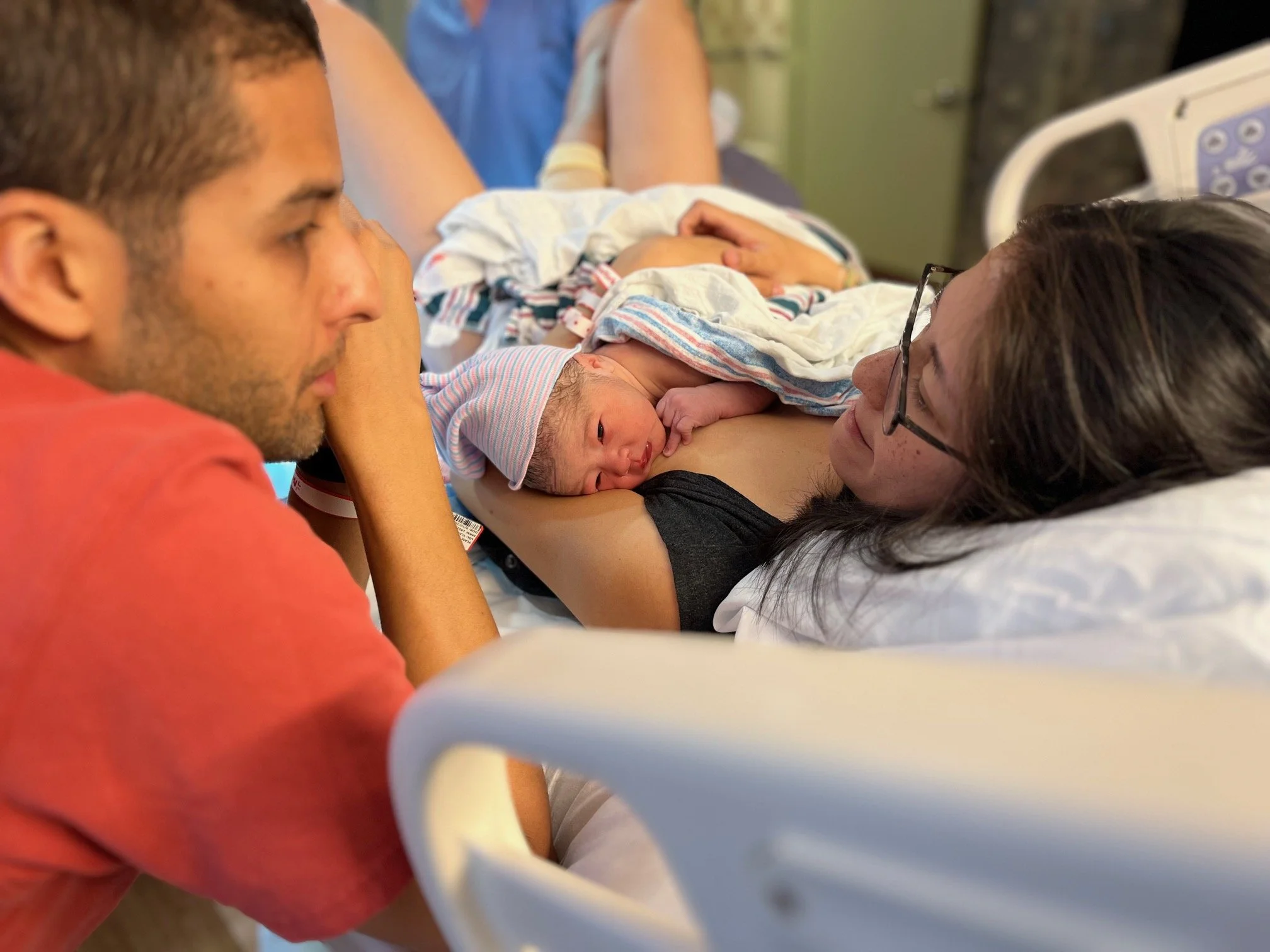
In this episode, it's Karen Yi’s and Kristofer Rios's turn to share their story. As a public radio journalist and a producer of documentaries, they both crave education and information and it shows in their birth choices. They share all about challenges of infertility and advocating for better medical care, to the smart decision to hire a doula and the fast-paced reality of labor. They discuss the importance of building a supportive team, the unexpected moments that shaped their birth story, and the lessons they learned about surrender, resilience, self-compassion and patience with partner and baby.
Resources:
Vickie Fernández Wint & Rachel André
Dr. Peter Guirguis (OB)
Sonia Reiter - pelvic PT
Nuuly - rental maternity clothes
Cenote in Yucatan (image, Karen mentioned visualizing one of these in labor)
Sponsor links:
Free “Pack for Your Best Birth” Packing List (with free mini-course option)
East River Doula Collective (find a doula, attend our free “Meet the Doulas” event)
Birth Matters NYC Childbirth Education Classes (Astoria, Queens and virtual)
*Disclosure: Links on this page to products are affiliate links; I will receive a small commission on any products you purchase at no additional cost to you.
Episode Topics:
1. Introductions & Background
Karen and Kristofer’s personal and professional backgrounds (public radio, documentary filmmaking, journalism)
Living in Bay Ridge, Brooklyn; family origins
2. Conception Journey
Struggles with infertility and decision points (IUI, IVF)
Emotional crossroads and the moment of discovering pregnancy
Dealing with fibroids and their impact on conception
3. Early Pregnancy Experiences
Navigating early pregnancy with fibroids
Pain, misdiagnosis, and feeling dismissed by healthcare providers
The importance of self-advocacy and seeking second opinions
4. Finding the Right Care Team
Switching providers and the difference in care quality
The role of doulas: how they were found, interviewed, and chosen
The impact of doulas on both birthing parent and partner
5. Pregnancy Adjustments & Self-Care
Adjusting expectations for physical activity during pregnancy
Discovering and using resources like the Bell Method and pelvic floor therapy
The importance of listening to one’s body and adapting routines
6. Preparing for Birth & Parenthood
Taking birth classes and the value of education for both parents
The emotional and practical benefits of birth preparation
Renting maternity clothes and embracing body changes
Taking a “babymoon” and prioritizing couple time before baby’s arrival
Meal prepping and basic baby-proofing
7. Pet Preparation
Preparing their dog, Cashew, for the arrival of the baby
Tips and challenges in helping pets adjust to a new family member
8. Labor & Birth Story
The onset of labor: recognizing signs, timing contractions, and emotional responses
The role of the partner during labor (support, timing, and comic relief)
The journey to the hospital: logistics, emotions, and unexpected events
Arriving at the hospital: triage, rapid progression, and support team dynamics
The pushing stage: humor, teamwork, and memorable moments
The importance of surrendering to the process and trusting the team
9. Immediate Postpartum Experience
The birth outcome: quick labor, healthy baby, and unique details (placenta tour, long umbilical cord)
The emotional aftermath and the importance of documenting the experience
The value of humor and positive energy in the delivery room
10. The Fourth Trimester & Early Parenting
The challenges of postpartum recovery (physical and emotional)
The importance of assembling a supportive postpartum care team (pediatrician, lactation consultant, family)
Navigating feeding challenges and pediatric care
The emotional rollercoaster and need for self-compassion
11. Reflections & Advice
The power of information, agency, and making informed choices
The importance of patience, kindness, and grace for oneself and one’s partner
The value of community, support, and sharing birth stories
Final tips for expectant parents: plan for postpartum, build your team, and be flexible
Interview Transcript
Lisa: 00:00
You're listening to the Birth Matters podcast, episode one thirty-six.
Kristofer: 00:04
Going back to this idea of the care you want is out there, it's you know, we had been with the other practice for a couple of weeks and they never showed any interest, they never asked any questions, they didn't explain things. Within like three minutes of sitting down with this new practice, it was you know, they first started by just asking Karen a lot of questions while her concerns were, you know, like how's it been going, you know, going up to that point? And it was just a night and day difference. And just that, like them listening and really listening and then and then giving us information, it just really changed the whole experience for us. And yeah, I'm just so grateful for it because
Karen: 00:42
Yeah, I mean it changed the trajectory of what our experience was like. I think it made us feel much more confident in who our doctors were.
Lisa: 00:58
Welcome to the Birth Matters Show. I'm your host, Lisa Greaves Taylor, founder of Birth Matters NYC and director of East River Doula Collective. I'm a childbirth educator, birth doula, and lactation counselor, and I've been passionately supporting growing families since 2009. This show is here to lessen your overwhelm on the journey into parenthood by equipping and encouraging you with current, best evidence info, and soulful interviews with parents and birth pros. Please keep in mind the information on this show is not intended as medical advice or to diagnose or treat any medical conditions. Are you following us on Instagram yet? We have lots of educational content there, so connect with us over at Birth Matters NYC. Now for a synopsis of today's story. Today I'm joined by Brooklyn-based public radio journalist Karen and documentary producer Kristofer or Kris. From navigating fertility challenges and advocating for better care, to the powerful impact of hiring a doula and the whirlwind of labor and delivery, Karen and Kristofer share the real ups and downs of pregnancy, birth, and the early days of parenting. You'll hear about the importance of finding the right support team, the surprises and humor that come with labor, and the lessons they learned about surrender, teamwork, resilience, self-compassion, and patience with both partner and baby.
And now a quick word from our sponsor, East River Doula Collective's next Meet the Doulas event will be on Wednesday, February 4th at 6:30 p.m. on Zoom. And our next virtual Savvy Birth 101 workshop will be on Wednesday, February 11th, the following Wednesday, at 7 p.m. on Zoom. You can find the link to sign up for either of these events on the top banner over at birthmattersnyc.com. So if you're expecting a baby or even trying to conceive, we'd love to see you at either or both of these events. Birth Matters All-in-One Childbirth Class series are filling up really quickly for the rest of winter as well as into spring. So if you're due in the next few months, be sure to grab your spot soon. We currently have dates posted through the end of April. Also, just a reminder that if you don't live in New York City or you just don't want to have to travel for childbirth class, we would love to have you join us for our live group interactive class series virtually on Zoom. A lot of folks have found this to be a very convenient option while still having the benefit of being able to chime in and ask questions in real time. This format is also priced lower than the in-person option, so it's a great option for folks with a more limited budget. You can check out this option as well as several other childbirth class format options like private classes and our online on-demand course, all over at birthmattersnyc.com. Okay, let's jump in and hear from Karen and Kris.
Welcome to the Birth Matters podcast. Today I have with me former students of mine in birth class, Karen and Kris. Welcome, Karen and Kris. How are you doing today?
Karen and Kris: Hey. We're doing well.
Lisa: Could you just please take a moment to introduce yourselves to listeners?
Karen: 04:11
Sure. So my name is Karen Yi, and here's my husband, Kristofer Rios. And we had our baby boy almost more than three months ago now, August 10th, and he was born in Brooklyn. We both live in Bay Ridge. We've been here for a while. Kris is a native New Yorker, actually. I'm a Floridian transplant. And I work in public radio. So this is my first time being on a podcast talking about myself. So it's kind of a strange experience.
Kristofer: 04:36
Yeah, and I'm a documentary and a journalist as well.
Lisa: 04:39
Love it. Big NPR fan. So thank you for the work you do. And you do work specifically in the area of homelessness and poverty. Is that right?
Karen: That's right. Yeah. Yeah. Like economic justice and economic insecurity.
Lisa: Oh, such an important area. And Kris, sometimes I'd love to have a sidebar on like the kind of documentary work that you do. Because I also love documentaries.
Kristofer: 04:59
Mine's a little bit more widespread, but also I cover social justice issues quite often.
Karen: 05:04
A lot of culture as well.
Kristofer: 05:05
Yeah.
Lisa: 05:06
Ooh, nice. Thank you. So let's get started by sharing anything you'd like to share about your conception journey and/or your pregnancy.
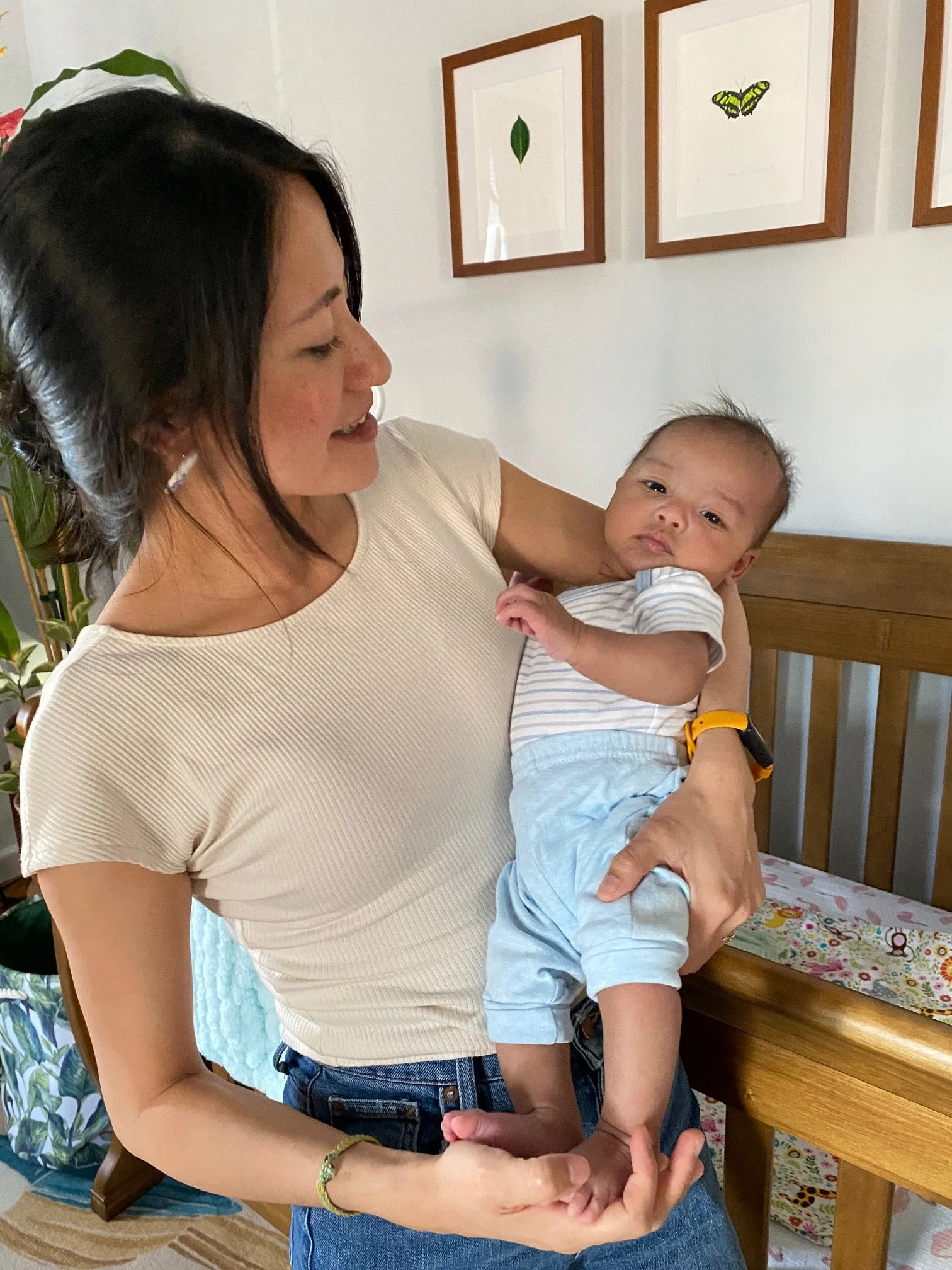
Karen: 05:14
It was definitely a journey, I'd say. I think Kris and I were trying to get pregnant for a while, almost two years, and we did all the tests. There was nothing wrong. And so we were getting to the point of deciding do we want to do an IUI or IVF? And we had decided we didn't want to do an IVF, and we were considering, okay, what where do we go from here? Right? Do we just accept the fact that maybe we're not going to have a child or consider adoption? And so we were at that crossroads and we're like, let's get through the holidays, right? This was around the end of the summer, beginning of the fall. And I was talking to my friend about it and pregnancy and the difficulties that I've had getting pregnant because I had a lot of issues with fibroids. And we had finished a bottle of wine, and I'm driving home hours later, and I'm like, you know what? I'm actually late on my period. And I got home and I was by myself because my husband was traveling in Colombia for work, and I took a pregnancy test, and I was pregnant. And I was like, oh my God. Like I couldn't, I was like in shock. I couldn't believe it. I thought I did the test wrong. And I sat with this news by myself and my dog for two days because
Lisa: Yourself and your dog.
Karen: Yeah, like my dog Cashew was the only one who knew. And I didn't know who to share it with because I obviously had to share it with Kris first, but he wasn't around. And I was gonna fly to Colombia eventually to meet up with him. I eventually told him on FaceTime, and we were very nervous at the beginning because we weren't sure whether it was gonna stick, whether everything was gonna be okay.
Kristofer: 06:34
Um Yeah, because it was still pretty early and we were really cautious, like we didn't tell many family members. I don't think we told anyone for quite a while.
Karen: 06:43
Yeah, we told my parents later when it was uh closer to the 12 weeks. But yeah, I mean everything, the timing really worked out for us. We had just gotten a slightly bigger apartment and we were ready. Like we've been ready and planning for this baby for a long time. So he was so wanted already. And when I got pregnant, I had early complications because, like I said, I had had a fibroid, which are these like non-cancerous growths, right, in your uterus, that can cause problems. And so for me, they had caused really heavy periods, and I actually had had surgery to remove them many years ago. So, right before I got pregnant, they came back, right? And usually they grow back, and they had opted not to remove them because they weren't that big and they weren't causing issues. So I was pregnant with fibroids, and the further along I went, the more the fibroids sort of started losing their blood supply because obviously the babies are taking the blood supply. And when that happens, it's a process called degeneration, right? And so that is very painful. And so, really early on in my first trimester, I was just in an extreme amount of pain, right? And I couldn't walk. And usually I'm very mobile, I'm very active, and I never call out sick from work. And I called out sick for a whole week, and this is very unnatural for me. And I was sort of bedridden and it felt really scary because I didn't know what was happening. And at the time, I kept calling my provider and they kept saying it's round ligament pain, which is very common for first-time moms and first-time pregnancies and just pregnancies in general. And I remember one of the nurses told me, if you come in here complaining of round ligament pain, the doctors are gonna look at you and think you're crazy. So it was like very, I didn't feel like anybody was listening to me, and I thought, wow, I must have a really low pain tolerance that I'm complaining about something that everyone has and that everyone goes through. And I was texting all of my friends because a lot of my friends, most of my girlfriends have already have children or multiple children. So I was sort of the last stop on, you know, the last one of my friends to get pregnant, and they were like, I don't remember it being so immobilizing or for this long.
Kristofer: 08:42
Um just just for some context too, it's like, you know, Karen mentioned she had fibroids. It's something that she's been dealing with for a while now, and the practice that we were at originally, they had actually missed it the first time around, which was really frustrating for me because she was sick for quite a while, and then it was just because they just didn't catch it. And so when this happened, and we had already been thinking about working with doula's, but when this was happening and they were just so dismissive of her pain, I got pretty frustrated and I was like, I think we had already engaged our doulas.
Karen: 09:15
Yeah, we knew pretty early on we wanted to hire a doula. Um, and honestly, hiring a doula was the absolute best decision we made for my pregnancy because that opened up so many doors. It opened up the door to meet you, Lisa, and take your class and just so many resources. And so, yeah, it had been a practice that had been very like it took them uh almost nine months to say, Oh, you have fibroids. Like I had to be, I was bleeding so much for my periods, I was anemic, and going up a flight of stairs took the wind out of me. That's how ill I was, until my doctor was like, Oh, maybe we should do an ultrasound. Oh, you do have fibroids. And this was nine months of heavy bleeding. Where my physician was like, There's something wrong with you, you need to go back to your gynecologist and tell her. Yeah. So once when I was pregnant, it was around like maybe 15 weeks.
Kristofer: 10:00
Yeah, it was pretty early.
Karen: 10:01
Where I had like sort of the first bout of fibroid pain, and we had hired our doulas who were fabulous. Shout out to Rachel Andre and Vicky Wint. Um, and they were giving us, you know, advice on things like try hot compress, try warm showers, warm baths, you know, try a belly band. But they were the ones when my provider was telling me, you're exaggerating, you're fine. They were the ones that were saying fibroids can cause pain and it will pass, and your baby should be okay. They were giving me the reassurance that I was looking for and the answers I was looking for from my provider. And then I think Vicky jumped on the phone with me very early and she said something that I won't forget, which was the care that you want is out there, right? The care that you're looking for is out there. And she gave me a range of providers that I could switch to because frankly we didn't switch because I was like, it's so much paperwork, they have all of my records, they have my surgery, like they know everything that I've had. And Vicky was like, they can literally email that over, like it's not a big deal. And I'm like, oh, okay, okay.
Lisa: 11:01
It just feels more like more stress than it actually ends up being for most people. Yeah.
Karen: 11:07
Yeah, it really wasn't that hard.
Kristofer: 11:08
And like I'm in my memory, like those early days, you don't realize how much you don't know until you go through it, because I think a lot of these things, they're so specific and individual to your experience. And so like when you talk to friends who have had kids, these aren't and you know, there's also this fog of like you forget all this stuff, right? So I think most people don't lead with any of these kinds of experiences. And so I remember in those early days feeling just really, you know, we're both journalists, so for us information's really important. And I remember feeling really anxious because I just didn't, we just didn't have information, so we had no idea, you know, she was literally immobile. I was out at a work meeting one evening and she called me and she was like, I can't move, like I need you to come home, and so I had to come home. So it's like this is what's happening. We're already really anxious about whether or not we can keep this pregnancy, and so it was just the lack of information was really frustrating and upsetting. And Rachel, they both really very quickly changed the whole thing for us.
Karen: 12:08
Yeah. Vicky, she gave me sort of a range of providers if I wanted at that point. It was so early. I didn't know what kind of birth I wanted. I didn't know anything really about birth except what you read on the internet and what your friends tell you and your family members. And so there was like a mid-wifery practice, there was like a mixed OB, mid-wiffery, and then I think it was like a straight OB. So I picked sort of the mixed, which was really like a 10-minute walk from my neighborhood. So it was also convenient because I didn't have to go into Manhattan, which ended up working great for me at the end because at the end you're going in twice a week, and walking 10 minutes is so much better than taking the subway an hour into Manhattan. For sure. Um, I picked a really wonderful obstruction. Like he was just a great provider, and um, shout out Peter Gergis. Um, I just really like immediately the first, I mean, someone else in his practice saw us the first day, and she hadn't even received my records, right? Because I was filling out the paperwork to get my records released. So she sat me down, I explained to her maybe two minutes, right? Two minutes of what I was feeling, and she immediately, without seeing my chart, was like, It's your fibroids. And I was like, Oh, she's and then she explained to me that they can cause pain. And when she did the ultrasound, she measured the fibroids. That's the first thing she did. And my other provider, who knew I had a history of fibroids, did not measure my fibroids, and so she was like, This is a five centimeter one and a seven centimeter one. Like they had grown, right, from the prior measurements before I was pregnant, and they were at the top and the bottom of my uterus hugging the baby. And I felt so much relief. I knew that the baby was fine, they weren't in the way of his growth, and I knew exactly what was causing me pain. And it didn't make the pain go away or make it better, but it just felt much more calm knowing exactly what it was. And it didn't take her very long, and she didn't have to look at my chart or understand my history.
Kristofer: 13:56
More than that, like going back to this idea of the care you want is out there, it's you know, we had been with the other practice for a couple of weeks, and they never showed any interest, they never asked any questions, they didn't explain things within like three minutes of sitting down with this new practice. It was, you know, they first started by just asking Karen a lot of questions about what her concerns were, you know, like how has it been going, you know, going up to that point? And it was just a night and day difference, and just that, like them listening and really listening and then and then giving us information, it just really changed the whole experience for us. And yeah, I mean, I'm just so grateful for it because Yeah, I mean it changed the trajectory of what our experience was like.
Karen: 14:36
I think it made us feel much more confident in who our doctors were and just like what was going on, and it made us like one less thing to stress about and one less thing to worry about. And you know, subsequently, fibroids flared up again. I want to say end of second, like almost to the end of second trimester. And that pain was much, much worse. And that was like it felt like a knife sort of stabbing me from the inside. It was like a very sharp pain where again I couldn't walk. And I was considering calling an ambulance to take me to the hospital. And I went to my provider, and they were like, Yeah, women are hospitalized because of this. You know, like it does happen. There's a medication that you're given in the hospital, we can prescribe it for you. Here are the risks, right? And so again, it was like that validation that, you know, I'm not some like wussy wimp who can't handle whatever's going on. Like it does happen, right? And it is happening to me, and I do have a certain condition. I think in a way, I remember thinking when I was feeling that fibroid pain, I was like, there is no way I can go through contractions. If I can't even handle this, like how am I gonna handle contractions? And I think that's also partly we'll tell we'll get into the birth story later, but that's what I was saying.
Kristofer: 15:39
Yeah, all this really factors into the city.
Karen: 15:40
Yeah, this is like important context where I was like, fibroid pain was really painful, and I was expecting that level of pain with the contractions or that kind of pain, and contraction pain is very different, which is why we arrived at the hospital very quickly. Anyway, we'll get to that later on. We're foreshadowing it. Sure. A very dramatic future shape.
Kristofer: 15:58
I guess the only thing I'll add about like those early days and is that like the the our doulas and everyone that they recommended, yourself included, I think that the one commonality is just the the how thorough the information was, how honest and open everyone was about this is what we know, this is what we don't know, this is what's fact-based, this is what might just make you feel good, and that's why we do it. All of it was just so helpful, and I think it gave us a lot of agency in the process. And I think that's really I mean, I feel it, I even feel it now, just being able to feel like you're the answers are out there, gives you the confidence and just makes you very present in and being a parent.
Karen: 16:44
But I think it also gives you tools to make choices, and I think that is empowering the ability to like make an informed choice. Because I I wouldn't say that anyone we like we had all these resources, right? The Doolas recommended, a bunch of pelvic floral therapists, which ended up going to a great pelvic floral therapist, a bunch of different birth class, birth educators, and we went, we chose your class, different providers, and we chose Gerges, right? And we were able to, with all that information, make really informed choices when it came down to it and continue to make informed choices throughout my pregnancy, which I think was really helpful because the internet is just like wild. Like you can find any answer you want on the internet, and it is incredibly not helpful. And just having the doulas there that you can just text something to. Again, that's why I say that doulas are really life-changing for us to hire. And then because of the early complications of my pregnancy, I had imagined this like very fit. I was like, I'm gonna be a fit pregnant woman, and I'm gonna do all of these like exercises and workouts, and nothing is gonna change in my life. And it was a cruel reality check that I had to adjust my life. I couldn't do the sorts of yeah, I couldn't stay as active as I used to be. I'm a reporter and I cover, I write a lot about homelessness. And initially I was going on a lot of walks across the five boroughs with outreach teams, right? And I would walk like nine, 10 miles a day, and I would come home in so much pain and so exhausted. And I think I had to stop. And thankfully I I had an editor at the time who was very caring and very considerate and said, You don't need to do this. And I had to really scale back what I was doing and how far I was pushing my body. And initially I remember I was doing like HIIT workouts and I was running and and then I had to change. And who was it that told me? I think I went to see maybe it was one of the doulas who was like, What do you think about yoga? And I was like, It's very slow. And they're like, You should try some yoga. And I was like, maybe I'll do Pilates, like maybe Pilates is a little bit more and I was like researching what to do, what exercise courses you could take when pregnant, and I found the Bell method, and the Bell method was also fantastic. It was another great resource, and it was like an eight-week course that you paid for with a bunch of different things. They also had like podcasts and articles that you could read, so you could take as little or as much as you want, but just do the the workouts and and they really it's like educational exercise where they they teach you a lot about your pelvic floor and how your muscles move and and how everything, the symphony of everything going on down there, which is incredibly helpful to think about because I think what pregnancy did for me is it really forced me to be in tune with what was going on into my body and listen to my body, right? Listen when it's saying you cannot walk 10 miles a day. Listen when it's saying you need to go to bed right now, you need to find a way to take a nap. You cannot be doing HIT workouts, you cannot please stop jumping up and down. So I really had it was like an exercise in forcing myself to listen to what my body was doing. And that I think really helped for labor. Like all of these things were unknowingly, I was preparing myself to give birth to my baby. So the Bell method was great, eight Pilates. It is, you find it's funny because you think it's not hard exercises, but you find yourself out of breath and it's just harder when you're pregnant. And so I did a lot of that. I did a lot of breathing techniques. I visited my pelvic floor therapist, Sonia Rader, Ryder, I think, I don't know how you. I think it's Ryder. Ryder, yeah. And she's not positive though. I see it all the time, but I don't hear it.
Karen: 20:09
She was great. I thought of I mostly thought about her while I was pushing my baby out, like opening sort of your pelvic floor. And she, I think, we did some pushing practices like right before when I was like 34, 35 weeks pregnant, and that I think was really helpful. I'm very petite. I'm like five feet one, and I was under 100 pounds before I got pregnant. And she's for small women, you really have to push hard. Like you have to work harder to get that baby out. And so I was already going with the mindset that I'm gonna have to work harder to get this baby out. I'm gonna push this baby out. Um, and so really her training and sort of her words really helped me in birth.
Lisa: 20:45
Um and I would think the Pilates too, with the core engagement, yeah, would also really benefit.
Kristofer: 20:50
But there was a moment where I think they told her to stop because they're like, you're they're like your core is very strong.
Karen: 20:56
Oh, yeah, yeah, yeah, yeah. Yeah. Sonia, because like she you do this they talk about kegels and there's like this misconception around keegels, and really it's just like learning how to relax and release your pelvic floor and like inhaling, and it's really just breath work. And again, it's like kind of this mind shift of small things actually go a long way in pregnancy. And in my mind, I was like, you have to be doing like 20 push-ups, or like I think shifting that and being like small things, like things that maybe you're just sitting and looking like you're doing nothing, actually do more for you than what you think you're supposed to be doing, right? So sitting there and just breathing for 10 minutes actually goes a really long way. And so she helped me with that a lot. And at some point she was like, Karen, you're almost like too tight. Like you have to learn to relax and open. And so her assignment the last four weeks of my pregnancy was like, just relax, just learn to breathe and relax and open. And she's like, don't do any more extra, like just stop, just stop.
Lisa: 21:50
You build muscle very fast. Let's overachieve by underachieving, like a mindset shift. Exactly. And that downregulation of your nervous system is so valuable too in going into labor to begin with, right? Yeah, exactly. Yeah, love it. Okay, I have a couple questions, if we may. Um, so first, I'm wondering if you remember how you first heard about doulas. Was it from friends? Or I know you're very well read, so maybe you read something, any remembrance of that?
Kristofer: 22:20
I did a story years ago on um, it's a different kind of doula, but they were abortion doulas basically. And this was so long ago, this was like maybe over 12 years ago. More than 10 years ago, for and through that whole just reporting that whole story, it opened up this world for me at least, of just this community of people who can demystify the birthing process on all ends of the spectrum, right?
Lisa: 22:49
Yeah, the whole spectrum, yeah.
Kristofer: 22:51
And I thought uh when I did that story, I remember thinking when I'm ready to have a child, I really want to have someone like this in my corner because just through the process of reporting and talking to mostly women that do this work, it just reveals so much to me. So I was like, I definitely want this is what I want from me. But I don't know, I don't know who voiced it first, you or me.
Karen: 23:15
I feel like I don't remember either, but I remember we were both on the same page. Whoever voiced it, the other person was like, Oh yeah, of course. That was always gonna be the case. And then we like none of my I don't think many of my friends for their first kids had doulas. And then I think for the second, one of my friends for the second, for her second child, she got a doula and it was like night and day her experience. I don't know if that was front of mind for me, but I just knew I wanted, I think, because of my experience at my old provider, even before I was pregnant. And I think I had she just didn't. I don't know if she wasn't reading the notes, right? And every time I would see her, but I remember her like a year into me trying to get pregnant, she was like, Oh, are you thinking of having kids? And I'm like, ladies, oh, are you kidding me? Like you have literally recommended, like I just couldn't like, did I tell you that your uterus is heart-shaped? Like I had a uterus, right, where it's like a little bit indented, and like it sometimes, I don't know, it could cause complications, but she didn't really explain that to me until a year after my surgery, my fibroid surgery, where you would see that. Um, and so it was like all of these things where I felt like I wasn't getting the information I needed to make decisions, and I think that definitely made me feel like I need somebody to help me navigate that I trust to navigate this hospital system and all of these unknowns. So it just I don't remember where the idea came from, but it was just something we both were like, yep. And we did it very early. We were interviewing, we interviewed three different doula practices. Um they were all fantastic. We're not gonna name names, they were all really great. Um it's really just a personal fit thing, mostly, right? Yeah, like it'd all be great. It was hard to make the decision. We're glad with it.
Kristofer: 24:54
I think any of the doulas would have been fabulous, but I don't remember early on, I don't remember if it was you that asked me or if it was in the interviewing of the doulas. It was just kind of questions like why do we want to have doulas? And I don't know. I just didn't want to be the kind of partner that was just freaking out in the delivery room. You don't really realize until you go through it, but actually the partner or whoever's in the room, right? Um, supporting the birthing apparent is really like it's a support role, but there's a lot that you have to do. You have to be an advocate, you have to really be calm, and like we always say that every birth is different, but no matter what happens, like you really have to be a rock. And I just didn't feel like without a doula I would be able to do that.
Lisa: 25:41
I mean, I was a little bit of an aspect of this of partners when it's a brand new experience we've never been through with such a huge range of normal, like why would that come just totally naturally for all partners or almost anybody really?
Kristofer: 25:54
Ah, I'm a producer, it's one of the roles I play as a filmmaker. And what your job is is to prepare for every possible outcome. But it's like you know, if we're talking about making documentaries, like I could think I've done it enough that I know what things to think about, what things to get out of my head. But if you don't, it's not like you have a kid every day. Right. And this is our first. It was just infinite. How can I produce this unknown?
Kristofer: 26:20
Just like such an infinite number of things that I could imagine into that like really triggers an anxiety if you don't have someone who who is doing it not every day, like every week, someone who has seen the the huge range of normal and they can say these are the things that you need to be looking out for.
Karen: 26:39
I will say in your class, we took the three over three weekends intensive. And I will say every time we would drive home, because we live in Brooklyn and we went to Astoria, and that's how much I believed. I was like, Lisa offers fresh made cookies. This is the reason I will fully admit to what's why we picked you. I was like, oh, chocolate chip cookies. And I had this sweet tooth through my pregnancy. I was like, But we were driving from Bay Ridge to Astoria and we would drive back, which is actually nice to have the long drive back because we could like unwind and really talk about your class. And every time, every Saturday, Kristofer was way less anxious. And by the third Saturday, he was like, All right, like he was totally prepared because I think he had that information, but like you can't be fully prepared. You can't be fully prepared, but you were much less anxious and much more confident going into it.
Kristofer: 27:23
Yeah, because like when you start reading books and there's these checklists of things that you should prep for and like the birthing plan, a lot of this stuff is you don't have any idea what it means. And so I think one of the things I really appreciated about your class, it seemed like a big commitment spending three or four four hours like five, maybe?
Karen: 27:40
Yeah, yeah.
Karen: 27:42
It's a good four hours.
Kristofer: 27:43
Taking out a chunk of your weekend. But I immediately what I really valued about it was not just that you had the space to really go through everything and learn everything, but the drive there and the drive back really gave us the time to think about the voice what we wanted and what we imagined it to be. And it was refreshing to see that we were on the same page about everything. And it just was like that whole experience was really worth it as well. And so it wasn't just the information that helped me feel less anxious, but also I think the process of us working together to figure out what is our birthing plan.
Karen: 28:18
Right, the conversations it forced us to have. Yeah.
Kristofer: 28:20
And so I'm glad that like it wasn't just like an eight-hour course one day at a hospital, or I don't really know how other people do it, but like it just I really was grateful for those three weekends where we just took out a day to just be present and think about what it is that we imagined it to be.
Lisa: 28:37
Okay, another very important question about Cashew. What kind of dog is Cashew? Can we get a picture? And did you think that Cashew knew you were pregnant before you knew? Compound question, right?
Kristofer: 28:53
Absolutely, you can get a photo of him. Yes, yeah.
Karen: 28:56
Cashew loves being the center of attention and he's having a hard time sharing it.
Kristofer: 28:59
Yeah, um he is uh he's mostly Chihuahua, but the other large percentage is Pitbull.
Lisa: 29:06
Pitbull poodle, yeah. Oh, I think we've talked about your dog. Yeah, I've seen the picture. Now it's coming back to me.
Kristofer: 29:13
He's a small dog with a big personality.
Karen: 29:14
And now that we're talking about Cashew, our baby is crying because they fight for attention. So be right, of course, yes, yes, yes.
Kristofer: 29:21
I'll let you answer the question about whether he knew.
Lisa: 29:31
While she's doing that, do you, Kris, have any tips on helping your dog adjust to the little invader that is the baby?
Kristofer: 29:41
Yeah, you know, it's funny, it's actually one of the things I wish we had thought about a little bit more. Um, we didn't really start thinking about that until, I don't know, maybe the last one or two weeks out. And we went onto some Instagram accounts that were pretty, there are some trainers that were pretty extreme. Like one of the things that people advise is that you bring clothing or a diaper from the hospital to the home and then train your dogs to accept boundaries. Here goes our little guy.
Karen: 30:11
Oh my goodness, hello, baby. The new star of the family.
Kristofer: 30:16
She asked about prepping Cashew for baby. I did prep Cashew for cold, but the thing is it's very impractical. And once the baby's here, it's yeah, this it's your whole world is reframed. Um, but we did do that. We actually, I was the one who was in charge of diapers for a long time, but especially in the hospital. And so I did keep one diaper, and I didn't get to come home before Karen came home. But when we got home, they went to the room, and then I did a little bit of training with Cashew to just get him to pick up the scent and then really respect the boundaries of that scent of that baby.
Karen:
I don't know if he respects his boundaries.
Kristofer: 30:53
Not anymore. But the thing is, he's Cashew's, wasn't aggressive. I think he was just more curious. He was like, What is this? What did you bring into our home? And then when he realized it was a new family member, he was really excited.
Lisa: 31:04
A new member of the pack.
Kristofer: 31:06
Yeah. And so it became more of a thing of you know, luckily Cashew's a small dog, but still, like, you know, when you have a newborn, he could if you don't set boundaries, they can hurt the baby.
Kristofer: 31:17
So it just took a couple of weeks to really get him to learn. Like when you're doing tummy time and when you're doing things like that, you need to just stay back until we call you over, until it's more controlled. And he hasn't picked it up like a hundred percent, but he is like he does move back and we ask him to move back. He is gentle with baby. And I think the bigger problem now is that you know he's accepted him so fully into the pack that he wants to play.
Karen: 31:41
He like throws his toys at him, like throw me the like he wants to play with his toys with the baby. Yeah. Obviously, the baby can't.
Kristofer: 31:46
And it's like you need a couple years before that can happen.
Karen: 31:49
Yeah.
Kristofer: 31:50
So, but I do recommend, and I think it really is, I think, on the support partner to do this. If you do have, I don't know anything about training cats, but if you do have dogs, I do recommend thinking a little bit about it and just yeah, reading up a little bit about it beforehand because you once you bring the baby home, you realize that the dog can be, can be a factor, like a big factor. And you really there's just a lot that you already are having to deal with in those early days that you want to make sure that your pet doesn't really complicate things. Like he has a tendency to like when he's excited, he'll like hop up and jump on us and say you don't want your dog jumping on you if you're holding a newborn, like things like that that become immediately apparent to you when you bring home.
Karen: 32:31
When you're too late to train it up.
Kristofer: 32:33
So definitely recommend don't spend too much time, but maybe I would. I would have liked maybe more than two weeks to have prepped for it. Maybe think about it a month out.
Lisa: 32:44
Good tips. And for listeners, I have a pet tip sheet that I've compiled over the years and I'm always trying to improve upon. So if I'll try to maybe link it, link to it in the show notes. Or if you take my birth class, you'll have access to it, or you can even email me and I'll just send you the link that has some tips for both dogs as well as cats in it. And I've had several dog trainers over the years in classes who've given me added to the list and just feedback I've gotten from fellow doulas and stuff.
Yeah, it's clutch.
Lisa: 33:14
Yeah. Cool. Thank you for talking about cashew levels. Can't wait to go for the picture.
Lisa: 33:22
A fellow Chihuahua owner, so I can't wait to get the pictures. So what else? Is there anything else that you wanted to share about the pregnancy journey and preparing for parenthood before you go on into the birth story?
Kristofer: 33:34
I think, yeah. I think that's most of it.
Karen: 33:36
Yeah. Oh, I did, I'm not like a shopper, but like at some point my clothes, I was like going up to the office in jeans, like they were held together by my hair tie, and I was like, I cannot do this. I really need to do something about it. And I actually rented my clothes, my maternity clothes, for the last I would say like the last few months. And I highly recommend that, especially if you're not a shopper, because it just felt really nice to embrace your bump and feel good in the clothes that you're wearing and have them fit you. I don't know. I actually, surprisingly, after the first trimester and second, like after the fibroid pain really went away, I loved being pregnant. Like I, I really enjoyed it. I loved experiencing, I loved feeling the baby and like getting to know what he needed and like you know what would happen when you had sugar and how much he would move and his little wake windows. And again, I think it really taught me to just listen to what was going on. But yeah, that's one thing that made me feel good, actually, surprisingly. Being able to wear my clothes and being able to look cute is not like a common thing for me to say. And I had actually had one more box of maternity clothes that had come right when my mom arrived. And um and she was like, Let's take cute baby bum pictures tomorrow. And I was like, Okay, I have a perfect dress. And tomorrow was the day that my baby was born. So I never got those baby bum pictures. I never got to wear like half of the dresses in that.
Lisa: 34:56
Do you have a shopping platform rental platform that you would recommend?
Karen: 35:00
Newly, like N-U-L-Y. Um, I think Rent the Runway also does it, but Newly is a little bit more boho. They actually use brands that are just like normal clothes that are a little bit looser in some cases. Some are maternity clothes, but it doesn't always feel like you're wearing maternity clothes. And they have it for like every season. And like if you have special occasions. Oh, the other thing I would recommend is if you can afford it or go like a baby moon. That was like we also scoffed at that. We're like, what is a baby moon? But then we took it and we went to Italy and just had a really really good time there, and yeah, it was nice because we're not gonna be able to do that just us two for a really long time. So I'm really glad we had that experience.
Kristofer: 35:40
Yeah, we splurged. We had all these points saved up.
Karen: 35:42
Yeah.
Kristofer: 35:43
And so we're like, it's gonna be a while before we get to use them again. So we just used them all, went to a couple of nice places. Yeah, and I'm glad we did it. Yeah. Yeah.
Karen: 35:52
Oh, and then toward the end, I wish we would have started this earlier. We were doing date nights. Like him and I would just like on a Friday night after work go and have dinner somewhere. And we got through three date nights before baby came. I wish we would have started them earlier, but I think being able to just get the information and all of the appointments and stuff and the classes like out of the way by maybe a month before, you know, I think that was really helpful because by like week 34-35, like I was really tired and we were also like over like it was almost like too much information. I'm like, I don't want to read anything else. Like I'm done. Like I got the information I needed. Getting out of the headspace, yeah. Yeah, like now we just need to chill. And so we really worked on just finding ways to relax and enjoy each other's company before.
Kristofer: 36:33
Yeah, we did, we did a lot of prep and um yeah, I guess like the end of the second trimester.
Karen: 36:38
Right. When it starts to feel a lot more real, and you're like, oh, we need a room for the baby. Yeah, we should move our couch, yeah.
Kristofer: 36:44
Some basic baby proofing. We did a lot of meal preps.
Karen: 36:48
Oh, yeah, meal prep was really helpful.
Kristofer: 36:49
It came in handy.
Karen: 36:51
And we did it over time, so it's like, you know, we would maybe like cook it, we would cook a meal and then make a double portion and then we would freeze that. So it wasn't like it never felt overwhelming because we kind of spread it out.
Kristofer: 37:01
Yeah.
Karen: 37:02
Yeah.
Kristofer: 37:03
Before we move on, um kind of going back to the question of if Cashew knew.
Lisa: 37:08
Oh yeah, we didn't answer that.
Kristofer: 37:11
I don't know if he knew. But there was something that you said that reminded me toward the end, I would notice that Cashew would be in the bed with us, and then he would look over at her belly, and then Karen would be like, Oh, baby kicked. I don't know if he knew if she was pregnant before we did, but he certainly knew there was something going on because he could, I don't know if he I must have heard, right? And he used to do this really cute thing where he would lay across, almost in a protective stance, like around Karen's belly.
Lisa: 37:42
Oh, I love that.
Kristofer: 37:43
Yeah, that's why some people were like, Oh, are you worried about Cashew being jealous? And I never really worried because it always like he probably knew he probably felt the presence even more than I could. And so I think that for him the baby was new, but I think he realized that this is what he was protecting the whole time. Yeah, because he's oh you know what we should do? We should send her the video of Cashew.
Karen: 38:07
Oh walking, oh our dog because at one point he just decided because our dog loves to be on two legs, he just wants to be a human. And at one point he started pushing the stroller. Yeah, because he couldn't see baby. Yeah. He's like, what is this thing? It was the first time we were using the stroller, and we had like a little net, right? And he's like, Where is the baby? I can't see the baby. I need to be on two on two legs. So he was walking on two legs, and then eventually he starts pushing the stroller. He's like, it was hilarious. Yeah, it almost looks like he's taking over. These two idiots don't know what they're doing. Let me push the baby.
Kristofer: 38:38
Yeah, it's obvious he's very protective of Ahriel, and he's been nice.
Karen: 38:42
You know he did develop like a deeper bark when I was pregnant, remember? He was like very protective, like he's not an aggressive dog, but like any dog that looked at me wrong, he would just go crazy. And this is like a new behavior that really started when I was pregnant. I think he realized there was like more to protect. Yeah.
Lisa: 38:60
Well, then I don't know if you've thought of this, but did you notice any change of behavior around the time that you went into labor? Because that's another thing. A lot of dogs, the hormones of it, and start acting a little differently, but I don't know if you observed that at all. I don't remember.
Kristofer: 39:16
He's kind of part of the birthing story.
Karen: 39:18
Oh, he is part of the birthing.
Lisa: 39:19
Oh, good, great. Can't wait. With that said, are you ready to jump into that? Feel free to start wherever you want to start. It could be in the days or the weeks leading up to it, whatever.
Kristofer: 39:28
I'll preface this by saying that it's funny when people tell it's it's it wasn't that long ago, right? It was like not even four months ago, but you really very quickly forget the details. Karen was great about writing down notes and journaling. I wish I had done more of that, especially in the immediate after of the birth, because you forget very quickly. I'm only prefacing it because it's like some of the kind of sequencing of the events might be a little bit out of order. Yeah.
Karen: 39:57
But I guess we can start. Okay, so I actually oh, another thing I recommend if. If you can stop working earlier, please stop working earlier. Like I was very much like, I'm gonna work till the day I give birth, the minute I give birth. I'm gonna have my first contraction in the way I was like, I'm not no. And then by the end, I was so tired. Commuting was awful. This was like the dead of summer, right? And um, I actually used some extra PTO days and I stopped working two days early, um, two days before my due date, which is perfect because I ended work on a Wednesday and my contraction started on the Thursday. So baby was very polite. He let me finish my last story. So I didn't realize there were contractions. So I finished work on Thursday, on Wednesday, Thursday, and then for the first time I slept 10 hours. And it was like, because it gets really uncomfortable to sleep by the end. And I felt so well rested. I was done with my job. It felt so nice to wake up at 10 a.m. I was super relaxed. And then I think I hang up a phone call with a coworker and I go to the bathroom and I'm spotting immediately. I was like, oh no. And I started to feel like a thrill. It was like this nervous anticipation, and I didn't know what to do with myself. And Kristofer was working and I was like, what do we do? Like what and he's like, it's fine. It could, it might not happen. Nothing may happen. Like it's just spotting. And we thought it could be my mucus plug, but I think it was just like bloody show. We texted the doulas, and I wanted to get a haircut because that's one thing my mom was like, You should get a haircut before your baby dies, because you're never gonna get a haircut again. And I was like, Really? So good, good tip. Um, so I had scheduled a haircut in Chinatown, and we had a date night, I think the next day or that day.
Kristofer: 41:31
So that was Thursday, and you got the haircut on Friday. Yeah. And date night was Friday. Yeah. Yeah.
Karen: 41:36
I was very nervous and like thinking any minute like something would happen, and nothing happened. Like it was just this little bit of blood, and then everything was fine Thursday.
Kristofer: 41:45
But I kept asking that Thursday night, like, do you feel contractions? Do you feel anything? And you said something like, Oh, I feel a little bit of cramping.
Karen: 41:55
Yeah.
Kristofer: 41:55
And I was like, cramping or contractions?
Karen: 41:58
And I was like, I think I'm making it up. Like I think I just like am anticipating it, and because like at the end you feel all these sorts of pains and pressures, and like it's just a little bit uncomfortable. So I'm like, I think I'm just making it up. Like I think if I like readjust myself, it's fine. So I didn't make anything of it. Friday comes around.
Kristofer: 42:16
And the bleeding stopped too.
Karen: 42:17
Yeah, it was just one time bleeding. It was like one time that's why we thought it was um my mucus plug. So Friday comes around, I go to Chinatown, I get my haircut, I'm talking to my hairstylist, and she's like, Yeah, the last woman I was who I gave a haircut, she started having contractions in the chair. And I was like, Oh, maybe I'm having a I was like, No, I think it's still like so. I got my haircut, had a really great steamed pork bun for two of them, I think. Then that night I got home, and my mom had flown in the night before, and her flight had been delayed because of Hurricane Debbie. That was Debbie. And that night, Kristofer and I went to this restaurant in Brooklyn, which will not be named, a bit overpriced, but it was fine. It was like decent food, but we had had these. The best thing was like the gnocchi, right? It was like these like creamy, and I'm like gnocchi. I don't want to admit it, but I'm like lactose sensitive.
Karen: 43:06
So it was like clearly there was like milk in it, and I was like, oh, these are not gonna go down, but whatever, they're really good, right? Worth it. Yeah, really great date night. Um, and then that night we watched this documentary. The documentary, I think, is very key. It was about service dogs.
Kristofer: 43:21
You it wasn't about service dogs, it was just about dogs, period.
Karen: 43:24
Okay, no, but it was like a program that screens dogs.
Kristofer: 43:27
The part that you liked was about because they and they ended it up with a service dog training.
Karen: 43:31
Yeah, and they like screen dogs and they match them with people who um have disabilities and it's like their companion for life, right? And my oxytocin levels were skyrocketing. Yeah. Such a happy documentary. We went to bed like so happy that night. It was just so feel good. Um, so we had a good time. We had a decent meal and we had seen this documentary. I had slept. I was like rested. And I remember going to bed that night, and I actually read this in my journal today. And Kristofer goes, because I hadn't slept, hadn't been sleeping well for weeks. She's like, he said, I hope you get some rest tonight, babe. And I said, Me too, right? Did not sleep that night because he fell asleep. And I remember that night my uterus was really loud. It felt like fireworks, and I kept Googling, like, is a loud uterus a sign of early labor? Like, should your uterus sound like there's popping sounds? Yeah, it was like popping and gurgling and swooshing. Like, I almost felt like um the baby was trying to talk. I was like, this is crazy. Like my uterus has never made these noises, it's like insane noises. I tried to sleep, I couldn't because I felt this really intense pressure. Oh, hello. My baby is making his presence known. Um I felt this really intense pressure, like I had to go to the bathroom. And I was like thinking, oh my god, these gnocchi, they didn't go down well. It's definitely the gnocchi, they're not sitting well with me. I kept having to go to the bathroom and felt this increase, this all right, he's also gonna burp very loud.
Lisa: 45:02
It's so cute. I love it.
Karen: 45:04
My child. Yeah, so I felt like constant pressure, like this urge to poop, and I kept running to the bathroom and running to the bathroom, and at some point, like nothing was coming out, and I kept feeling this pressure, and I remember Googling do contractions feel like you have to poop? Pelvic pressure, contractions, pelvic pressure, early signs of labor. Like, I was like, it can't feel this way. This is not what a contraction is like. And after like an hour and a half of this, and I had gone to the bathroom maybe 10 to 15 times, I kept running in there. I was like, I think this is it. I think this is the moment. These this has to be contractions. It can't just be the bad gnocchi. Like the bad gnocchi is out of my system. And so I woke Kristofer up. It was like 3:30, and I had started feeling the sort of the pressure around 1.30. So this has been going on for like two hours at this point. Yeah.
Kristofer: 45:48
Yeah, and I think, I think, you know, going back to sort of the fibroid pain, I think it was so intense in the beginning. I actually think that she because the when I had asked her whether she was having cramps or contractions, that was before Thursday. I think that was like on Wednesday.
Karen: 46:03
No, no, that was Thursday because I didn't Thursday was when I started bleeding.
Kristofer: 46:06
Well, I I just think she it didn't register because like the fibroid pains were so intense for her that she it I mean everyone you you think the contractions are gonna be, you know, so like intense and and that's the sign, that's when you know, but I I sh it didn't even register for her.
Karen: 46:23
Yeah, yeah. Um yeah, so I woke him up and I was like, I think I'm having contractions. Yeah, and he looks over at me.
Kristofer: 46:30
And I wake up and like she's like sitting up in bed wide awake, and I'm like, oh okay, she's definitely having contractions. Um it didn't look like she had even slept at all.
Karen: 46:39
I hadn't. I was rigid because I kept trying to I was in your class, you say like when it's like early labor, you can rest and pick four to five activities to do. And I had had my four to five activities, I was gonna like um, I was gonna like walk my dog, and I like was gonna like clean the edges of my like apartment that there was like this dust and accumulates, and I was like I'm gonna be on all fours and like clean these edges, and that's gonna help a baby come. Like I had all this plan in my head, but I couldn't lay down, like I could not relax. Like laying down actually was really painful. And the only thing I could do pretty early on, I mean I labored for the first two to three hours in the toilet because I thought I had to go to the bathroom, and then I quickly realized that I needed to be on all fours. Like I needed to because I had so much pressure, I needed to be on all fours, and so I spent the entirety of my labor pretty much on all fours.
Kristofer: 47:28
She woke me up at like 3: 30, and I think that's when you went to the bathroom again.
Karen: 47:34
Yeah.
Kristofer: 47:35
And then when you came back from the bathroom, that's when I mean I think we just realized like you were having contractions and they started to get more intense.
Karen: 47:41
Yeah. Yeah.
Kristofer: 47:42
And so then she started to sort of we brought on the yoga ball, you start to do breathing exercises, and I started to just do my counting thing.
Karen: 47:51
It's timing.
Kristofer: 47:52
Yeah. And it was pretty obvious that at that point that like it was just, I mean, I stayed up for about an hour, but they were kind of all over the place. So I went back to sleep.
Karen: 48:03
Okay, I did not know he went back to sleep because like I'm pretty blind. I wear contacts, and without my glasses, I can't see anything. Like, I you you can be anyone. And obviously, I was going to bed, so I didn't have time to put on my contacts or my glasses. And so I thought, like, I was at this point at the foot of the bed on my knees on two pillows, like leaning against the bed, and he was sort of like laying across. And I thought this whole time that he was just sort of like watching me, meaning being sweet. Yeah, him and Cashia. And I was like, wow, he's so support, like, he's so sweet. He's just like watching his life, his wife labor. And then we were telling the story to a friend a couple weeks later, and he was like, Oh yeah, somebody needed to sleep, I went to bed.
Kristofer: 48:39
Well, because it's because in my mind, it's like I've been like, we're in it for like 24 hours, and it's 48 hours. And because we hadn't had any other early signs, like it wasn't her mucus plug.
Karen: 48:53
Yeah.
Kristofer: 48:54
Uh on that Thursday.
Karen: 48:55
He was going through like the checklist we had learned.
Kristofer: 48:57
So I was just going through everything, her water hadn't broken. I was like, oh, we're probably in this for a while, right? This could just be like a first wave and then maybe they go away. So I was like, if this is gonna be labor, then I should get some rest, right? Because I'm gonna go.
Lisa: 49:10
Lisa said don't wake the partner, so I'm gonna go back to sleep now.
Karen: 49:16
It was really funny. And then he was like popping up because it was morning, right? Like eventually my mom woke up, like Kristofer went to make coffee, and like you had said not to time every hour, so he timed it like initially, but there wasn't a pattern at the beginning, right? It was very sporadic.
Kristofer: 49:29
I think at 7 a.m. You were way more in the rhythm, and so that's when I timed again, but they were still pretty far apart. They were like probably 10 minutes apart.
Karen: 49:39
You think that much?
Kristofer: 49:40
I should have checked, but yeah, it was enough. It was enough where I was like, okay, not time to go. Because one of the things that we should have mentioned is that um we really wanted very minimal medical intervention.
Kristofer: 49:52
And so I think everyone has to figure out when they want to go to the hospital. But for us, what we had concluded was that you know, the latest we go, the less likely we'll have you know a lot of interventions.
Karen: 50:02
Right. And it was like, I think you had a chart where it was like 511, 411, and 311. And because we were and it's essentially it's like contractions that are five minutes or four minutes or three minutes apart, lasting for one minute for one hour, right? So it was this one hour of data is very key information for the future parts of the story. But we were looking at like a 3-1-1 or 4-1-1 because we were very close to the hospital and we wanted a low intervention berth. And my idea was like, I hope I get to the hospital when I'm like eight centimeters dilated, so it's like too late to ask for the epidural. That was like my plan, so I got to trick myself. Um it didn't quite work out like that. So, like at seven, it's such guesswork.
Kristofer: 50:40
At seven, I realized, oh, we're getting closer, we're not there yet. We called Rachel, who was our doula on call. Yeah, she listened in for a little bit.
Karen: 50:47
She listened to my breathing. Yeah, yeah.
Kristofer: 50:49
And she was like, it sounds like she's got a great rhythm. It sounds like she's figuring it out. Just be there to support her. And so now I was like, when do we go? And she's like, You'll there'll be a shift and you'll know.
Karen: 51:00
She said, I put her on speaker, and I remember hearing this, and she said, There will be a change and you will hear it, and then you'll know it's time. And I was like, interesting.
Kristofer: 51:09
Um at that point, I hadn't fully packed my bag. Or made your coffee, that was right. I hadn't had to make coffee. So now I got up and I just started getting things ready. I started packing some of my bag, and we, you know, we brought it was your recommendation actually to bring gifts to the nurses, so I was packing that stuff up.
Karen: 51:26
You bought these like mini Milano cookies, like little packs of Milano cookies. Oh, nice and iced coffee, la Colombe iced coffee.
Kristofer: 51:32
So I ran that down to the car. I walked Cashew, all that kind of stuff.
Karen: 51:37
You tried to make me some breakfast, which didn't work.
Kristofer: 51:39
Yeah, we made you a smooth your mom and I made you a smoothie, which you didn't really touch. And then I went, I took another nap. And I think I think it was like at 10 when you woke me up because you're like, you're like it, they're getting more intense.
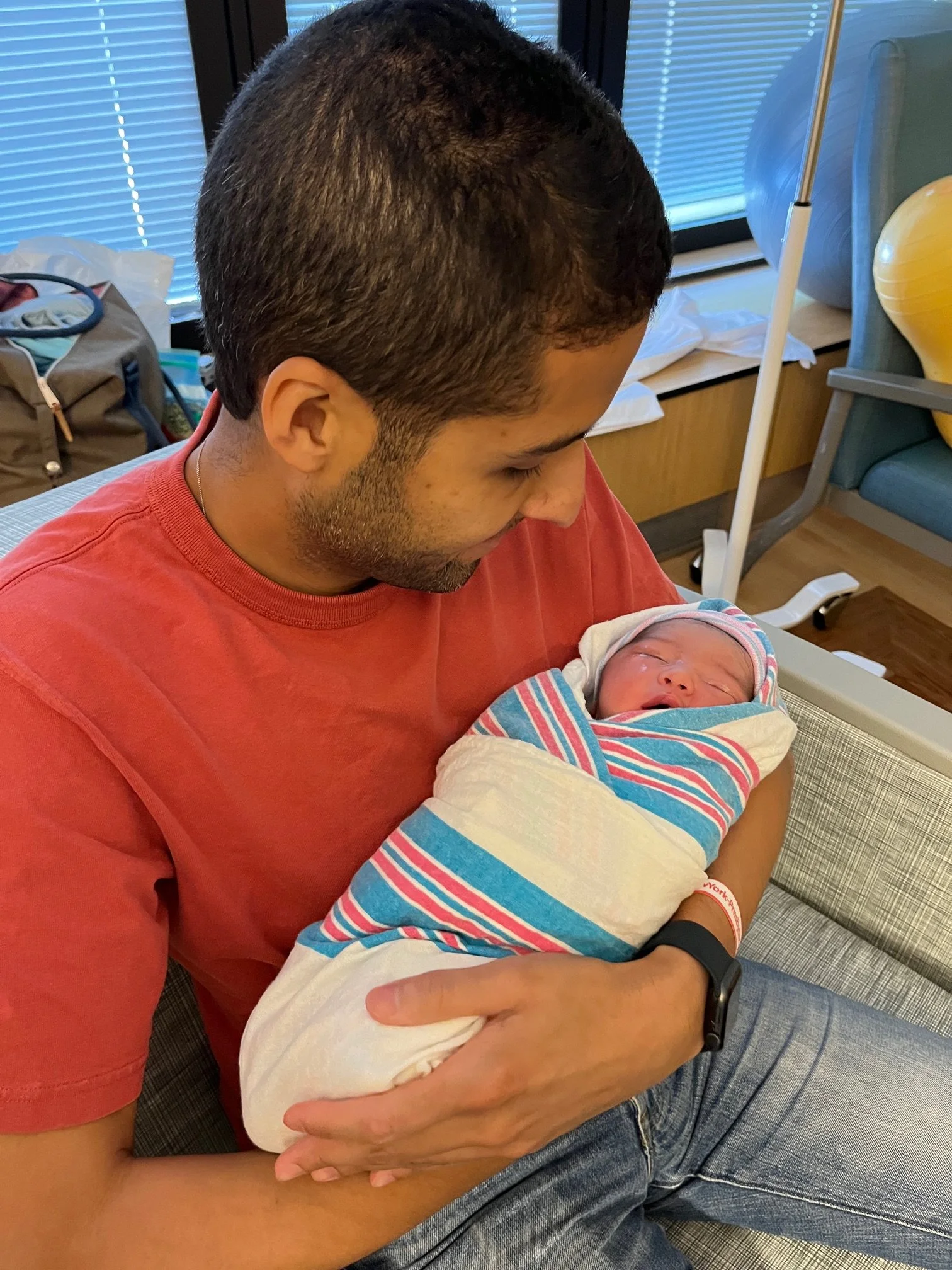
Karen: 51:56
I think, yeah. So initially the positioning was fine. Like the position I was in was the most helpful, right? Which was like on my knees so that the pressure could be off of so it would help with whatever pressure I was feeling in the contraction. So then I needed movement, and I think being I draped myself over the birthing ball, rocking back and forth was really helpful, and just like completely just draping myself over the ball and relaxing my body, like a complete ragdoll over the ball was really helpful. And then at some point, like that stopped working, and then I was really hot, and all I could do was signal to the air conditioning, and Kristofer turned on the air conditioning, and that helped cool me off. We tried heat packs, which helped initially, but then weren't one of these things you try and they help with two or three contractions, and then suddenly they make it worse and you have to throw it away, right?
Kristofer: 52:37
Yeah, a friend of hers from the UK sent her a tens machine.
Karen: 52:41
Yeah, we had a tens machine, we had a comb. The comb didn't help me. The tens machine helped for a little bit toward the end because then around 10, I would say the breathing I needed more help, right? I needed more support than just breathing on my own.
Kristofer: 52:54
And I did some of the pressure, the counter pressures, I did them wrong at first. She was just like, She came out of a contraction and she was like, that was not helpful.
Karen: 53:05
The double hip squeeze, right? Which one of my friends was like, That is you have to get your husband to do that. And we never practice it outside of her class. So he was just pushing my butt.
Kristofer: 53:13
Yeah, she was like, You're squeezing my butt, you have to like, and then she kind of put my hands where they needed to be. And so then in the next contraction, I got it right.
Karen: 53:20
Yeah, like at some point you can't talk, you can't talk during the contractions on your own, and like at some point you stopped being able to talk really. And so that's when they started really intensifying, and nothing was really working. Yeah, and yeah.
Kristofer: 53:31
And I will say this is relevant. At this point, she needed a lot more active support, so it was harder for me to actually time the contractions. And then I mean, we know this now, but I think she was farther along, and it was hard for me as the partner, the supporting partner, to basically she would just give me a thumbs up or when she was.
Karen: 53:53
I was telling him when they would start and when they would end at the beginning.
Kristofer: 53:56
And then you would know when they would end because they just end and she can talk again. But I think what was happening actually was that she was having them so close together. They were really close together.
Karen: 54:06
And so I couldn't talk or signal to him that they were starting. So he was timing it one big contraction when they were actually much closer together.
Kristofer: 54:13
Yeah.
Karen: 54:14
Yeah.
Kristofer: 54:14
And at this, I mean you should tell this part of the story because Oh, okay.
Karen: 54:17
So anyway, it's around 10 a.m., right? Or 10.
Kristofer: 54:19
I remember this one's like 10: 30.
Karen: 54:21
No, I remember looking, I had a FitBit and I like my watch. And I remember I go to grab my watch and Kristofer's like don't look at the time.
Kristofer: 54:28
And I was like, Because I'm still thinking, I'm still thinking we're in it for hours, right?
Karen: 54:32
Yeah, and he's like, you don't want to know what time it is. And I was like, I need to know how long I need to, I was like, I need to know how long it's been and how much longer I need to do this, right? And I look and he's like, Don't do it. And he's like, We've got a long, we've got a long way to go. And I was like, that is the most in my mind, I was like, that is the most unsupportive thing I've ever heard in my life.
Lisa: 54:50
Go back to sleep.
Karen: 54:54
Go back to sweetly staring at me. That's what I thought he was doing. I go grab the watch and it says 1053 a.m. And I was like, oh my god, like it's not even afternoon. If I have to keep doing this, I can't. I don't think I could do this for another 12 hours. I don't think I could do this for another 10 hours. And so I kept saying, at that point we hadn't called our doctor. We had only called the director.
Kristofer: 55:13
Wait, you're gonna jump ahead though, but I think this is important. You went to the bathroom after that, and that's when your mucus plugged. No, yeah, because you said I'm bleeding, and I said, Don't flush the toilet, and I went to look, and I was like, That's your mucus plug.
Karen: 55:25
Yeah, it was very stringy. So, like my mucus plug was coming out, yeah.
Kristofer: 55:29
But at this point, like I'm still thinking we have a ways to go, but like I'm like, okay, it's urgent now, like things are moving, they're progressing.
Karen: 55:36
Yeah, I think I had been urging him at that point. I was like, call Gerges. So just like call my doctor. I was like, call Gerges. And he was like, It's too early. I need an hour's worth of data. I haven't been able to time your contractions for an hour. He's like, he's gonna ask me. I was like, Kristofer, call like all I could articulate to him was call Gerges. What I really wanted to say was, I need more support, and I need I can tell something has changed, and I can't deal with it on my own. And I need my support team to assemble, right? That's what I wanted to communicate to him, but I didn't have the words for it. All I could articulate was like, call Gerges, call Gerges. And he was like, It's too early, don't look at your I don't have an hour's worth of data.
Kristofer: 56:14
And I was like, okay, maybe I should call a doctor.
Karen: 56:16
Yeah, then I did scream it at him, maybe I should listen. Because he doesn't have my data. And I was like, the data, call the doctor.
Kristofer: 56:24
So I called the OB, I call Gergis, and the first thing he asked me is how far apart are the contractions. And I was like, I actually don't know because I haven't. Yeah, but I was like, I think they're four minutes apart. And so she's going through a contraction in the background, and he hears her and he says, if that's her in the background, she's much farther along than you think. I would go to the hospital. And so that's when I'm like, okay, we gotta go.
Karen: 56:48
It's time. Okay, so then who else would it be in the background?
Karen: 56:58
And I will say, like, it was like my friend who had an unmedicated birth was like, I basically mooed throughout my whole labor. So I was thinking of her, and I was doing very low, like low sound, like low moaning, and that really helps. It feels like a release valve almost. And so I was like, I wasn't quite moving, but I was making those noises toward the end, which was really helpful, along with continuing to drape myself and continuing the rocking movement. And then I don't think I heard Gerges on the phone because he wasn't on speaker.
Kristofer: 57:24
No, he was on speaker. Yeah, you just were in it.
Karen: 57:26
Okay, I didn't hear it. And I see Kris moving around, and then I think he said, Okay, let's try to make our way to the hospital. But then he turns to me and he goes, Okay, but I want to do some things for myself first.
Karen: 57:38
Because I need to do some things for myself first, babe. I would like to go to the bathroom and I would like to shower. And I remember my head being like, Are you fucking kidding me?
Kristofer: 57:45
No, I said this is how it happened now. I said, I said That's how I heard I need to take care of some things.
Karen: 57:51
For myself. That's what you said. I remember you said for me or for myself. That's what you said.
Kristofer: 57:57
You said like what? And I said, I'd like to take a shower and I'd like to go to the bathroom. Because I'm still thinking that we're in it for 20 hours, right? So I'm like, when's the next time we're gonna go?
It's a stalling tactic. I was so stalling tactic. It wasn't being selfish.
Karen: 58:12
Yeah, I was so angry. And mind you, I didn't know he had been sleeping this whole time, but I was so angry that he wanted to stall us going to the hospital.
Kristofer: 58:19
I was like, fine, do what you're and I also had to finish packing the bags and loading them into the car. Loading them into the car and pulling, and I wanted to pull the car around, right? So then you were like, I don't think you have time for that. So I was like, okay, fine. So then I go down and I go downstairs, I take the rest of the rest of the stuff to the car, I pull the car up front, and in those two minutes, I think, maybe three minutes that I go and do that, things are like dramatically changed in the room. So when I come back, she's having a contraction, and Cashew bolts out the door.
Karen: 58:52
He opens the door to the bedroom because I was in the bedroom the whole time, and he opens the door, and I don't remember this, but Cashew apparently looked bug-eyed and just sprinted out of the room.
Kristofer: 59:01
Yeah, and at this point I'm like, okay, we gotta go, right?
Karen: 59:05
Yeah, I mean, I was in transition, right? I didn't really know it at the time, but it was like nothing like all of these tools are very helpful until you hit transition. When you hit transition, nothing really works. Yeah, like it is just you just have to get through it. And maybe water would have worked, like maybe, but absolutely nothing was working, and Kristofer wasn't there. He was loading the car. So I just remember I was just draped over my bed and like ripping apart. I was like trying to rip apart my comforter, like all that it was like tactile things. I just needed to like rip things and hold things very strongly. And like I was like, I don't know, I think I was like low-key screaming at that point.
Kristofer: 59:39
No, I mean you were moaning very loudly. And I it was I just remember Rachel being like, You'll know something has changed. I was like, something has changed, right? So then I and it was audible. I'm like, Let's get ready. And so I'm getting dressed, and Karen's like, Well, she comes out of a contraction, she's like, I wanna use the bathroom before I go.
Karen: 59:57
like peeing often.
Kristofer: 01:00:00
Yeah.
Karen: 01:00:00
I was trying to do like the most. I was like, I want this to be over quickly. I want it to be efficient. I gotta pee as much as I can, right? I'm gonna make this an efficient labor. Like none of these painful contractions are gonna be wasted. So I was like giving into them as much, and I was like, I gotta pee. So I went to pee, and as I'm cleaning myself, I feel something coming out of me. There was like something hard, right? And I like open the door and I yelled to Kris.
Kristofer: 01:00:23
You yell, you're like, I think there's something coming out of me. And I'm like, what? So I walk in and there was something coming out of her. And she goes, What is it? And I'm like, there was a split second where I'm thinking back to all the information the doulas had shared to your birthing class.
Lisa: 01:00:38
Like going through all your slides and it's wrong. What's going on?
Kristofer: 01:00:41
And I'm like, this was not in the book. This was not in the class. I was like, I don't know what this is. So she yelled again, like, what is it? And I was like, I don't know, but I'm going to take you to people that do. Let's go right now.
Karen: 01:00:55
There was no time. He didn't do any, he didn't go to the bathroom, he didn't take a shower, we just bolted out. Um, and I think looking back, I knew it wasn't a head because it didn't feel big. We thought maybe it could be a hand or like part of the embodiment.
Kristofer: 01:01:07
My initial reaction was like, Oh my god, this baby is about to be born right now. But then as we're rushing out, like I'm going through everything in my head, and I'm like, no, we're just not at the pushing stage yet. Like, she didn't have any kind of urge to bear down. I think I asked you in the car, do you have the urge to bear down? And you're like, no. So I was like, at that point, I'm like, okay, it's something I don't know about, but it's not my baby.
Karen: 01:01:29
I will say something I remember in your class, which is why I was like yelling to call the doctor and that I needed to go to the hospital, was like there was a slide that you had where you had these emoji faces where it was like early labor and active labor and the emoji, which is like a silly face. It doesn't even look like a person, right? It was like a smiling, kind of pleasant emoji, and it's like early labor, right? And then the active labor emoji was clearly this person's like upset. And one of the cues was like, When you're in early labor, you go to the bathroom and you turn on the light and you close the door. When you're in active labor, you do not care if the light is on, you do not care if the door is on open or closed. Like I remember leaving the bathroom and just like I was bleeding, and I was like, I think I was bleeding all over the floor, and I just left like a dirty pad on the floor, and I'm that's not me. And I didn't even turn on the light, or I didn't turn off. I didn't even turn off the light. Like I left the door open, and I remember gonna walk out without pants on.
Kristofer: 01:02:17
I had to be like you should put pants on.
Karen: 01:02:18
Yeah, like I remember because it's all inhibition, right? Yeah, like I just my sense of decorum and like just was out the window, and I remember thinking of that slide and that face, and I was like, I am that emoji, that is my face. I was like, Oh shit, like we are an active labor, we have to go, you know, and I think that it's I didn't think that was the one slide that I would come to mind, but that's the one slide that really helped me realize we gotta get a move on.
Kristofer: 01:02:39
Yeah, yeah. Anyway, we run out, and as we're going, we have some steps in front of our building, and as we're walking down the steps, she goes, I think my water broke. So then I'm like, Oh, the playbook is all out of order here, right? I'm like, we it's just a different kind of labor, and I'm like, shit, we might be in trouble. And thank god it was early still, it was like 11:30 ish when we left 11:30, yeah. Yeah, on a Saturday. So there was traffic on the BQE because our hospital was Brooklyn Methodist. Um, but it wasn't too bad. But I was going very fast. I called the OB on the ride there, and he didn't pick up, and then I called Rachel, our doula, and she did pick up and she's like, Hey, what's going on? I was like, We're going to the hospital. And she was like, Okay, I'm getting ready. Uh I'll be there as soon as I can. I think it'll take me about 20, 30 minutes. So we get there, we no, well, actually, the ride was you need to be here for this part of the ride because I annoyed her during the ride.
Kristofer: 01:03:41
I kept doing this thing where I didn't know if we were gonna make it, and so I kept telling her how far out we were from the hospital.
Karen: 01:03:50
Yeah, so when I got like I leaving the building, I could feel like I didn't think I realized how messy contractions can be. There's stuff coming out of you constantly. And so I had put on a pad and I could feel as I was walking, I waddled my way to the car. My pad just suddenly got soaked, and I was like, Oh, this is my water breaking. And I had remembered, which is really important, we didn't put the car seat in so that I could be in the back seat. And I took a pillow, not for the hospital, but just so I can lay on it in the backseat. So I just crawled into the backseat and I was again at all fours, like no seatbelt. Because you had said, Don't worry about the seatbelt. We didn't worry about the seatbelt. Crawled in on the backseat, and I had I was continuing, I was still in transition. Like I was still in transition in the backseat of the car because the contractions were just like on top of each other, and I waited till a contraction to end for me to leave the house. So I was trying to time my movements around like any break I would get in my contractions. And so I was, I remember like gripping the side of the arm handle, and my feet were like pushed against the door. So I was like, I hope this door doesn't open in the middle of the highway. And Kristofer was like, We're 19 minutes away, babe. We're 13 minutes away, babe. We're seven minutes away. And I was like, what is it was like I wasn't sure if he was anxious or what he was trying to tell me, but it wasn't helpful to me.
Kristofer: 01:05:00
But I think because in my mind, I'm like so hard to know. Well, I'm like, if she knows how far away and she's like, I can't make it, then I have to pull over and figure out how to deliver this child. I didn't have to think that's what he was thinking.
Lisa: 01:05:12
Yeah, you're like, give me a little late time. I'm just having to tell you. That makes sense.
Kristofer: 01:05:16
I'm going through my mind, like, what will I do in that situation? I was like, well, I guess I'll call an ambulance first, and then I'll call the OB and be like, okay, dude, walk me through it, you know?
Karen: 01:05:25
Like, but I had I remember thinking, like, I know Lisa said it's very uncommon for you to give birth in the car. Like, it's not gonna happen to us. But I was like, what if we're like the reporter couple who has a baby on the BQE? I was like, of course it would happen to us, even though it's like a 1% chance like it would. But I didn't, I didn't actually feel like pushing. Like I felt like it wasn't gonna happen because I was clearly still having contractions in the car. Um, and I remember seeing the building sort of glide by. And then the longest was like when we were on the streets and the red lights because the lack of movement, you just I don't know what it was that being stopped in the car was like really uncomfortable. But we did make it, and when we pulled up, they had told us there was valet parking at our hospital, but not on the weekend.
Kristofer: 01:06:05
Uh and actually there wasn't, it was valet across the street, so that was the other problem. Oh, but did we pull up in the wrong? So we pulled up right to the front of the hospital, and we load out, and the guard was like, You need to park your car. And I was like, But she's in labor, and she's like, I don't care, you need to park your car. And I was like, I'll just take her up and be right back. And she goes, No, you won't.
Lisa: 01:06:25
Oh, come on, dude. You see how advanced she is.
Kristofer: 01:06:29
I was like, at least get her to the ward.
Karen: 01:06:32
And he had given me my water bottle and my ID card. And I remember when we pulled up, he had asked me, like, are you sure you can do this? And I, in my mind, I was like I think our that's our baby grunting in the background. In my mind, he was asking me, like, are you ready to give birth to this baby? And I was like, Yeah, I have no choice. But in his, he was actually asking me, like, do I need to get you a wheelchair? Right? He was like, and I was like, Yeah.
Kristofer: 01:06:58
I said, Do you need a wheelchair? Can you do this? You just only heard this.
Karen: 01:07:00
I only heard, can you are you sure you can do this? And I was like, Yeah. So I walked myself into the hospital because I was angry at his question. So slamming doors. Yeah, so again, he had left to go park the car. I'm waving my ID to the guard. The guard that moves her little podium, lets me in. I'm waiting for the elevator. I remember these old ladies, I was having a contraction at the elevator lobby, right? So I leaned against the elevator, sounding like who knows what, like a dying cow, I don't know. And these old ladies are like, Are you okay? And I was like, putting my hands to them, like, please do not talk to me right now. I cannot answer your question. And no, I'm not okay. And so I go up to the and then the security guard was like, Do you know where you're going? And we had done a hospital tour, but again, I do not have my glasses on. I am blind, I cannot see anything. And I was like, No. So she like escorts me to labor and delivery. Labor and delivery, like, takes my information and was like, Can you give your ID to the lady with the glasses? And I was like, I cannot see who has glasses. Please, can you do that? Um, and thankfully, I think by that point it was like really good timing that my contractions had slowed down. So I think I was out of transition almost as soon as we walked into the hospital because there was some time between contractions where I could have conversations with the nurses and walk myself to triage. Um, and then in triage, like they asked you so many questions in triage. Like, isn't it ridiculous? It's so that pointed labor is just like yeah, and I but like again, like I did not care. I was like, something is coming out of me. Can you check? And I just pulled down my underwear and she's like, We'll get someone to check. And they like pages of and they like me but I remember at that point I felt like really in my body, and like I was like trying, like I was like back in it. It's crazy how when you're in a contraction, you're completely out of body, right? It's like you cannot hear, you cannot like ever all your senses are dulled, right? You're just like focused on what is going on. Once a contraction ends, you're like you snap back into it. You can have a lucid conversation. And I was answering these questions in between. I could remember the date of my surgery for fibroids. I could remember that I had been out of the country. I was like, we baby mooned in Milan, in Italy. That's where we went. Like I was having complete conversations with the triage nurses, but not during contraction. So it was crazy how you change and how like with it you are in between. And they had made me, they wanted me to lay down, but like already there was so much pressure on my back, which is really hard. I remember taking off my like again, threw off my underwear, took off my shoes, and I think Kristofer, I was telling everybody, I was like, My husband's parking the car. My husband's parking the car, he's coming.
Kristofer: 01:09:24
Yeah, when I got up there, I texted her because her mother was here, so I texted her mother saying we made it to the hospital safely because she was concerned. And I remember it was like almost 12. And when I get up there, there's just I can hear over the PA, so-and-so to triage, and there's like people running around. And so when I get to check in, they knew who I was. I was like, I think that's my wife, and they're like, Yeah, come. So I get in there, and there's a bunch of nurses and doctors around her, and I was really concerned. Like, I'm just I still didn't know what it was that I saw, and so I was like, I don't know if it was the baby, if it wasn't the baby. And so my first question was, is she okay? And they're like, She's fine. And I was like, is the baby okay? And like the baby's fine. And then I was like, okay, cool, where can I stand where I'm out of the way? And they're like, you can go right to the room because your baby's here. And so I didn't even really we I don't if we were in triage for five minutes, that might be too much.
Lisa: 01:10:16
You know, I don't know how long it was, yeah.
Kristofer: 01:10:18
It was really brief. And they just saw, they showed us to the delivery room. A nurse came in and gave me one sock and her underwear and her shoes. And I was like, where's the other sock? And we're like, we don't know. Moments later, she's wheeled in and the sock’s on her foot.
Karen: 01:10:36
It's like half on my foot. It's the one sock half on my foot.
Karen: 01:10:40
I remember in Triage they did a cervical check during a contraction, which was very unpleasant. Oh no. Very unpleasant. And I think at that point, when my water broke, that was what it was because they didn't feel anything coming out. So I think it was my amniotic sack that was coming out in the
Lisa: I figured it was the forewaters, yeah.
Karen: Yeah, so we get wheeled into the room, and I was like, I had to lay on my side because it was like way too, it was way too painful to be on my back. So I was like on my side and I was gripping the sort of plastic siding on the bed.
Kristofer: 01:11:06
One of the doctors, or maybe he was a nurse, I'm not sure, but they were like, Well, before she comes in, a doctor, kind of like the attending doctor, was asking, Did you want an Epiduro? And I was like, We were actually trying to do limited intervention if possible. And he was like, Great, because that ship has sailed. And I was like, Cool. Yeah.
Karen: 01:11:25
Yeah. And I know that's hilarious. Yeah, I was 10 centimeters dilated. Like I arrived and I was 10 centimeters dilated. And they're like, Yeah, the baby is here. They were like, he's ready to go. Um, and I remember the doctor, one of them, I think it was one of the residents, was like, Do you want an epidural? And I was like, Do I have time? Like I knew it wasn't. Like it didn't make sense.
Kristofer: 01:11:46
And then the attending jumped in and he was like, not really.
Karen: 01:11:48
And I was like, it's fine. I want to feel like it's fine, I want to feel this part. And I've already gotten through what I what in my mind I was like, I think I'm over transition because again, there was like a lot more time between contractions. And I just felt a lot more present. Like I wasn't as like far away as I was during the sort of the transition. And at that point, my doula hadn't arrived. It was new. So we pulled up to the hospital basically at 12. By 1220, my doula arrived, Rachel.
Kristofer: 01:12:13
It was like a 1225.
Karen: 01:12:14
Yeah, and she was like a fairy godmother, she's like a little fairy. She came in, she immediately got a cold compressed towel and she put it on my forehead, and it was instant relief. Like it was such a little touch of magic that made me feel so much better. And then they just left us in the room. I was like, should I push? I don't know what to do. Then we just had a few more contractions in the room.
Kristofer: 01:12:34
We had a nurse with us and they were putting connecting her to things. Yeah. I remember I was still pretty anxious about the baby until they put the heart monitor on.
Karen: 01:12:44
And once I heard the fetal monitor, yeah.
Kristofer: 01:12:46
Once I heard the heart, I was like, it just sounded like what it had been sounding like. Which is that like sound?
Karen: 01:12:52
Yeah.
Kristofer: 01:12:52
And then I was like, okay. Like he is.
Karen: 01:12:54
It's really comforting to hear that. Yeah.
Kristofer: 01:12:56
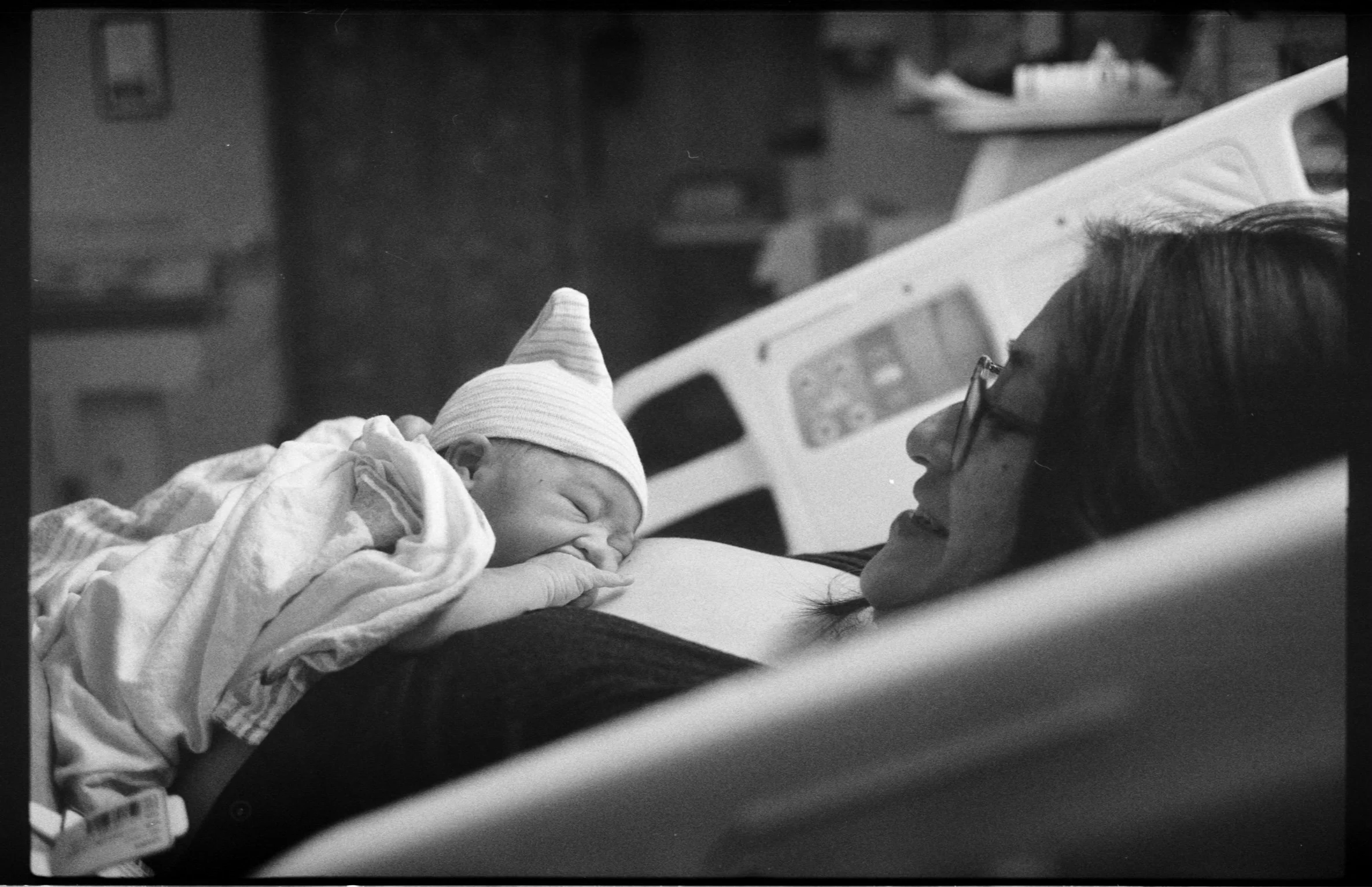
And so once they put everything they needed to put on her, she asked if should I push? And they were like, if you can wait for your OB.
Karen: 01:13:03
They all wanted me to wait for my doctor. Yeah. And they like draped me with a little sheet. They're like, okay, you could push, but they like covered me.
Kristofer: 01:13:09
And then all walked away.
Karen: 01:13:11
Yeah, and then they left us in there. And I was like, okay, I guess we're just chilling.
Kristofer: 01:13:14
So, you know, we were going through contractions for about 20 minutes. Another 20-30.
Karen: 01:13:20
Gergas arrived at like 12.40. He arrived 40 minutes after because he was stuck in traffic. Yeah.
Kristofer: 01:13:24
And he walks in. At this point, once he arrived, like all of the support staff came in. Um and they actually came in right before he came in. And when he walks in, she was being really odd, like she was just cracking jokes between contractions. And it was just like, I mean, it was nice because like I knew one that like when she was going through contractions, that she had it, she was doing everything she needed to do. But also it just like I it made me more at ease. But I don't think she was doing it for me. I think she was just in a good mood.
Karen: 01:13:56
I really was in a good mood. It was really strange, actually.
Kristofer: 01:13:58
And so when Gergas comes in, he goes, Okay, guys, what are we doing here? And she goes, Nice of you to show up.
Karen: 01:14:10
I don't remember saying that, but I was like, welcome to the party, and we're having a baby, like help me get this baby out. That's what we're doing.
Kristofer: 01:14:18
And it was pretty funny because basically from that point on they were just cracking jokes with each other back and forth uh through the contractions.
Karen: 01:14:25
Oh, I remember like in between contractions, um, like because you push, you know, you push during contractions, right? And then you take a break. And there was like, I would say a couple minutes between my contractions. Like I had a nice break in between, or I felt like it was restful.
Kristofer: 01:14:37
In the beginning, there was a lot of pushing, and then there was a moment where I think you just needed a break. Yeah. And they were like, take a break.
Karen: 01:14:45
Yeah. Um, and I remember looking at Kristofer and I was like, Do you want to make out with me? But that's one of the things. That's one of the things recommended, you know, to get your oxytocin levels up. And I didn't really mean it. Like I didn't really want to make out with him, but he was like supportive partner as ever.
Kristofer: 01:15:05
I was like, Are you for real?
Karen: 01:15:06
Like if you want me to. I was joking.
Lisa: 01:15:10
I think it's yeah, I've never thought about it for the pushing stage, but yeah, I don't I wish you were joking.
Kristofer: 01:15:16
Yeah, and then I think I said I will say that like you were like you were very awesome, like you were super attractive in that, like throughout that whole thing.
Karen: 01:15:24
I did ask you, I was like, are you more in love with me than ever before?
Kristofer: 01:15:26
And I was like, yeah, actually. I don't know. I was just like, at that point it was clear that she had gone through it the way that she wanted to. And I mean, in retrospect, but also a little bit in the moment. It's like she was really diligent about all of the you know, the Pilates and all the yoga and all the exercises. I remember, and beyond that, like you took really good care of yourself. You know, you really listened to your body throughout the whole Which meant, I think, slowing down.
Karen: 01:15:51
For me, it meant drastically slowing down.
Kristofer: 01:15:53
And so, like in that moment where we by accident, but we actually were executing our birthing plan, and she was in such a good mood and so present in herself. I was very much in love with you, but just like also in awe. So in awe of what you had, what you were doing. So I would have made out with you if you wanted to. If you’d been serious.
Lisa:
It's beautiful.
Karen: 01:16:19
No, it was very sweet. Like I remember being turned and I was like holding onto his hands, and I was pushing, like holding onto his hands, and the nurse was like, It might be oh, and then the other thing I said to him was like, Can I rip your shirt? Because one of my other friends would have had an unmedicated birth. She actually ripped her husband's shirt in half. And I was like, Why did you he wore a really thick shirt and I think so that I wouldn't break it?
Kristofer: 01:16:37
Yeah, I didn't want to rip my shirt.
Karen: 01:16:39
It was like an expensive thick shirt, and I was like, Can I rip your shirt off? And he was like, He's I think you said something if you just want to do it for the story or something.
Kristofer: 01:16:45
Yeah, that's yeah. And I was like, do that.
Karen: 01:16:47
This was our conversation in between pushing, like it really felt like Oh, I wish I could have been there. This one. Staff must have been like, Who are these weirdos?
Kristofer: 01:16:55
Um they were amused by us.
Karen: 01:16:57
Yeah. And like this whole time I have one sock on, right? So then I'm like pushing and I'm holding on to him. You never put on the other sock.
Karen: 01:17:04
So I'm like holding on to him. And then at some point the nurse is like, and I remember I like I knew something had changed because I could very clearly advocate for myself at this point. Like I could advocate that like when in triage, I needed to lay on my side. When I got to the room, the nurse was like, Okay, lay on your back. And I was like, I cannot lay on my back, it's too painful. I'm gonna lay on my side. And she was like, Okay. And then I said, Can I put something in between my legs? And they're like, Yes. And they brought me a peanut ball and I put it in between my legs, right? I was like, Can I start pushing? And I was very much present, which I really wanted to be. And I don't remember if I asked for a headlock or an Ivy headlock.
Kristofer: 01:17:36
You did, it was the first thing.
Karen: 01:17:37
Yeah, and they gave me an So I wasn't tied to any tubes. Like my biggest thing was like, I want to be free and like to move, not confined to anything, and I wasn't. And then yeah, I remember I pushed, and then at some point they were like, it might be more effective if you like like turn through because what I kept doing is I kept like during the contraction, she was closing. I was closing my legs because I think I wasn't like relaxing my body enough, and I could feel that. And I remember turning to Kristofer at some point and saying, I really need to relax myself because I was really tense, and I was thinking of my pelvic floor therapist, Sonia, who like you need to open your pelvic floor and relax when you're pushing, right? And I wasn't doing that, I was like tensing up. So once I started to open and relax my body, I felt like my pushes were a lot more effective because I wasn't fighting against myself, right? And I wasn't able to relax my leg on the sideline, and so actually turning on my back, um, I would only turn like kind of three quarters.
Kristofer: 01:18:31
Yeah, you weren't fully on your legs.
Karen: 01:18:32
Yeah, to push, and then like I would hold my knees, and that seemed more effective. Like I remember initially I was like me through my pushes, and then Gergis was like, you know, if you direct some of that energy into your pushing, it might be more effective. And it actually was right, and at some point he was like, push with your core, and I was like, Oh yeah, like I can do that. And once I started pushing with my core, and he I think he was saying, like, you need to visualize yourself opening. Yeah, and like it's kind of counterintuitive, but yeah, and I think that really helped. The baby was out by 102 to 102. Like, I wasn't pushing very long. I pushed for maybe like 20-30 minutes. Yeah, and
Lisa: You were feeling the urge, or not really?
Karen: I was feeling yeah, toward the end, I toward the beginning I wasn't like I think by the time like a little bit before the doctor got there, I started feeling the urge. Like I did a couple pushes without him.
Kristofer: 01:19:17
That's why they asked you to wait because you turned to me and Rachel and said, I feel like I have to push.
Karen: 01:19:23
I did, okay.
Kristofer: 01:19:23
Yeah, and then me and Rachel were like, go for it, and they're like, like, can you wait?
Karen: 01:19:27
Yeah, okay. Yeah, so I did a couple pushes before he got there. Yeah. Yeah. But I would say the most was when he was there. And I actually liked being able to surrender to my team and let Gergas tell me what to do at that point. Because I had done so much, right? And felt nice to be like, Can you just turn, can you hold your can you put your hand here? Can you and I was like, Great, just tell me exactly what I need to do. And I think that really the baby was out, he was healthy, and then he was suddenly crying on top of me. And it was really beautiful.
Kristofer: 01:19:56
Yeah. Really quick birth, which I think I think we realize now. That quick births aren't necessarily a great thing. There's like complications. Nothing crazy. It hasn't been anything crazy, but it just takes a little bit longer to heal. And like Karen, yeah, there's just been some things that resulted from it. Actually, he has a lot of things that we had to work through early on.
Karen: 01:20:16
Yeah, like a lot of neck tension and jaw tension and stuff.
Kristofer: 01:20:19
And we think it's partially probably because of the quick birth and maybe partially because he was crowded because of the fibroids.
Karen: 01:20:25
Yeah. I had a really another tip, one of your tips, we actually did get a tour of my placenta.
Lisa: 01:20:31
Oh yeah.
Karen: 01:20:32
My doula actually showed us the placenta just to make sure there weren't any parts still stuck in there. Yeah, the doula did. Interesting. Yeah. And so she and it was really actually cool to see his little house that he had been living in. And I had a very large placenta, which is crazy that that placenta was in there with a six-pound, 11-ounce baby with a very long umbilical cord and two fibroids. Yeah, it had a very long cord. I think my doula said it's one of the longest she's seen.
Karen: 01:20:56
It's wrapped around his shoulder, like a little sash.
Kristofer: 01:20:59
Yeah. Highly recommend it, actually. Like it's pretty wild.
Karen: 01:21:03
The placenta tour?
Kristofer: 01:21:04
Yeah. It's just it's something crazy to see. And I'm glad we were a little reluctant, but I think our doula was like, she's like, yeah, you should do it. And I think part of it was also to make sure it was all out. So then I'm glad she gave me the nudge.
Karen: 01:21:18
Yeah. And she, I don't think we wanted photos. Kristofer brought his film camera, but he didn't have any time to take pictures.
Kristofer: 01:21:23
There's no time, yeah.
Karen: 01:21:24
And I don't know that I wanted photos, but our doula took pictures. I'm so glad she did to document that moment because you forget so quickly.
Lisa: 01:21:30
Yeah.
Karen: 01:21:31
And I remember she took a video of like right after the baby was born as they're like moving him toward me. And I think someone said, Oh, you made that look easy. And I was like, Yeah, with one sock on. And I just, I don't know why this sock was like a recurrent theme throughout my labor. And it was like half on. And then I remember the nurses that went snapped it completely on, and it was like a full sock. And it was just and again, no glasses, so I couldn't see the faces of anyone who was delivering my baby. Any doctor could have delivered my baby, but I could not have seen their faces..
Karen: 01:21:60
Um, and I kept saying that. I kept saying, like, I can't see any of you guys. And I did bring you snacks. I was like, there's snacks in the car for you. Oh, in the middle of pushing, I'm sorry, there's Milano cookies, yeah.
Kristofer: 01:22:09
And I have to tell you to stop it. It was like focus.
Lisa: 01:22:13
You're birthing a baby, not gifting things.
Karen: 01:22:16
But I will say, like, the laughing and sort of like the vibing with everybody in the room, like I think it helped relax me. Like it didn't, I didn't want it to feel like this really big medical event with all these tubes and like beeping noises and like a sanitized hospital room. And I think actually not being able to see helped that in a way. Like it doled my senses. Yeah. Because everything was like the soft blur effect, right? Like I didn't even see light really. It was actually, it helped. It helped me to just focus on what I needed to focus on and really relax and be in the moment. And the only person I could see was Kristofer because he was the closest to me, like on my side.
Kristofer: 01:22:51
But I will say we didn't mention this earlier, but we had done hospital tours of two hospitals, and uh Brooklyn Methodist was really fantastic. We had a plan, but we actually didn't even need to hand it over because a lot of what we wanted, they already do. Yeah, that's their best practice.
Karen: 01:23:07
We also didn't have time to hand it over. Like one of the nurses was like, You had a birth plan, and she was like, uh she laughed because there was just no time to look at it.
Kristofer: 01:23:13
Yeah, but we were fortunate that like we were with the hospital that already was doing a lot of the things, everything that we wanted, really. And so we got really lucky with that because I think if we were anywhere else with how quick everything happened, if they started to do things that we had to then advocate for, it might have snapped her out of it. Like it might have just slowed things down a bit. Yeah, we got lucky in that everyone on our birthing team was really aligned with what we wanted.
Karen: 01:23:39
Yeah, and I felt like I could relax and surrender to my team. They were all just I love my birthing team. Everybody had the role to play. Oh, and okay, so I will say I remember something that was really helpful for the end of my strength contractions and for the beginning of transition. Transition, nothing really helps, but like the beginning of transition was actually visualizations. And I remember one of my doula, she had these bi-weekly visualization or imagery workshops. I took one and I was I didn't know what it was, and I was coming off of work and I was still in work mode, and she had like someone who specializes in this come into a workshop, and you visualize your baby in your uterus, and you try to talk to your baby, and I was like so bad at this. They're like, What do you imagine your baby saying to you? And I was like, absolutely nothing. Like, I can't picture my baby. So she kept trying to encourage these exercises, and all the other women on the call were so thoughtful and had beautiful things to say, and I had nothing, and I was so bad at this, and I didn't understand what it was. And the only image that I could think of during that whole session was like I was picturing like a cenote, like this pit of water, this fresh water, and like me floating in it in a white dress with my baby, and with plants hanging. That's like the only image I could conjure in this hour.
Kristofer: 01:24:47
No, this is the first time hearing this.
Karen: 01:24:49
Oh, yeah. And she was like interesting, and she wrote it down, and I was like, Thank God I like have something to say, right? Because everything else, I had nothing to say. I was still in work mode, I couldn't turn my brain off. And I was telling Vicki, I was like, I didn't know, I'm sorry, I didn't know what it was. Like, I don't know if it quite clicked for me, and it was like, maybe this is a little too for me. But in the thick of contractions, that really helped. Like, I was visualizing me swimming in this pool, asking for my baby, like thinking of where I kept asking my idea, I was like, where are you? Are you coming? Like, where I where are you? And that's the only thing that got me through the beginning of transition, just like honestly visualizing me in that pool with the baby. And I don't know if you've ever been to Mexico and you've seen these cenotes, there's like these blind fish that swim in there, and they like bump into you, right? They like bump into you and they're like when you're swimming because they're blind, but it's the only thing I think they'll survive at a certain depth or something. So I was almost like this blind faith I had to have that he was like working his way toward me. And I remember that immediately was the only thing that could help relax me and get me through the intensity of what I was feeling, just like visualizing him working his way through my body, like visualizing this like calm pool of water with these like blind fish swimming in it, bumping against my body, and like these like hanging green leaves. And I told Vicky, I was like, I would have been the last person to say that visualizations and imagery would have helped, but I like it really came in handy at the end, and I was surprised by it. And I'm really glad I ended up taking that. So you never know what tool like in your tool belt will help you.
Lisa: 01:26:14
Yeah, that's so true. Yeah, yeah, thank you. I love that. I have been to Mexico, but I don't believe I encountered the blindfish.
Karen: 01:26:24
Yeah, I just remember that because they like they have whiskers and they like bump you. We were there together. Do you remember with our parents?
Kristofer: 01:26:30
Yeah, it's not she called it a pit of water, but like they're these really beautiful geological sort of formations. They're like fresh water, I guess they would be wells, but they're special because imagine that you're like in a cave with the skylight. Yes, right?
Karen: 01:26:45
Yeah, that is exactly what it was.
Kristofer: 01:26:46
And then there's and there's these deep kinds of wells. Um, some of them don't actually know where the bottom is because they're so deep.
Karen: 01:26:52
So they're like very quiet because they're like on they're almost like underground, right? And you like you if you're floating, if you imagine floating in the water, you're looking up at a skylight, right? Yeah, and it's like a very calm, still water. And that's what I was picturing, like this like stillness, floating.
Kristofer: 01:27:07
And then they're in the Yucatan, which is tropical, so it's really lush and green, like vegetation around the walls of the cave.
Karen: 01:27:14
I don't know why this image came to me during the exercise and why it came to me during birth, but I cannot explain it to you. Um But yeah, that's where my mind went and sort of talking to him. And I think the idea of like thinking of me and my baby as a team and like us working together to bring him earth side, I think was very helpful, right? It wasn't like me pushing you out, it was like us working together to get you out. It was like us working together through contractions and also thinking what it could be and what it felt like for him. Like it must be really disorienting to be like, you know, uterus out. Um, and so yeah, I think that really helped knowing that I wasn't in it alone and that he was also going through it.
Kristofer: 01:27:52
Um Yeah, I mean we were even even after we were like well into you know like second trimester, I think we were still a little bit anxious, like most parents would be. Like there's so much you don't really know until the baby's here. But I think that we started to realize that he himself was very intuitive and that Karen would get these certain kinds of cravings later on, actually. They didn't happen quite often in the beginning. And then you just sort of realize, like, oh, it is a team, and the baby is telling you not with words, but the baby's telling you what's needed. And if you just pay attention to those cues, even now, and it's actually really important in the fourth trimester as they call it, but yeah, because they don't have language really, right? Um, and you're just constantly troubleshooting. It's like, is it a diaper? Is it uh, is it gas? But if you center yourself and calm and just sort of listen, they are telling you what it is and what they need. Listen's kind of the wrong thing. I think it's like I feel what Yeah. Yeah.
Karen: 01:28:51
I mean, I think that's why like during contractions, I knew something was different. I knew something had changed and I needed more help. And like I'm glad I listened to that and I tried in whatever way I could to articulate that. And I just, you know, I just did what my body needed me to do, whatever position my body needed me to do, right? Like I think that helped me through it. And I will say that if there's one, like I remember when you when we took the class, you asked us the first question you asked is like, how would you describe labor? And I said something lame, like, it's a journey, or something like, I don't know, when you whatever you say when you don't know anything. And now I think I would say, like, if there was one word I would use to describe it, it would be surrender. Like, I think surrendering to the process is something that helped me get through all of it, right? Like surrendering to the fact that I needed to slow down and stop walking so much, surrendering to the fact that I need to do yoga and Pilates now. I can't do hit workouts, right? Surrendering to the fact that I needed to be on all fours and I needed to be in certain positions and I needed to open my body. Like, I think that really helped expedite things and sort of move, make my contractions as efficient as possible and get us to a really healthy and beautiful ending.
Kristofer: 01:29:55
Yeah, now then the baby gets here and everything.
Karen: 01:29:58
Yeah.
Kristofer: 01:29:58
Yeah, it wasn't so smooth in the immediate, but we're figuring it out now. There's just like for all the reasons why labor and pregnancy can be, you know, there's infinite different kinds of ways it can happen. It's certainly true when you have a new person here with you. And I again thanks to your class and like a lot of thanks to our doulas, like they really were in those early days very supportive. And we had had such there's one thing actually that was really shocking to us, which is that our labor and delivery team was so supportive and gave us so much information, and then you forget there's this bigger medical system. Yeah. And then the second you go to your pediatrician, because like I don't know, I I mean we should have thought about it, but we didn't think about it, and so then we just sort of decided on one that was kind of close by, and we do have a pediatrician at the practice that we really like, but not all pediatricians are made the same. The same way, like not all OBs are made the same, and so those but it's really, really crucial, you know, now like thinking back on it. I wish we had done a little bit more work and found a provider or a pediatric provider that was aligned with us because those are like those first three, four days are so important and can really set you on a trajectory that um you know can add challenges, I would say.
Karen: 01:31:20
Yeah, the feeding journey. But yeah, I think you had said this where like pediatricians I think spend like maybe a couple hours on breastfeeding, and that's it. And I remember thinking zero to three, yeah. And that's very clear, right? Like that was very clear with one of the pediatricians we had, and we had a very awful and it was so funny how quickly that bubble that we had created for ourselves burst the minute we talked to this pediatrician, and she was just awful. She was awful to us and made us feel like we were terrible parents.
Kristofer: 01:31:46
Yeah, like almost the exact opposite.
Karen: 01:31:47
Yeah, because we had our baby lost weight, which is normal, right? But so it was like how quickly this postpartum, this bubble that you created, this like team that you created, you enter the real world, right? Yeah.
Kristofer: 01:31:58
Um so that's uh hundred 150% recommend that. Yeah, just vet your pediatrician. Yeah, expecting parents that you think about on the other side of it, like who's your team, it took us a while. But we found someone and she's fantastic. But I wish we had that person ready to go like day one. Yeah. She actually was our day one who ended up actually coincidentally being at the practice that we picked, but she's not the first person we saw at that first visit. She was just a chance. Yeah, she was on call. Uh oh.
Karen: 01:32:29
Um, I think we gotta do a diaper change.
Kristofer: 01:32:31
Oh, okay.
Lisa: 01:32:34
We can wrap things up. Okay. So we didn't get to share any final tips. So you already get you've provided some really wonderful insights, but anything else before we wrap it up? Any tips?
Kristofer: 01:32:47
I think the same way that you would be very patient and kind with yourself through labor and everything before that. I think as new parents, that's really important to remember too. Um everyone will tell you this, and it means nothing until you have the baby here, but they really immediately immediately challenge you in ways that if I could have thought of all the ways that he was gonna challenge me, I would have never imagined the one that ended up being the real challenge, which was having patience. And because I'm a very patient person. And there's a lot of days where I'm just like, man, immediately it's just oh, I could have done that differently, or I could have, and then you beat yourself up. But you just are really fake, it's you're figuring it out and you're all figuring it out together and being kind to yourself in those first probably throughout the whole time you're raising the child, but like definitely in those first couple weeks is important. Um so that would just be something that I'll say, and I know whoever watches this will forget it immediately, and hopefully you remember because um you need a lot of grace for yourself and and for your partner and for your baby, you know. I got it. You wanna go?
Karen: 01:33:49
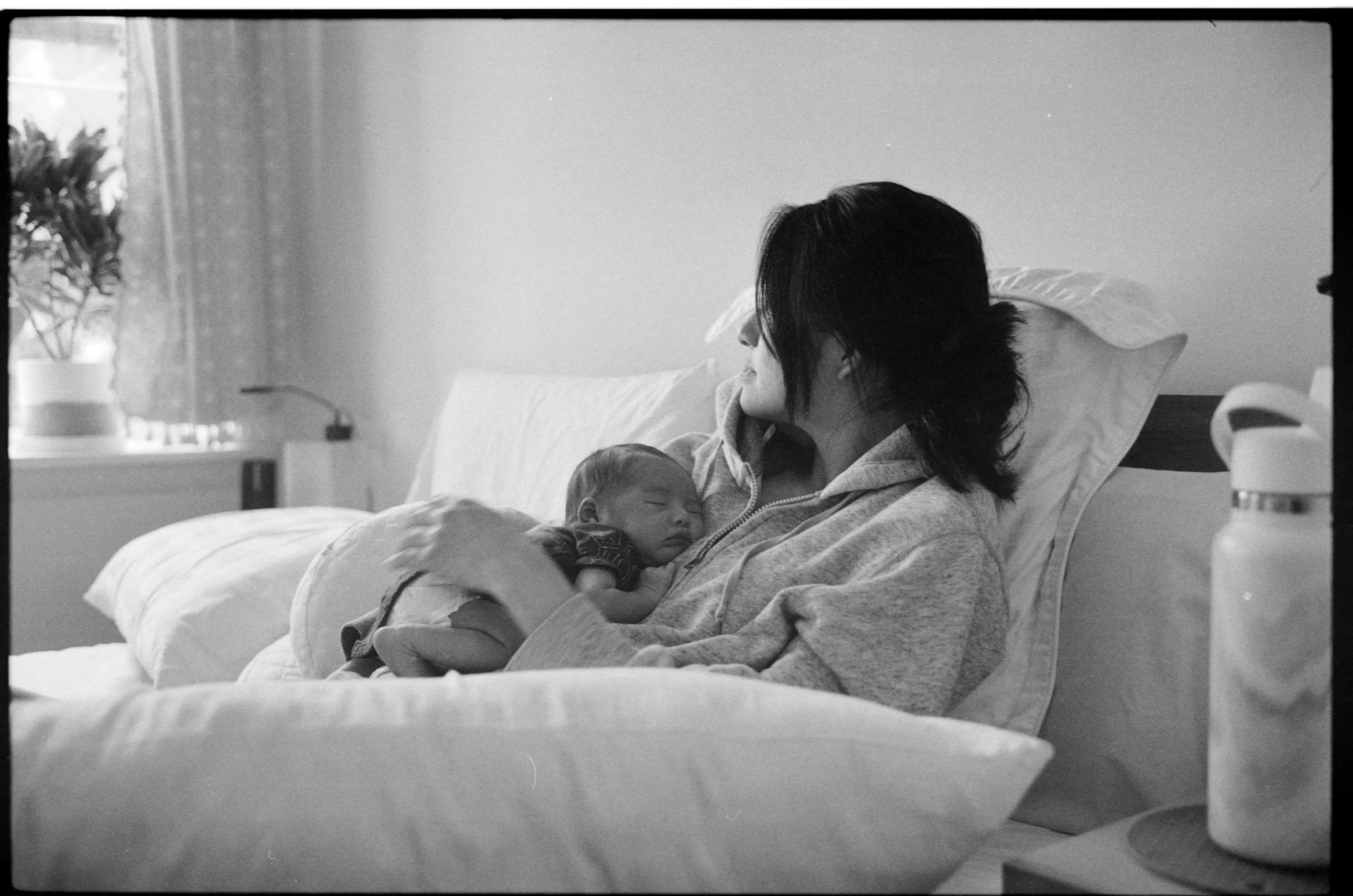
Yeah. He's been very patient. We were lucky that we didn't have any medical complications, but we could have, right? And I I think it's less about the outcome of your birth and your experience, but more about like how you feel about it and how you navigate it, because I think we could have ended up with an entirely different medical outcome, but it just it felt like we just were informed and we had such a good team around us that we really all cared and respected each other. The outcome almost didn't matter, right? Like we were lucky that it ended up the way it did for us, which it wasn't what we were expecting. I didn't want to get to the hospital seven to eight centimeters dilated, not 10, right? We barely spent 24 hours in the hospital, but just knowing that we had people that we trusted in our circle was everything. And the doula just opened all these doors for us and continued to be a per uh resource for us after. So I think having the right people in place that you trust is really important, more so than the outcome, because it's like you reflect on it differently and you feel better. Like I'm really happy about thinking about my labor story and my birth story. Like it was really positive, and I'm so obsessed with everyone's birth story now. I want to share mine, right? It's very weird for me to talk about myself this much. And then the second thing I would say is really, I know everyone says this, but truly think about your postpartum care because postpartum is hard, very, very hard. All everything, and I didn't have a complicated birth. I had a secondary degree tear, which is very common. But everything hurts at the same time. Like everything is very painful, everything is uncomfortable, everything is new, and you have to take care of a baby. We had my mom here, which was a godsend. I think we would not have survived without her here. Um, but like even thinking like Kristofer said, like, who's gonna be your pediatrician? Who's gonna be your lactation consultant? Maybe talk to them previously so that you are aligned in their approach and their like bedside manner and everything, right? That's I think if we would have been more intentional, continue that intentionality through the first few weeks, the fourth trimester would have been a lot easier. Um, the recovery would have been a lot easier. Like it's uh I think it's gonna suck no matter what, and that you have to get through it. But I think it could have maybe been different if we could have continued that bubble a little bit longer. But yeah, the postpartum is breastfeeding, like that's a whole other but it's just it's all a challenge, which is so hard to imagine when you're thinking about when you're pregnant and you have all these other things to think about. But that I wish we would have done a little bit more on because that's been really hard the last couple weeks for us.
Lisa: 01:36:18
Yeah, I hear you, and I'm always looking for ways to to message that to find a more effective way for that to land, really, because I just feel like it doesn't, because people are so overwhelmed with like you're saying, per the birthing process itself that we don't realize the depth of how exhausting it is and how challenging it can be, and the value of planning ahead and maybe interviewing a pediatrician uh ahead of time and lactation consultant and just having that team. I love that visual of the bubble that you've created and extending that into parenthood. Yeah, that's brilliant.
Karen: 01:36:56
Yeah, I thought like I could just deal with it, but it's just like it's nothing you've really ever experienced before because it's all on top of each other. I think mentally I had heard, I had I think we purchased the fourth trimester book. So I had read that book, I had taken your class, I knew my from my doulas, we had a whole talk about postpartum care, but still mentally you don't quite get it until it happens to you because literally everything hurts at the same time, even if you had an uncomplicated birth. It is like your whole body hurts in ways it's never really hurt before. And you have to take care of a baby and you don't really know how to do that, and like your emotions are all over the place. Like I didn't sleep for the first 48 hours. I think I was just in shock. I was like, I can't believe this happened. Like, I think if I fell asleep, it would go away. And you know, finally I slept after 48 hours and my baby was still there and crying. But yeah, I think it's really hard. I don't know. Like, I wish I had suggestions for how to make postpartum care better for women and breastfeeding education better and more comprehensive, and I don't know, like work better. I don't have any good suggestions, but I just know we need to do better at it. Um everyone. Yeah.
Lisa: 01:38:04
Yeah. Well, thank you, Karen. This has been such a delight to hear. My brain is going back to your pushing stage and all the jokes you were cracking. And then also sweet little Cashew. Cannot wait to see the video of the two legged pushing the stroller.
Karen: 01:38:24
I will send you a picture or a video.
Lisa: 01:38:28
Thank you again. And I hope to see you at a future reunion. Yeah, yeah. I think we missed the last one, but it's pretty early. It's a little early for the first time.
Karen: 01:38:36
Yeah, I think we were like in the throes of trying to figure out our baby.
Lisa: 01:38:39
Did not expect you to show up, but maybe in May. Yeah, yeah, we'd love to. We'd love to come. Yeah. All right. Well, great seeing you and take care.
Karen: 01:38:48
Great to see you. And Kristofer says bye. He's just doing a quick thing.
Lisa: 01:38:50
I mean, if he had anything else to say, I can wait and we can.
Karen: 01:38:56
Do you have any parting thoughts? No rush.
Karen: 01:38:60
Oh, he says he highly recommends your class.
Lisa:
That's very kind. Very kind.
Karen: 01:39:05
And the cookies.
Lisa: 01:39:06
The cookies. Alright, great. Thanks, Karen.
Karen: Thanks, Lisa. Take care.
Lisa: 01:39:12
Bye. Alright. So that was Karen and Kris's great story. Let's give you a little sneak peek of what's coming up next time.
Elisa: 01:39:22
I almost felt like I was coming to the end of my former identity. Like my former identity was about to be, I want to say vanished. So I was coming to the end of my time as I knew my former self. So in that coming to the end, you just release some wisdom, some love, some waves of vision that are there in that moment, right before you know you're going and you're returning in the same way. You are not returning to your former self. So it was a kind of death of your former self. Identity.
Lisa: 01:40:02
And as you sit with that sneak peek of what's up next time, this idea of identity, I'll encourage you today to mull over, think about what might it look like as your identity is shifting and you're leaving behind in one sense as you become a parent your old identity, shedding this old identity, taking on a new identity, or you could also think about it as a new and improved identity because you will be to some extent who you were. Everybody perceives it in a different way. And there could be a lot of feelings around this. There may be feelings of joy, of loss, sadness, grief, so many possible feelings. But maybe just think about that today and sit with this idea of this metamorphosis that you're going through in your journey into parenthood. Thank you so much for listening to the Birth Matters Podcast. I hope your 2026 is off to a good start. And stay tuned for lots more content coming. If you haven't subscribed or followed the show, I hope you will wherever you're listening to this. And if you have the ability to post a review, we would be so grateful because that's how people will find us more and more. Thanks so much, and we'll see you next time.

